

NO REGRETS - A 440-Mile Journey to Safety After a Lightning Strike
Discover our product
Sail Area
144.5 sqm
Overall Length
52' 8" / 16.1 m
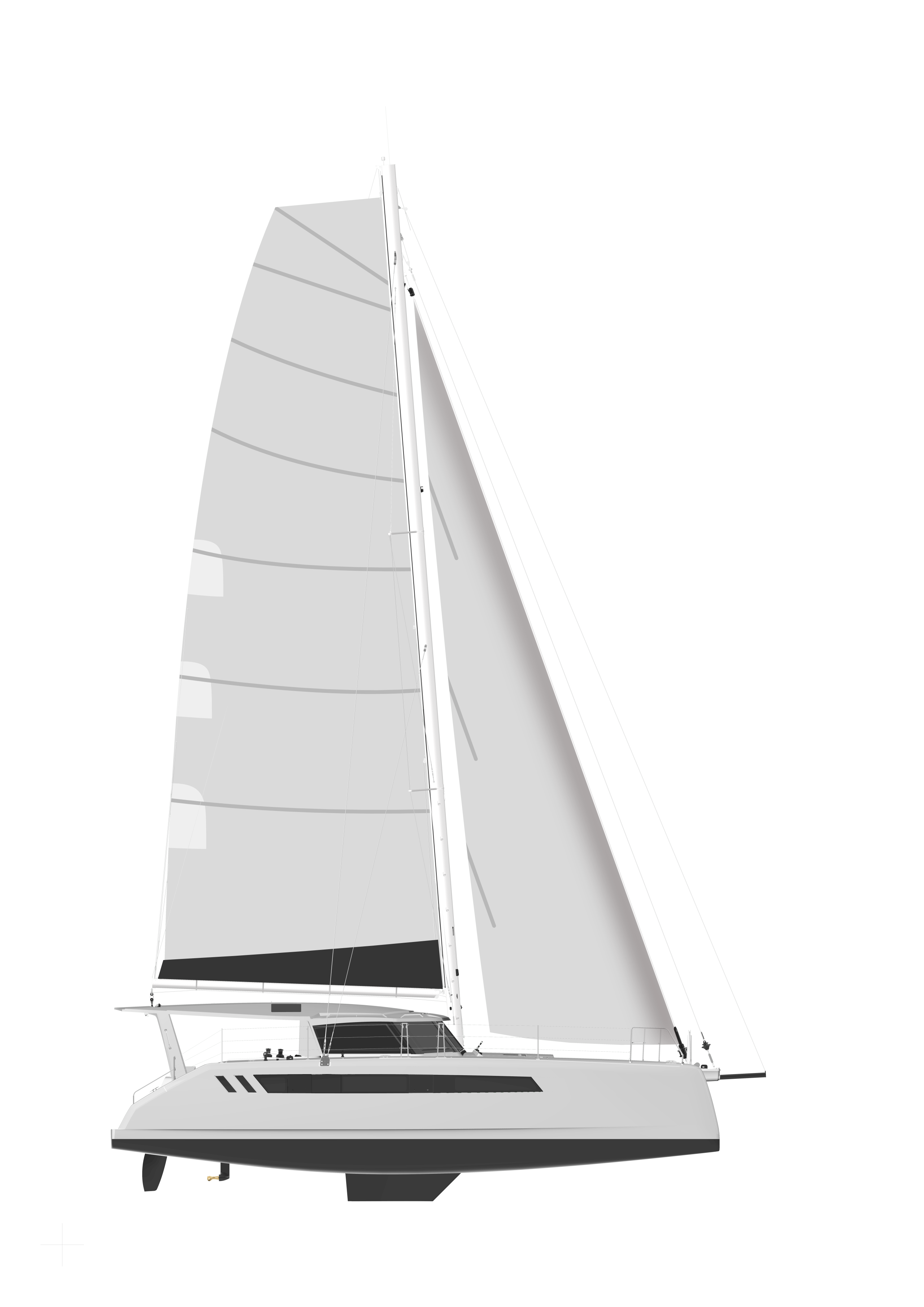
Sail Area
116 sqm
Overall Length
45' / 13.7 m
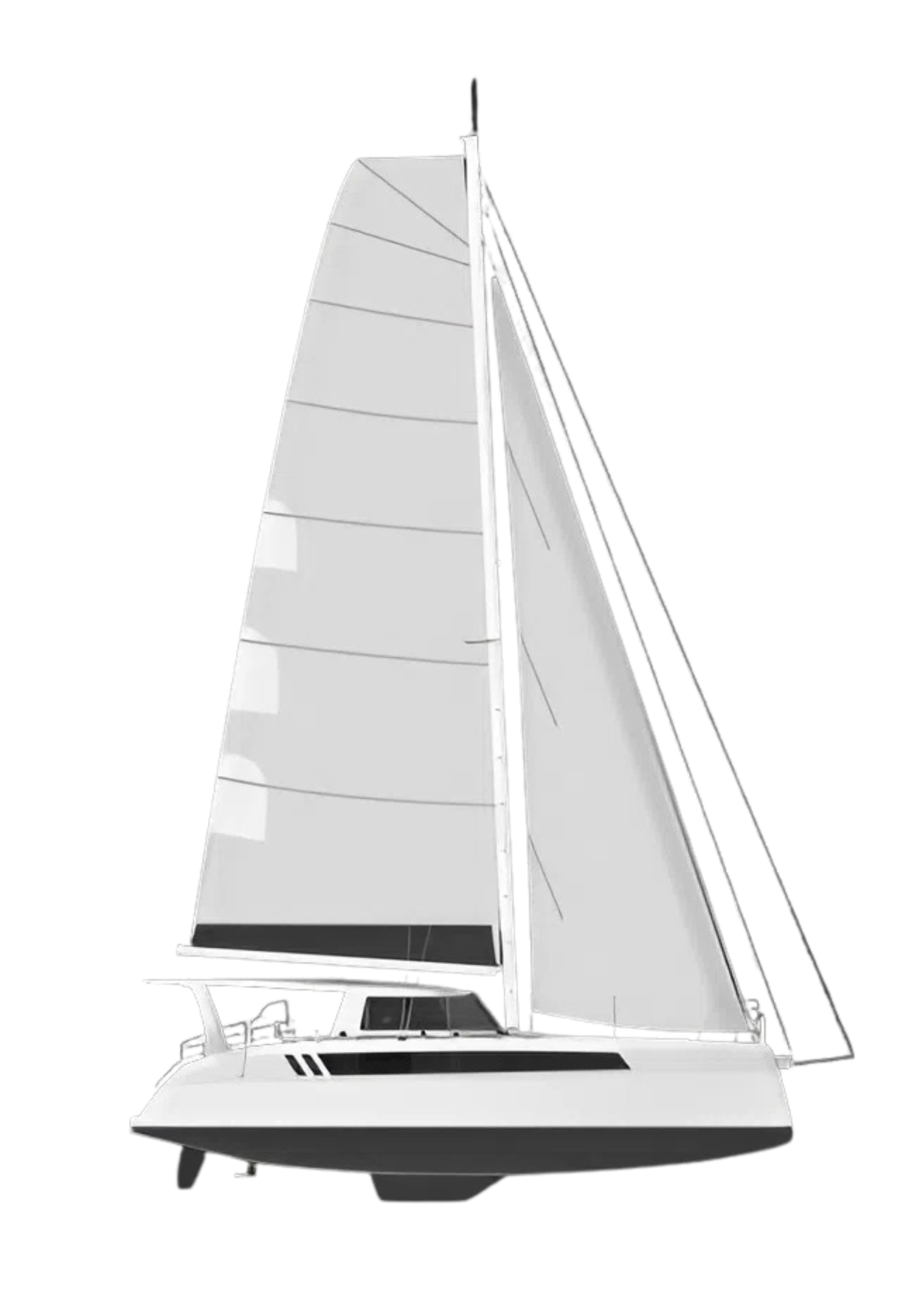 NEW CATAMARAN
Sail Area
103.8 sqm
Overall Length
42' / 12.83 m
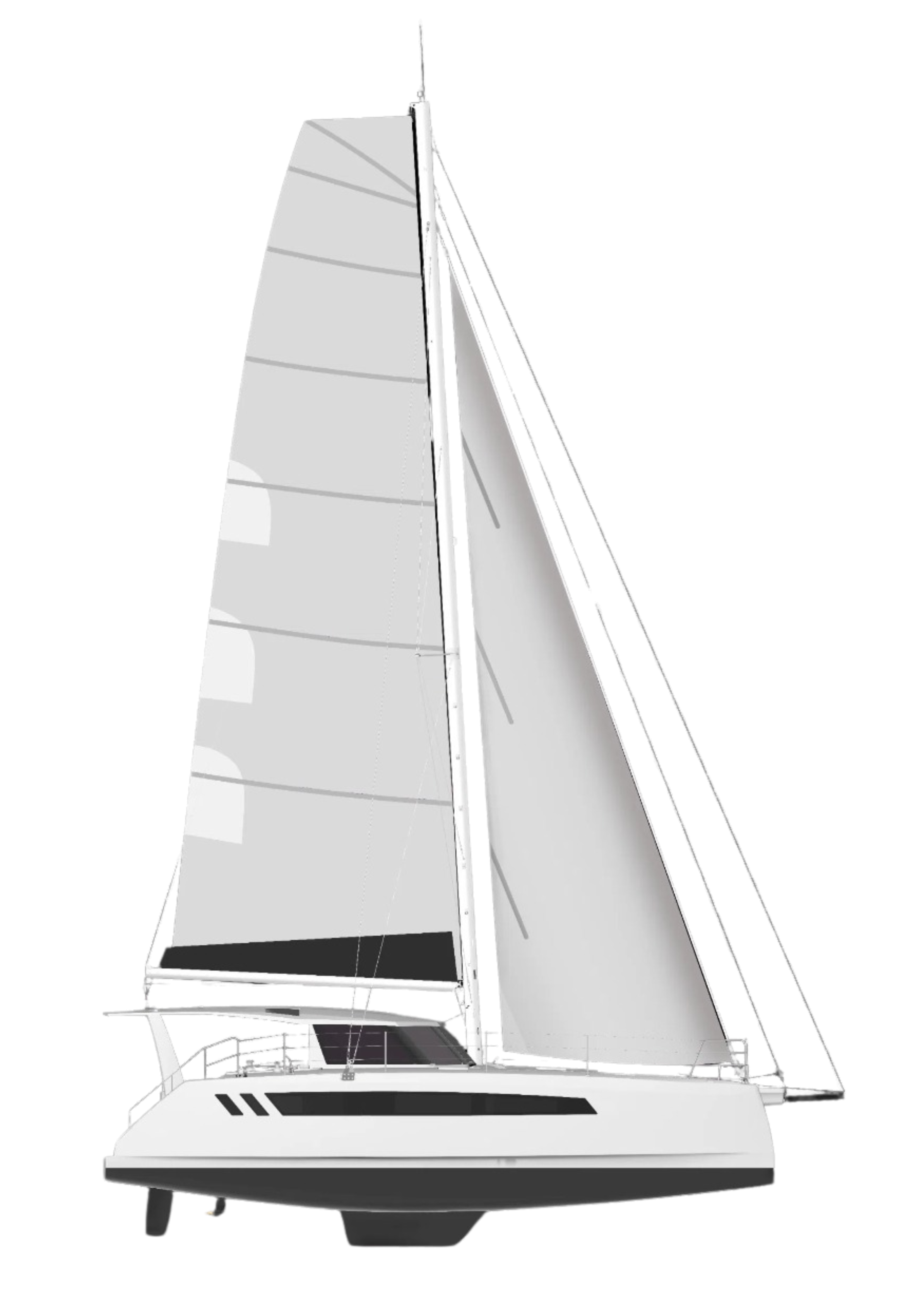
Sail Area
89.4 sqm
Overall Length
39' 3" / 11.9 m
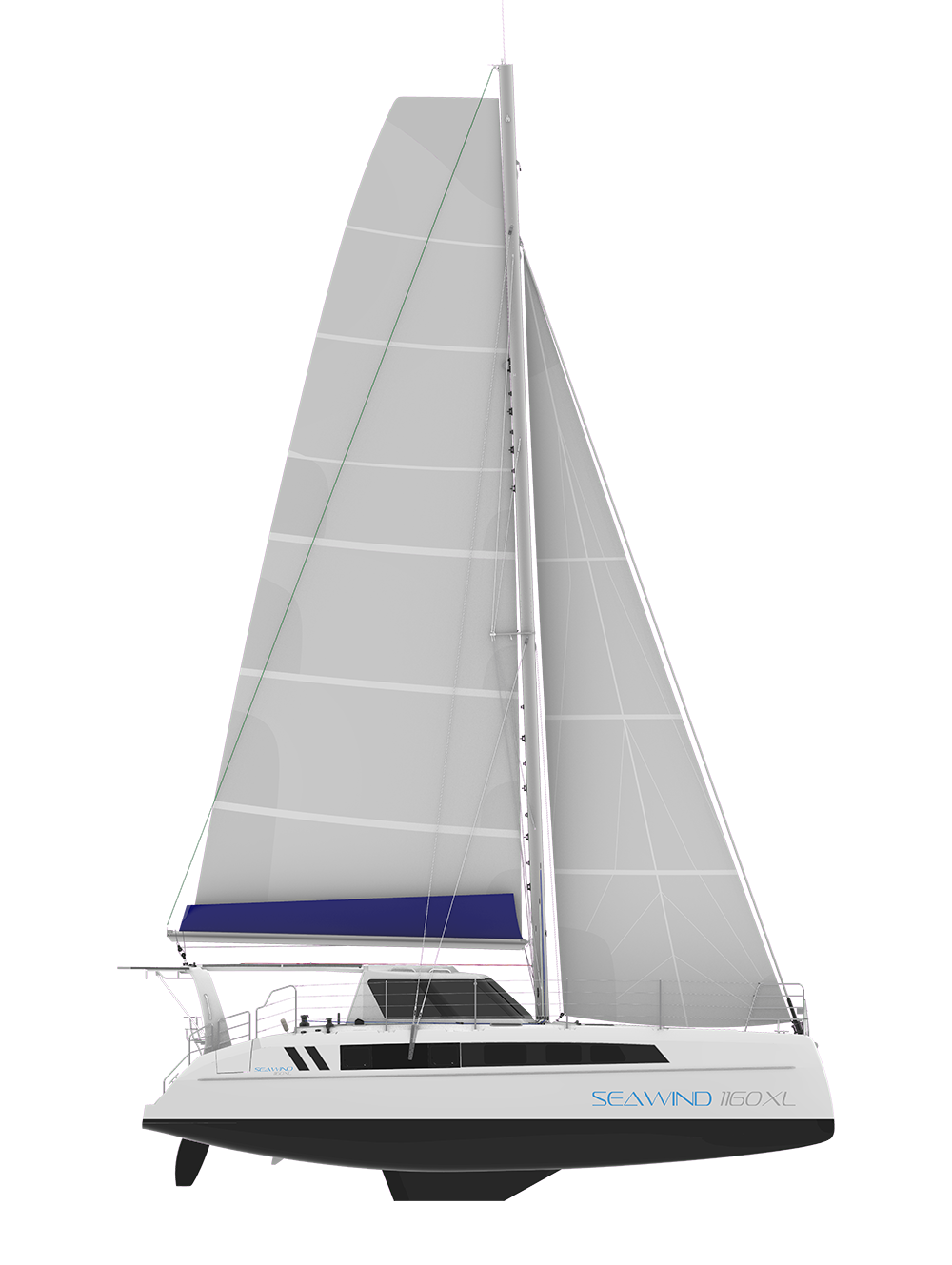 NEW CATAMARAN
Sail Area
87 sqm
Overall Length
38' 10" / 11.83 m
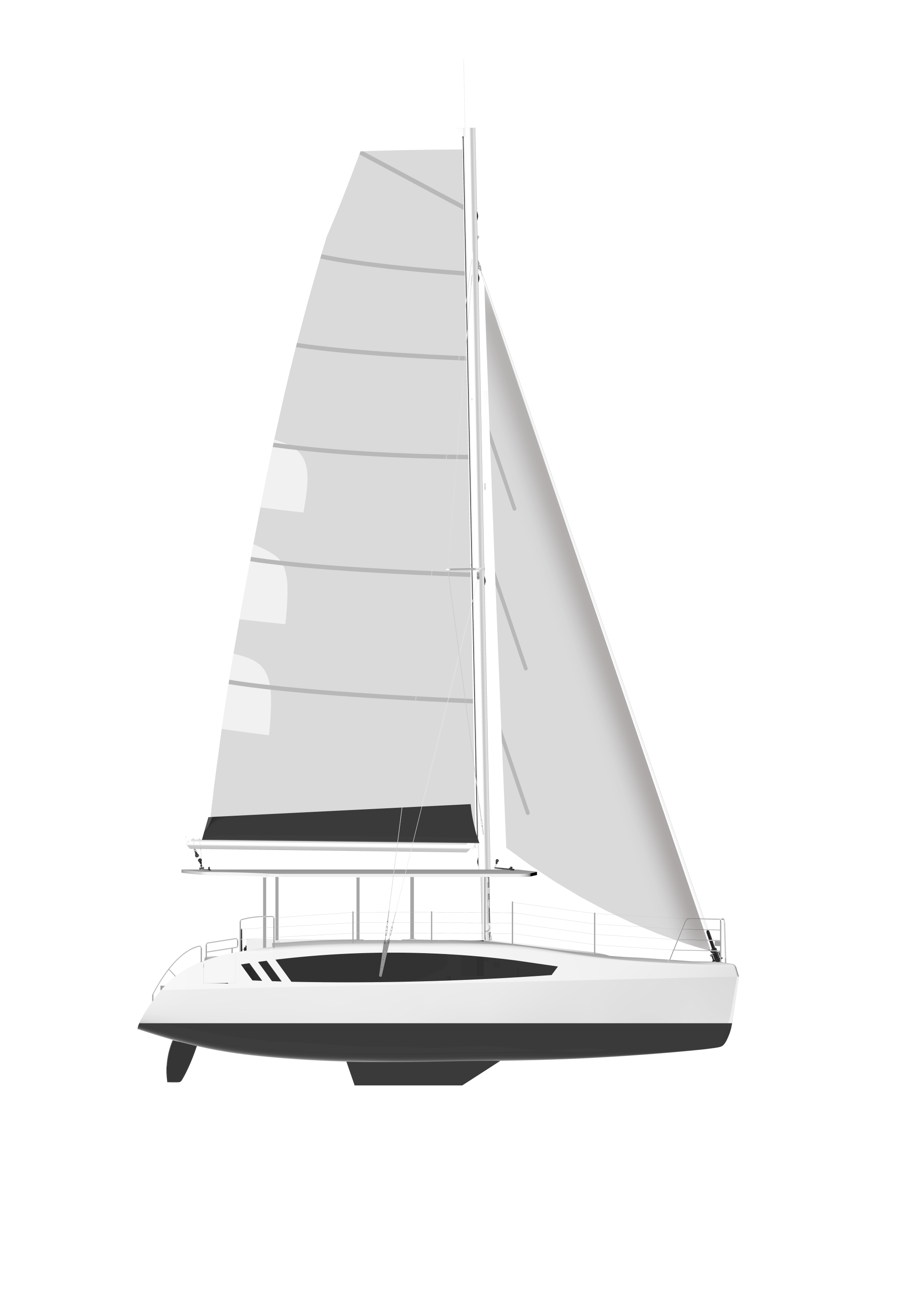
Sail Area
69.3 sqm
Overall Length
38' / 11.6 m
Come aboard our incredible trimaran and set sail for thrilling sea adventures that will create unforgettable memories
Explore our Trimarans
When we last left off, we were anchored in the lush green embrace of Santubong, Borneo. Since then, we’ve continued our journey with the Sail Malaysia Rally, which began in April and runs until the end of August, if you manage to survive it all.
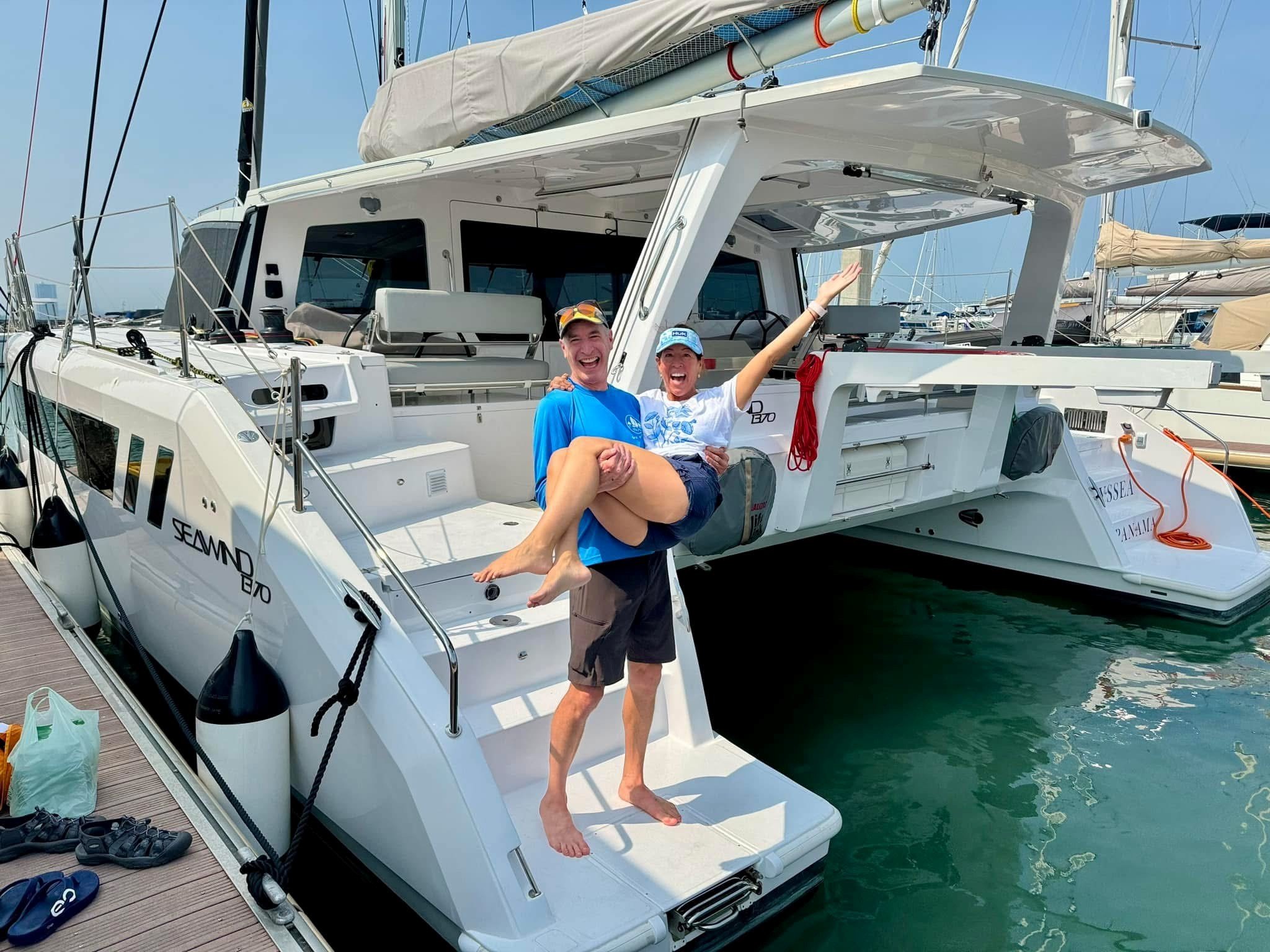
Discover Part 1 of the journey here
It’s been just over a month since the last update, but I swear it feels like a year. That’s what happens when you’re properly living: time stretches, warps, and expands like an accidentally deployed life raft. One month of rally life feels like a year’s worth of detours, discoveries, and delightful disasters. So let me start by saying this is not a rally for anyone craving a slow, sun-drenched, rum-soaked leisure cruise. There is time to explore, certainly, and even to rest… briefly. But boredom? Not a chance.
We continued our northward journey up the east coast of Borneo, ending this leg with a 36-hour nonstop sail to Miri, Malaysia, a lovely little marina town where, by some miracle, we wedged ourselves into a slip with barely a foot of water under the keel and inches on the beam. It was clean, safe, and just accommodating enough for boat chores, supply runs, and that most sacred of maritime rituals: obsessive planning.
Miri is surprisingly modern, complete with upscale restaurants and some marine services. After the obligatory three-step bureaucratic waltz with the harbormaster, customs, and immigration, we explored the town and shared stories with other rally sailors over delicious local meals.
The highlight, though, was Niah Caves, a cavernous marvel where archaeologists discovered Borneo’s oldest human remains, dating back 40,000 years. The main chamber is so vast you could park a fleet of 747s inside and still have room for a food court. Of course, you’d first have to contend with the pungent perfume of several million tons of bat guano underfoot.
Roughly half the rally pushed on to Brunei. We, in need of a dose of dry land and royal excess, rented a car and drove an hour across the border to the Empire Hotel, a five-star palace disguised as a hotel and priced like a Manhattan closet.
Brunei is fascinating. Once a humble water village ruled by a dynasty of 29 sultans, it now sits flush with oil wealth. The current sultan, among the richest people on Earth, resides in the largest residential palace in the world: 2 million square feet with 1,788 rooms.
To his credit, he shares the wealth. Bruneians enjoy free healthcare, subsidized housing, and no taxes. Alcohol sales are banned, but as non-Muslims, we were allowed to discreetly enjoy our own wine… in a private room, behind closed doors, under a veil of secrecy.
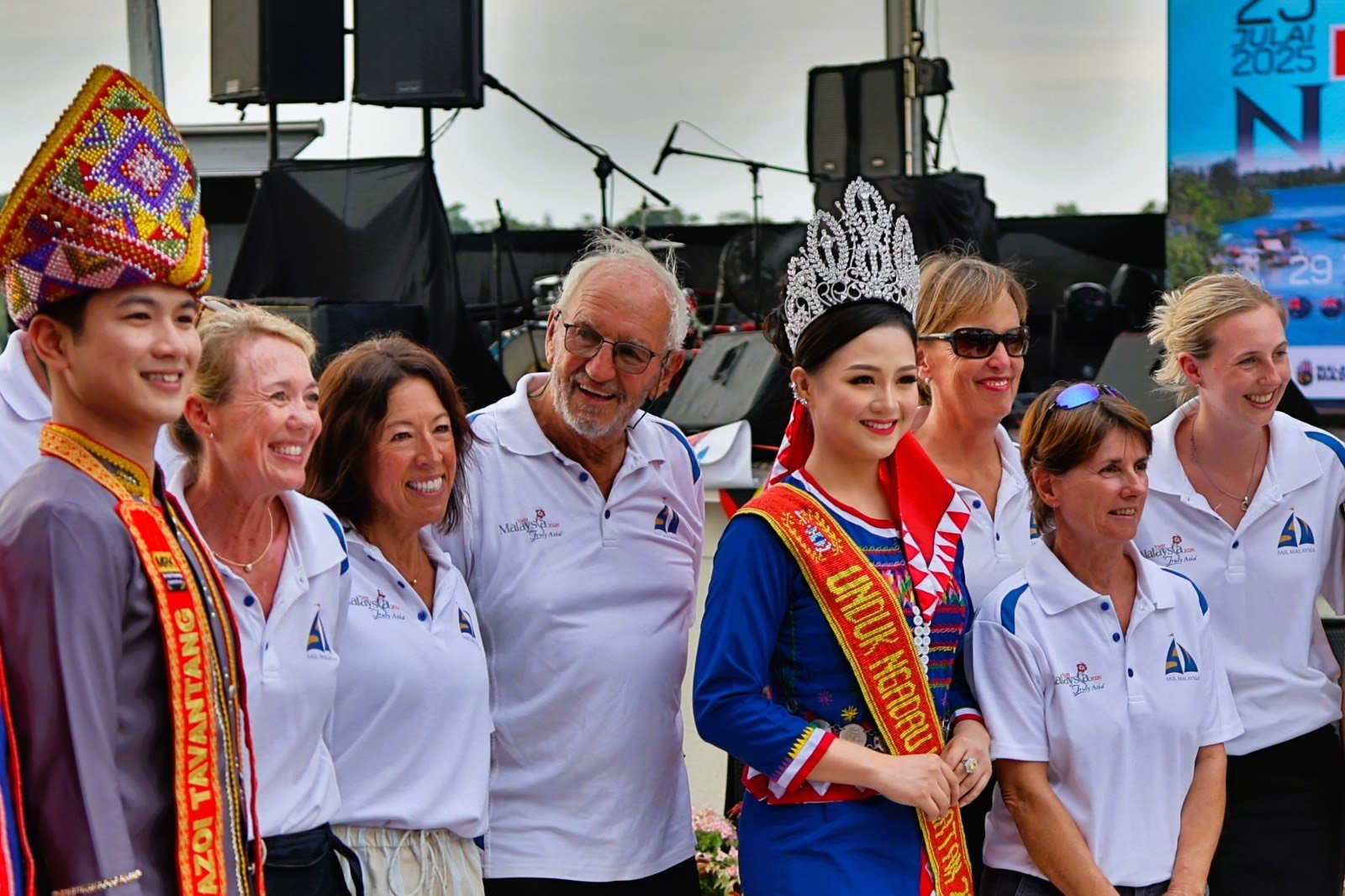
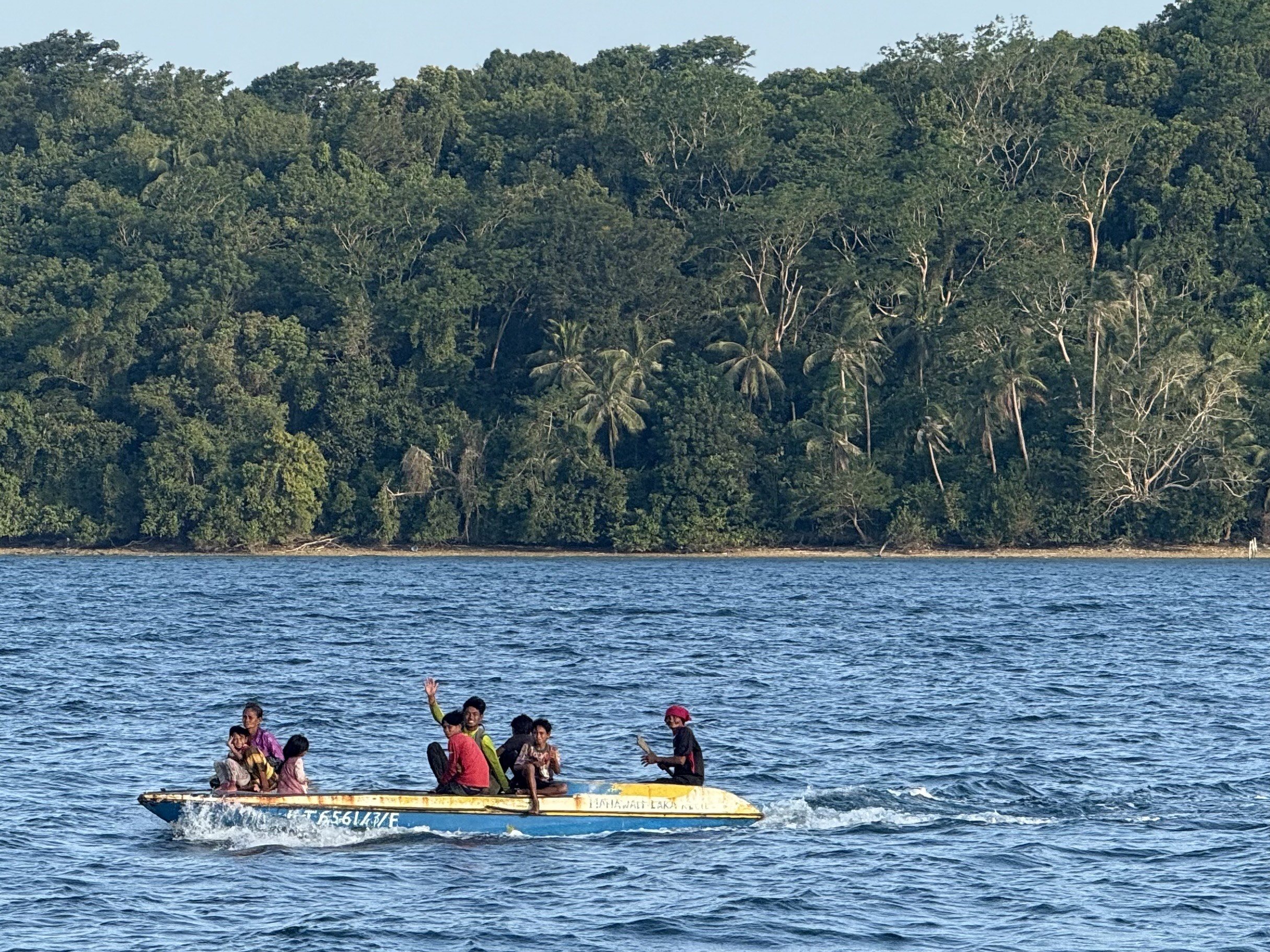
We took a longboat up the Sungai Brunei, climbed steel walkways hundreds of feet above the rainforest, and visited Kampong Ayer, the stilted water village still bustling with life. We dressed up in traditional clothing for photos, doing our level best to embarrass ourselves.
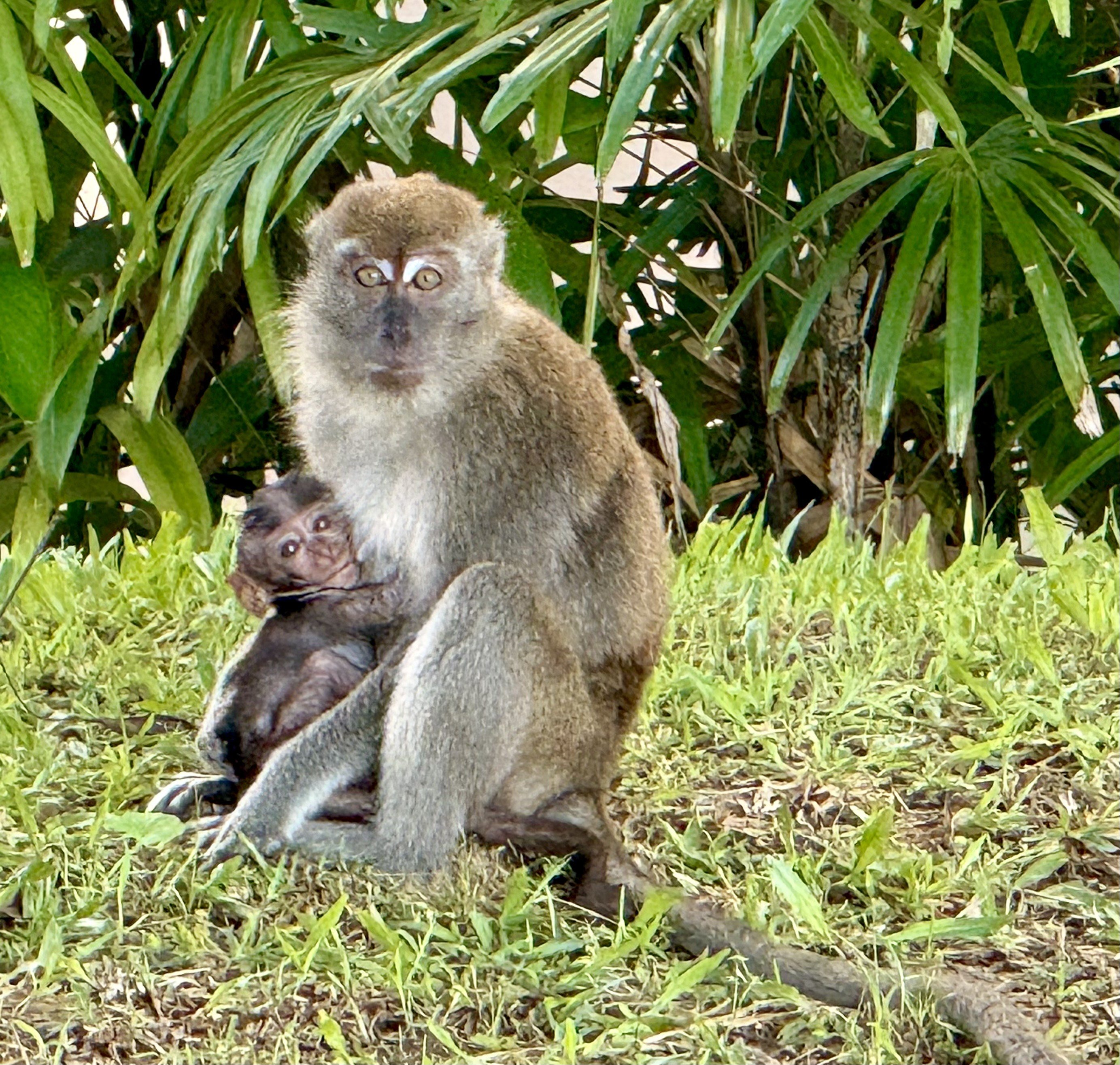
We braved a river safari to spot the elusive proboscis monkey affectionately nicknamed the Dutch Monkey by locals after Dutch colonials, for its nose and belly. The resemblance, I’m afraid, is not flattering. After nearly giving up, we were graced by the sudden appearance of a full family swinging through the mangroves. They were hilarious to look at, but we kept our amusement subtle to avoid offending our close cousins.
From Brunei, we continued north to Pulau Tiga, a pristine volcanic island that didn’t even exist until the late 1800s. Declared a marine park in 1978, it’s home to bubbling mud volcanoes that locals swear have skin-rejuvenating properties. Naturally, several rally participants leapt into the gurgling mud with all the grace of cannonballs at a pool party. Moments later, they emerged unrecognizable, resembling ancient swamp creatures with GoPro accessories.
Pulau Tiga is also famous as the filming location for the very first season of Survivor. Sixteen castaways, weeks of strategy, and no cheese platters. We did things a little differently. Our version of survival included a shower and a well-stocked charcuterie board.
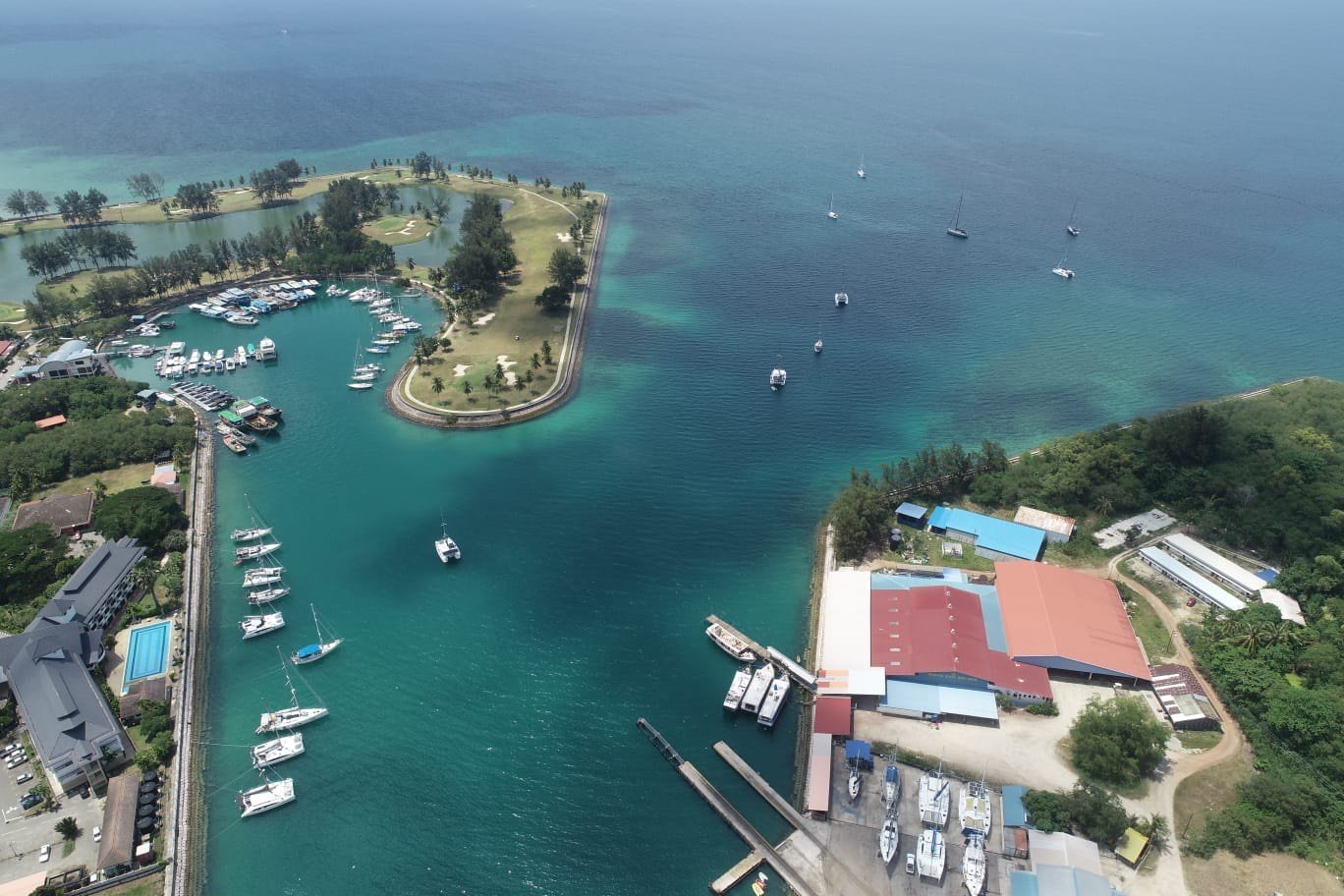
Next stop: Kota Kinabalu, a full-service city with a proper marina and, for the masochists among us, access to Mount Kinabalu.
Mount Kinabalu, the hulking granite monarch of Borneo, rises 4,095 meters (13,435 feet) in a frankly immodest fashion. It stands alone, shooting up from sea level in just 28 miles, making it the third-highest island peak in the world and the tallest mountain in Malaysia. It was designated Malaysia’s first UNESCO World Heritage Site in 2000, mostly because the mountain is so extravagantly biodiverse.
For perspective, Kinabalu hosts more species of plants, birds, and animals than you’ll find in all of Europe. If you haven’t been, you’ve likely never encountered the giant 50cm-long red leech, a squishy crimson tube of nightmares that feeds exclusively on the giant blue earthworm like something out of a Tolkien novel.
The name “Kinabalu” is thought to come from a Dusun phrase meaning “Revered Place of the Dead,” which in retrospect feels less like cultural poetry and more like a very literal warning. The summit is prone to gale-force winds, year-round freezing temperatures, sudden floods, and other meteorological features common in places that don’t want you there.
There are five distinct climate zones on the way up, from tropical jungle to all-rock alpine. Park regulations now require a guide, an overnight hut stay around 3,000 meters, and ideally some level of physical conditioning beyond “able to walk briskly to drop the anchor.”
Naturally, none of this deterred us.
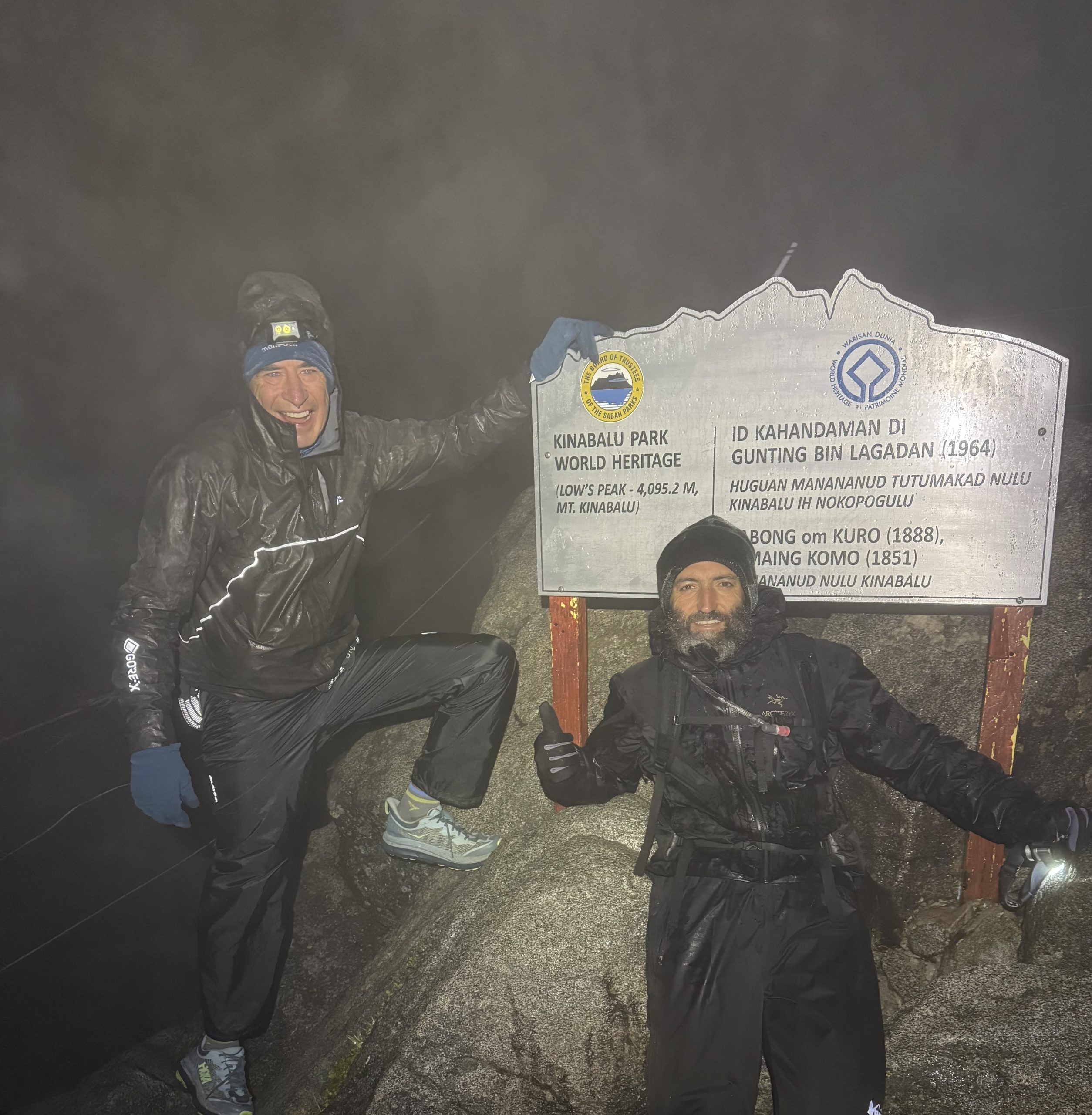

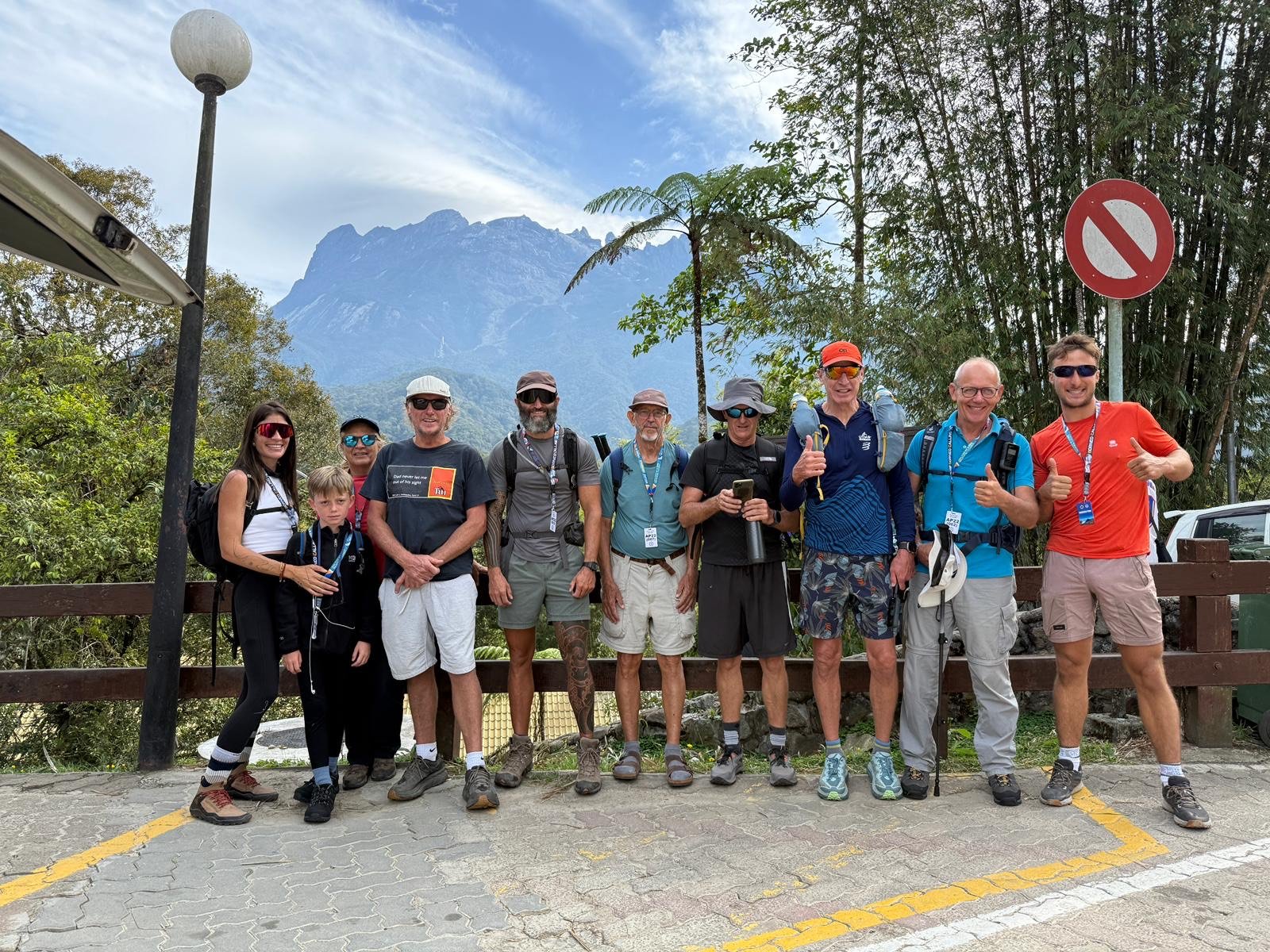
A dozen of us from the Sail Malaysia Rally, hardened mostly by humidity and sundowners, decided that climbing Kinabalu sounded like the most sensible form of self-punishment. After months at sea level doing precisely zero vertical anything, we gathered whatever gear we could scavenge to keep warm, plastic bags, old sailcloth, a few expired abandon-ship rations and set off with the misplaced confidence that a following wind would somehow carry us uphill. Those that remained started a WhatsApp group, appropriately named “Non-hikers Smart Group.”
The mountain, unimpressed by our nautical metaphors, responded on summit day with a headwind directly on the nose. Temperatures dropped, rain ensued, and the wind howled. At some point, hanging onto the rope to the summit, we began questioning our choices. All of them.
We did, in the end, all survive. Four of us made it to the summit, and the rest valiantly retreated with dignity. Out of about 100 people attempting that day, only 20 reached the top. Still, it was a fine day for camaraderie and perseverance, the kind you practice at sea when your mainsail tears or the plotter goes blank. Except colder. And with leeches. We’d had our fill, I think. No one said it out loud, but by the time we descended, many of us were thinking the same thing: next time, let’s just sail around it.
Sailing onward to Tuaran, we were again warmly welcomed by the yacht club and local officials, complete with music, dinner, and enough handshakes to dislocate a shoulder. From there, we made for Kudat, the northern tip of Borneo where the South China Sea meets the Sulu Sea. It’s a dramatic marine crossroads once dominated by pirates. From the 17th century, the Sulu Sea was less of a sea and more of a pirate highway. The Sultanate of Sulu was a pirate empire as much as it was a political entity. The Iranun and Bajau maritime raiders ruled the area, operating fleets of lanong warships essentially floating battering rams with sails and cannons. This was quelled by the late 1800s when it became a British protectorate.
Flash forward to the 21st century, and sails have been replaced by outboard motors and swords by AK-47s often associated with Abu Sayyaf, a violent Islamist group. This has resulted in several kidnappings and raids on coastal towns and resorts that included, all jokes aside, a couple of beheadings. These peaked in 2016–2017 with the kidnapping of entire small island resorts full of tourists and workers. Since then, Malaysia, the Philippines, and Indonesia have beefed up joint maritime patrols that have dropped incidents significantly, but not to zero.
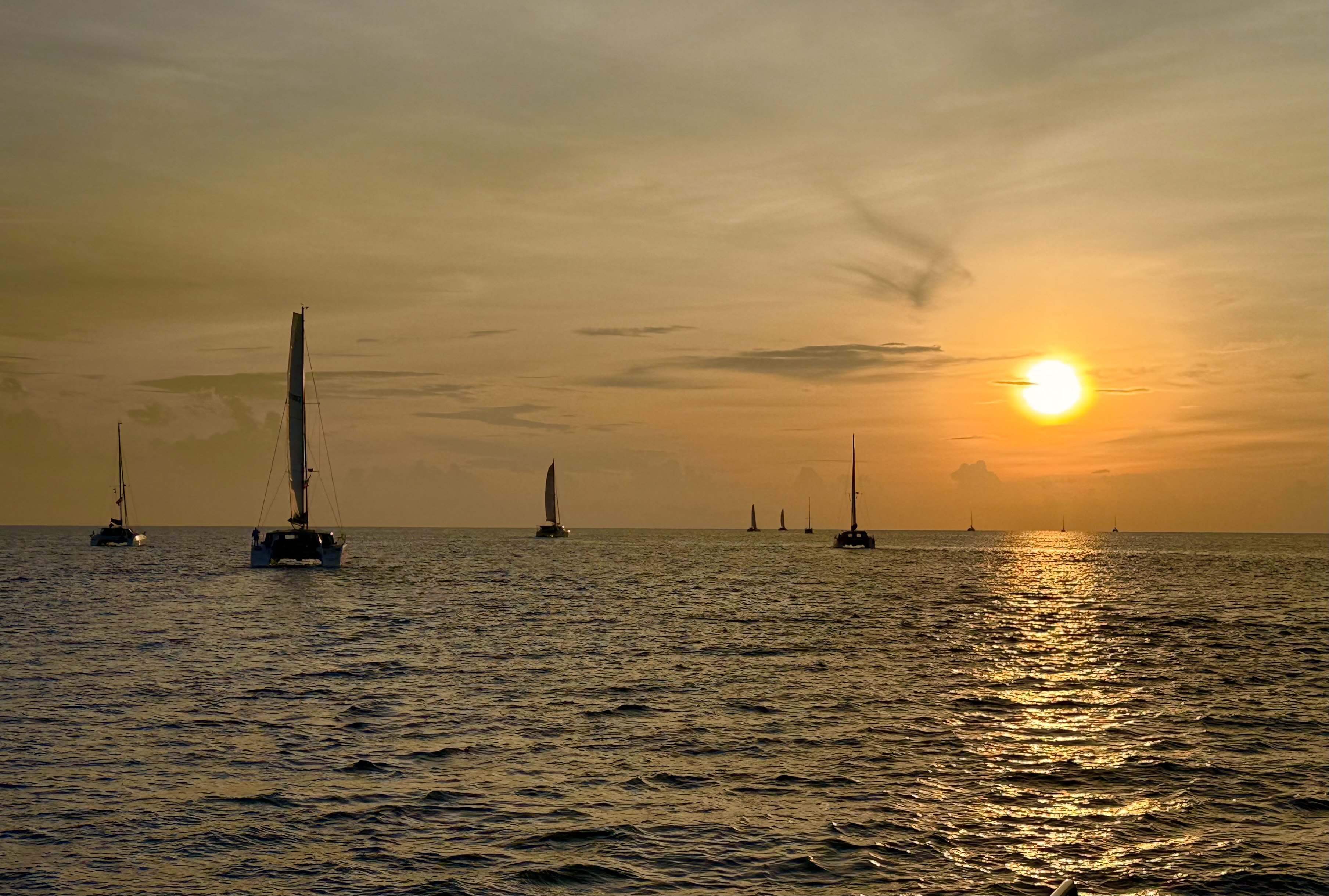
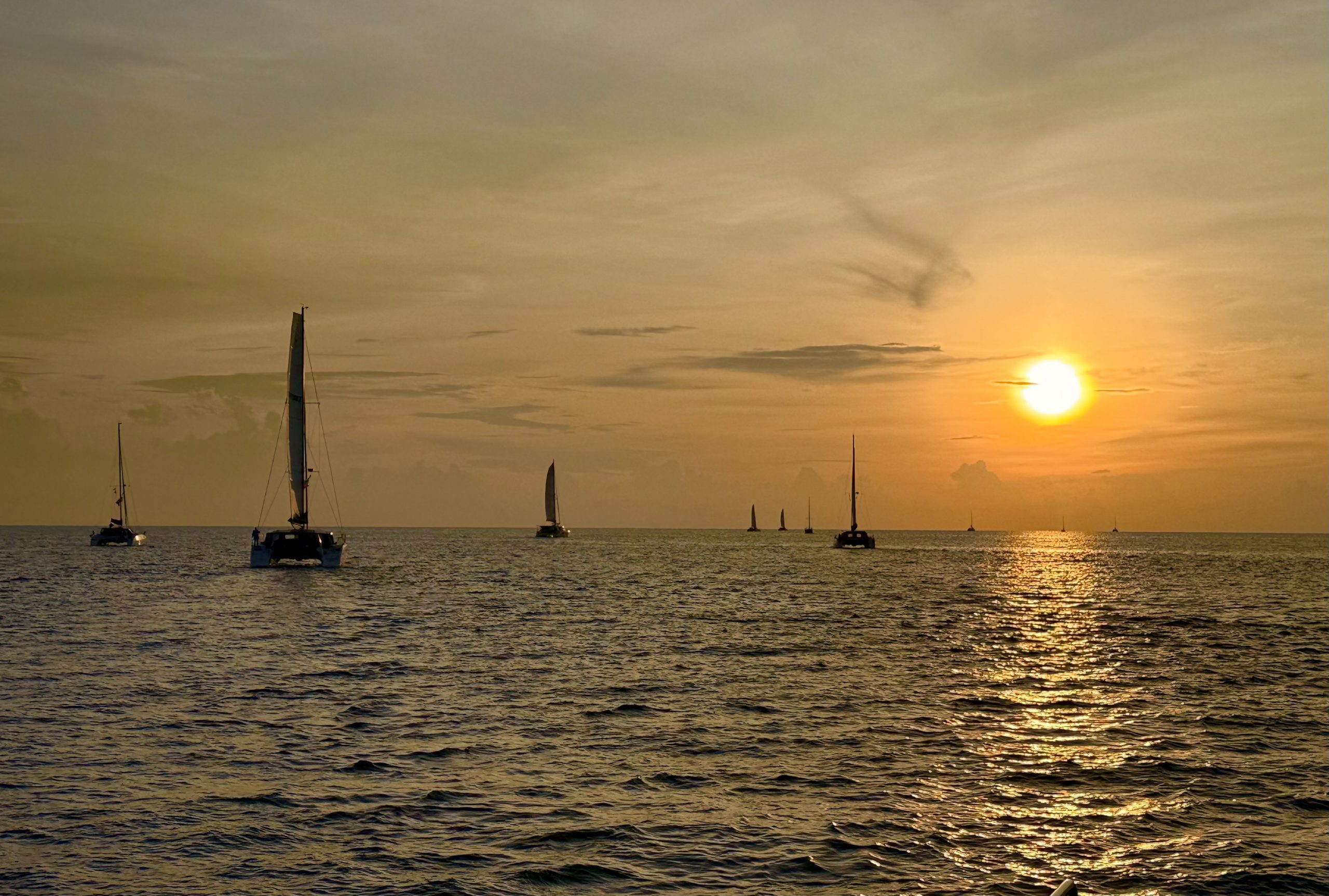
To ensure our safety, the Eastern Sabah Security Command (ESSCOM) deployed a flotilla: a mother ship, air surveillance, speedboats, and special forces. Our job was to sail in tight formation, 20+ boats in a 3nm x 10nm space, and report anything odd. At night, we stood rotating two-hour watches, radios ready. It didn’t feel dangerous. But then again, many things never do… until they are.
As we made our way together and coordinated into the Sulu Sea, we were immediately handed a remarkable opportunity. We were given special permission to anchor off of Turtle Island, a protected marine park and home to a large green and hawksbill turtle hatchery. We were invited to the island in the evening and anxiously waited well into the night to witness the remarkable cycle of the Green Turtle. They have been in existence for over 100 million years when there were no birds, no grass, no Himalayas, much less humans. They can live to be over 80 years old and return to the very beach where they were born, laying about 100 eggs. Sixty days later, these emerge from the sand like cute wind-up toys desperate to find the sea. Sadly, as nature goes, only 1 in 1,000 will survive. Witnessing this special cycle was a highlight to remember.
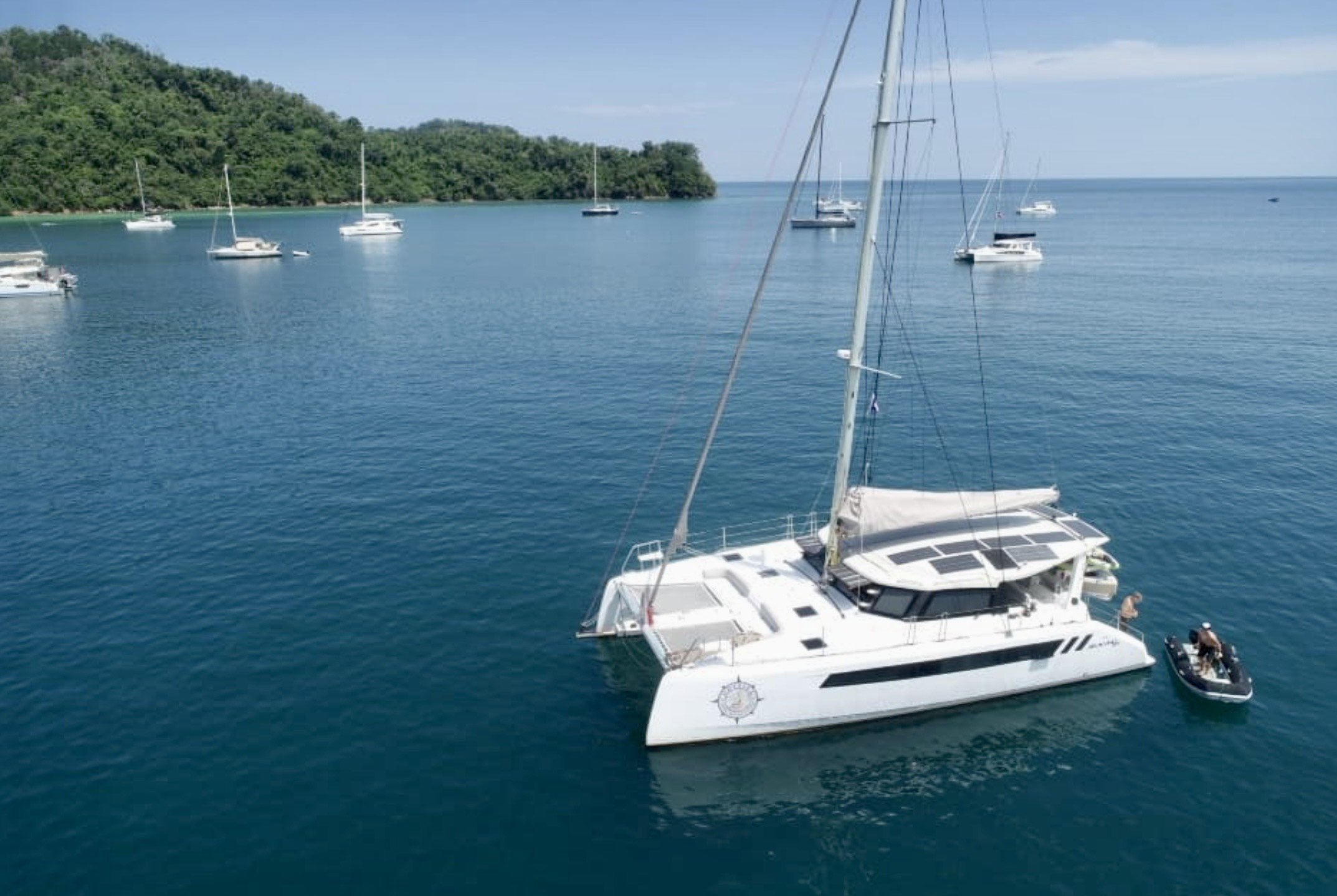
Of course, no rally is complete without a few mechanical melodramas. Daily radio requests and WhatsApp buzzed with needs: helping hands, an obscure part, or moral support. One particularly capable boat and crew needed a tow after their monohull prop wrapped itself into immobility. Rally friends dove in, literally, and a sailor armed with a spanner and a can-do attitude got them going again. Such is the way of sailors.
We’re currently anchored in Sandakan, near the head of the Kinabatangan River, with an option to motor 80 kilometers of crocodile-haunted bends, misty mornings, and wildlife spectacles.
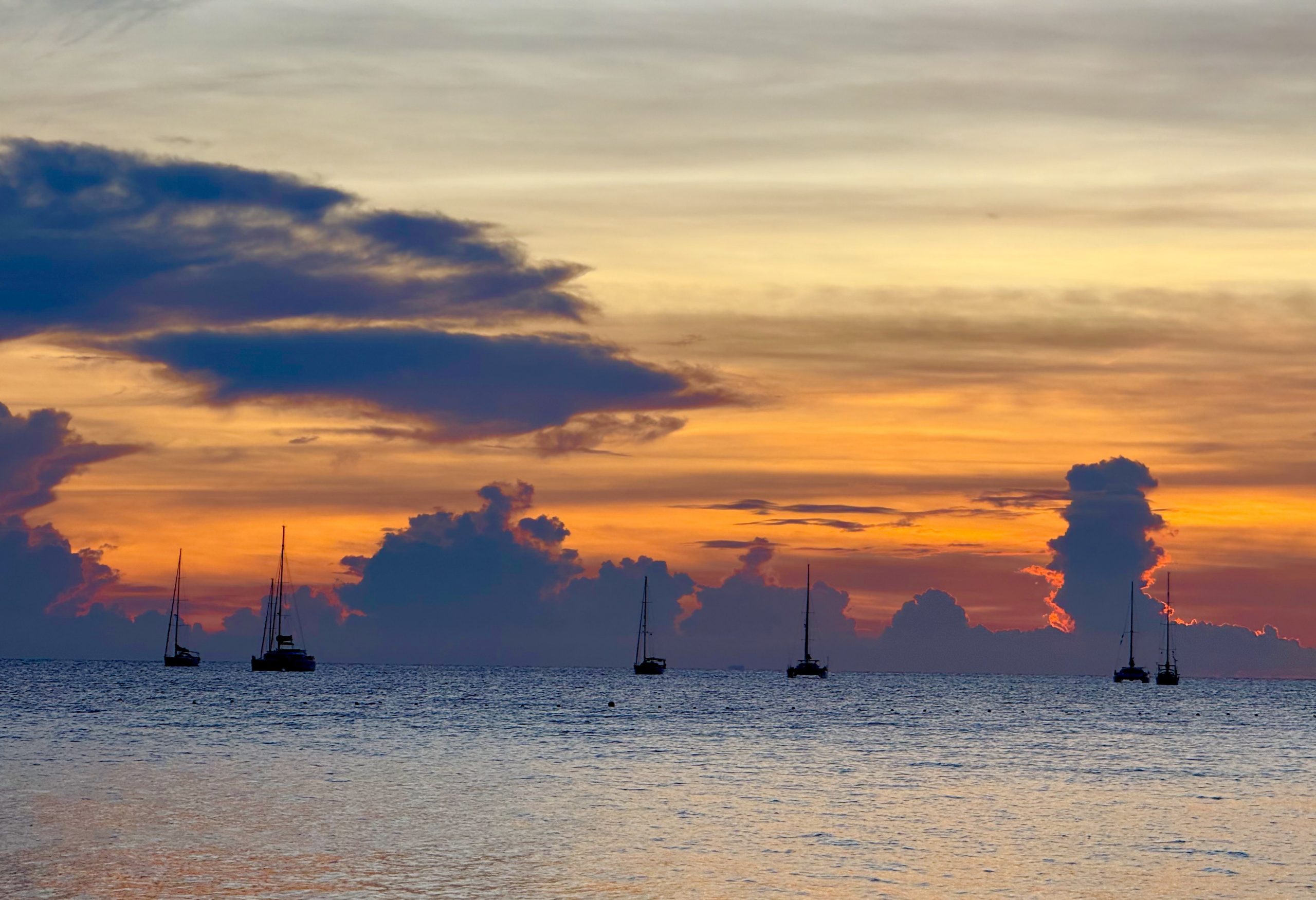
Each day out here brings a new experience, a new friend, an opportunity to learn something new about sailing, the culture and region, and ourselves along with a fresh chance to enjoy our Seawind all over again.
1. When did you take delivery of your catamaran?
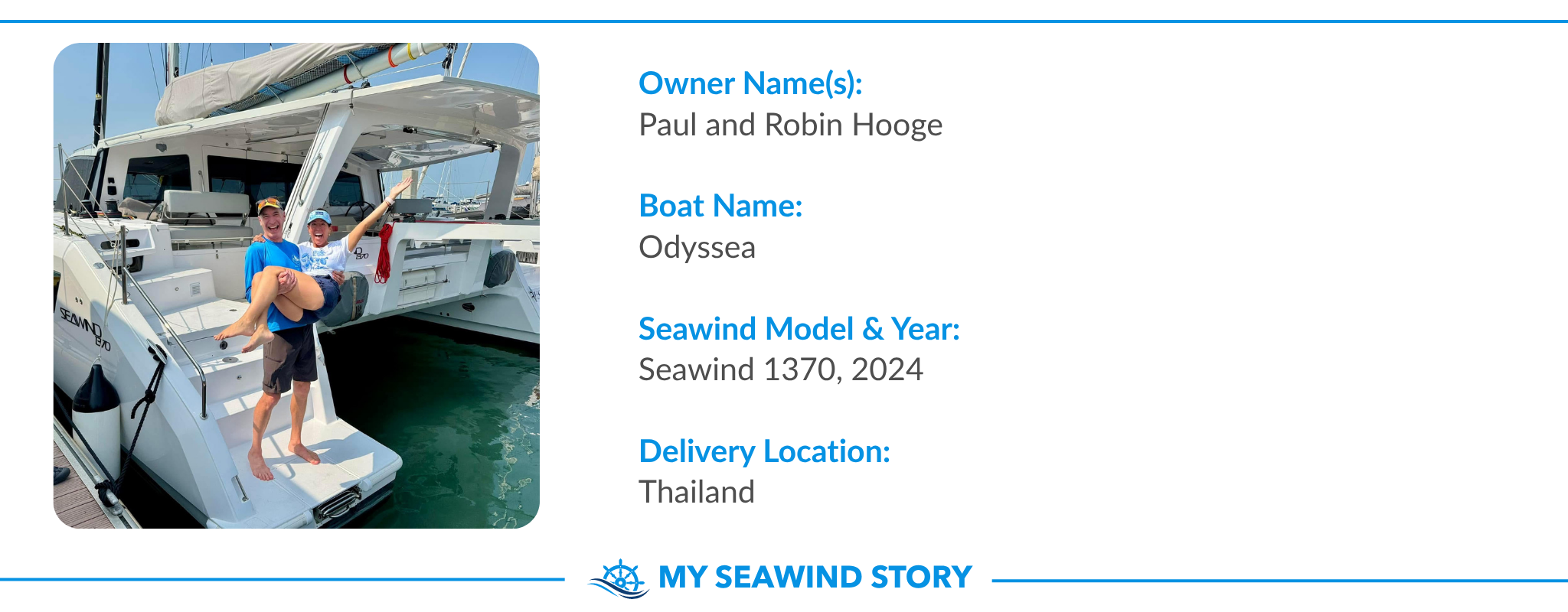
We took delivery of our new Seawind 1370 in April 2024 at Ocean Marina, Thailand.
2. Why did you choose Seawind?
There were a lot of strong reasons why we chose Seawind. Primarily it came down to a balance of ease of sailing, comfort, and performance, backed by a long successful history of quality boat building.
3. Favorite feature on the boat?
Picking one favorite feature is difficult, but for us it has to be the helm position. Those unfamiliar with Seawind often comment with worries or misconceptions regarding Seawind’s unique helm position. It doesn’t take long on a Seawind to understand why the helm positons are superior in so many ways. I can’t ever see myself owning anything but a Seawind for this reason alone.
4. Best item you’ve added since owning the boat?
That would have to be a Sea.ai, real time object detection, alert and collision avoidance system. It’s like having a full time alert crew member on watch all the time and provides a lot of safety and peace of mind, especially at night.
5. Favorite cruising destination so far and why?
Right now Southeast Asia takes the top spot for us. This sailing is beautiful, safe, inexpensive, uncrowded, and fascinating. That along with the universally wonderful people is a hard combination to beat.