
The Seawind 1160XL represents the latest evolution of one of Seawind’s most established and award-winning catamaran platforms. Building on the proven sailing performance of the 1160 series, the 1160XL introduces a range of refinements focused on interior volume, structural optimisation, and sail plan efficiency.
Below are insights shared by a seasoned sailor with many years of experience, together with Mike Rees, Global Sales Director at Seawind Catamarans. Drawing on hands-on sailing time aboard both the Seawind 1160 Lite and the new 1160XL, as well as feedback from long-time Seawind owners and recent charters, his commentary offers a practical perspective on how the 1160XL differs from its predecessor, how those changes translate on the water, and why the boat continues to deliver the sailing characteristics Seawind is known for.
Before we get into performance, I think the first point to take note of is her size. The interior volume is what is noticeably different on the new model and certainly the talking point when we had the new boat on display recently at the Sydney Boat Show. We had so many seasoned Seawind owners come onboard and congratulate us on refining the boat so well, and a lot of that centred around the increased headroom in the forward cabins, both over the bunk and also in the forward section. We also managed to increase the bunk width in the starboard aft cabin which, for a charter boat especially, is very welcome.
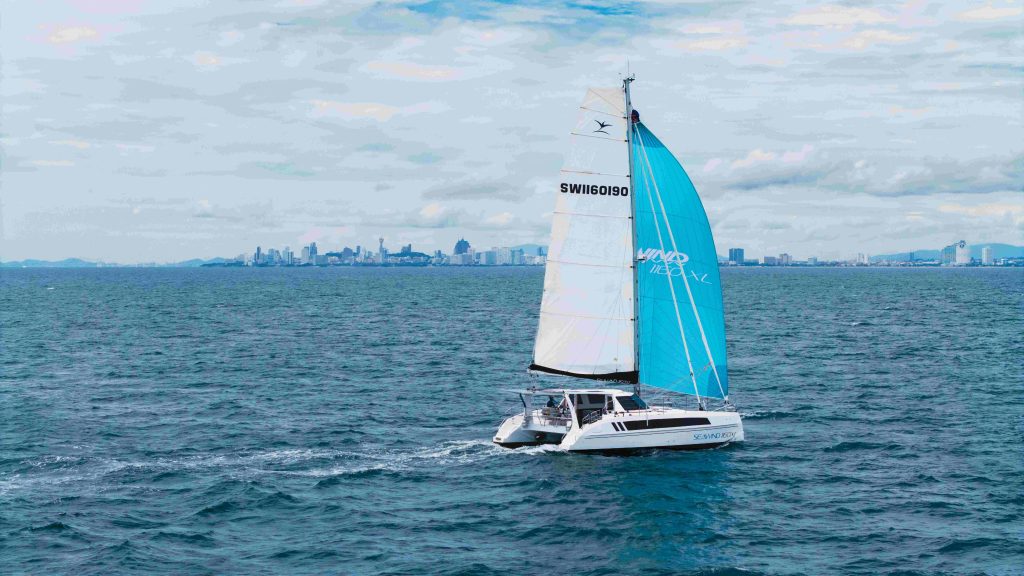
Sailing characteristics:
The 1160, then the 1160 Lite, were always excellent sailors’ boats due to their performance. People often talk about top speeds and “can you achieve this speed in 15 knots of breeze”, etc, etc. The characteristic that I’ve always found Seawind 1160 owners are most proud of is more around the lower-end sailing.
“When can you start sailing?” With an 1160, you’re pulling your sails out in 5 knots of breeze, whereas your typical charter cats don’t get sailing until they’re into double-digit wind strength. So our brief when developing the 1160XL was that we must have the same, if not better, sailing characteristics as her award-winning predecessors, which we have certainly achieved.
Hull shape:
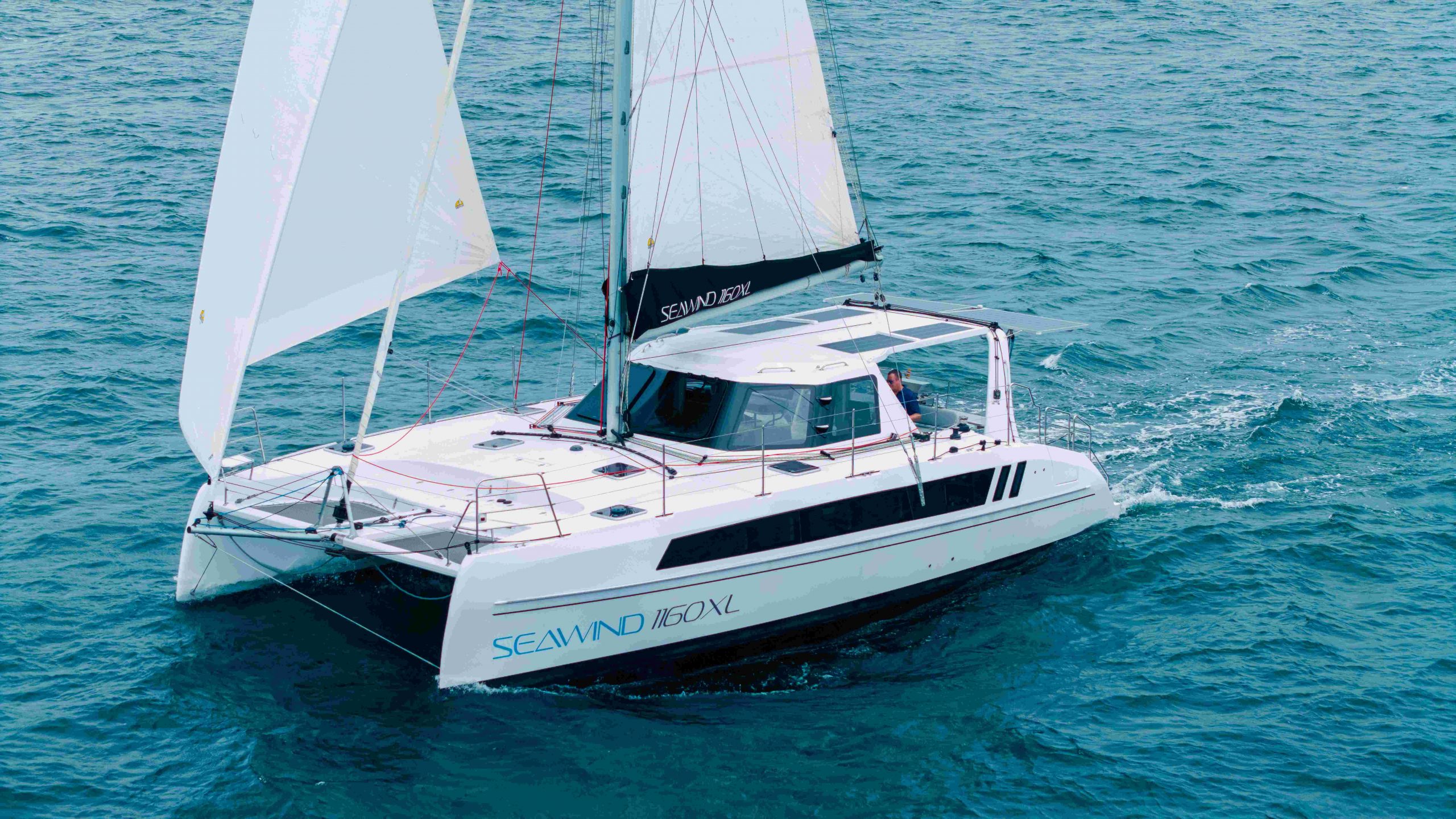
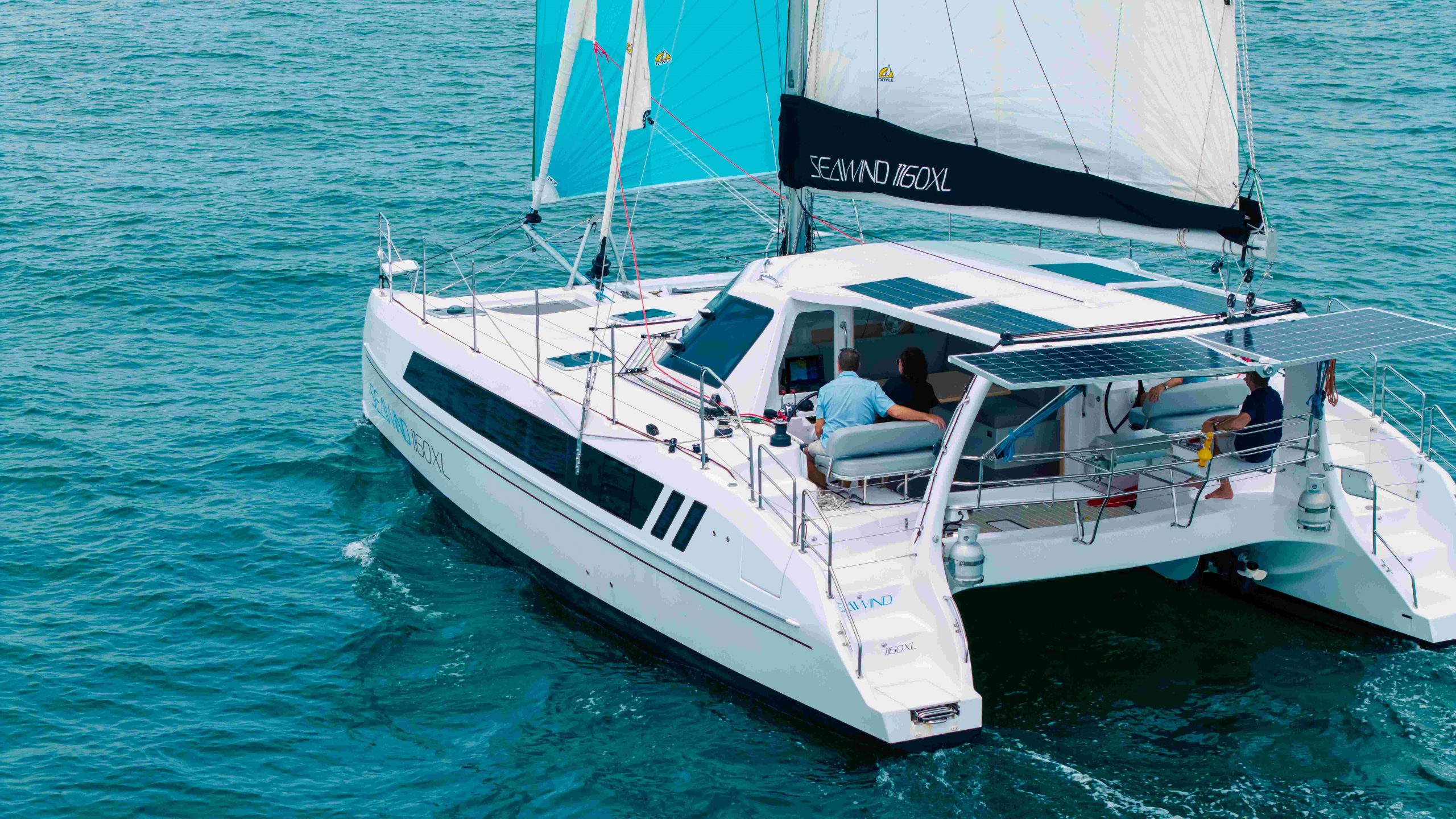
Outside of increased interior volume, we have the added waterline length going from 38 ft to 39 ft. This is a determining factor for boat speed and, again, a welcome increase for any sailor looking to achieve consistently good numbers on the water. However, it’s also relevant to say that it’s not just the same shape as the 1160 Lite, but bigger. With the reverse bow, we’re pushing some buoyancy forward, proportionate to the sail plan and low down, which all adds to better handling in choppy conditions. We first did this on the 1170 and then the 1370, and you really do find the boat is more stable, with reduced hobby horsing when underway. It seems to help with upwind performance, but perhaps this close-to-the-wind aspect is as much about the improved stability with the longer bow.
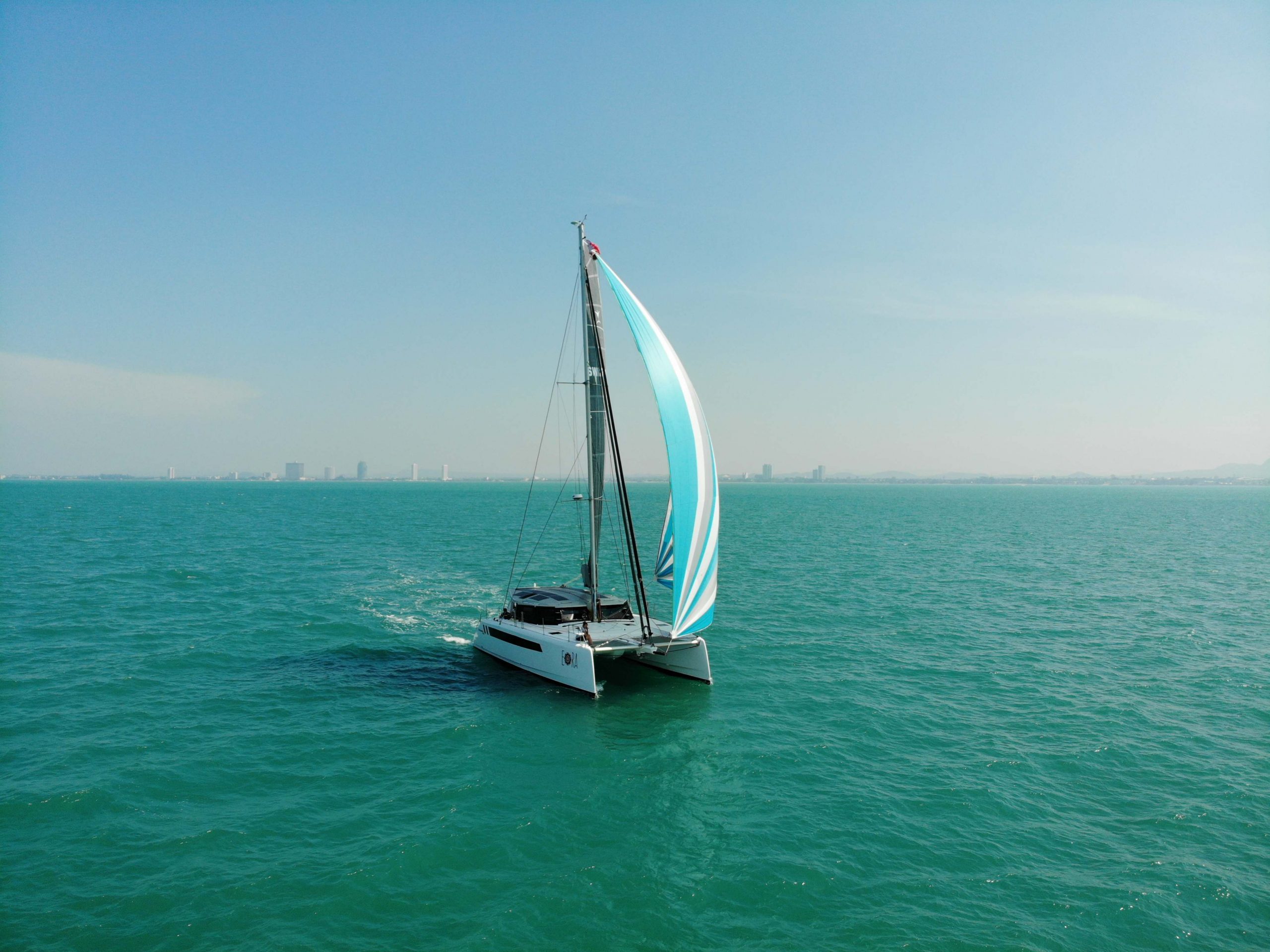
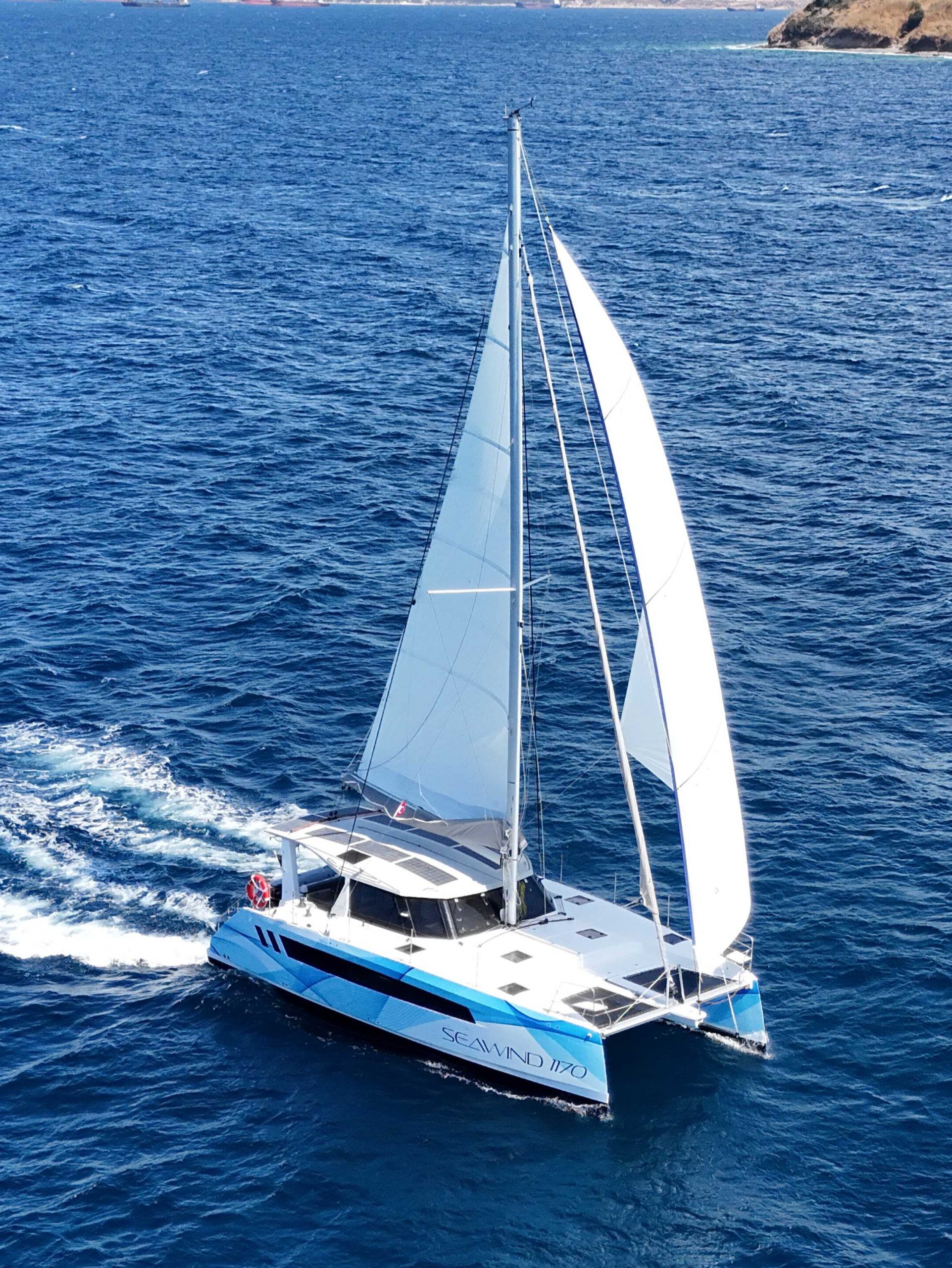
With all this newfound volume (read surface area and weight), how do we manage to achieve good sailing performance? Well, it’s actually pretty basic: power versus weight.
Weight:
With an increase in freeboard and waterline length, we needed to offset that GRP weight somewhere. We completely reengineered and optimised the full hull and deck laminate, which gave us some savings in weight. We also took what we learned from building our Sport model, the 1190 Sport, and brought some of this over to the 1160XL. As standard on the XL, we have carbon unidirectional laminates in all the high-load areas instead of the old E-glass laminates used in the 1160 Lite construction.
For example, at the base of the main bulkhead, the 1160 Lite has 21 layers of 300 g unidirectional glass, plus all the resin required to bond it all in. On the 1160XL, with exactly the same engineering outcome, we have one third of that weight, as we use only seven layers of 300 g carbon unidirectional laminate and therefore only one third of the resin, with no penalty other than cost. Apply this theory to all the high-load areas and all of a sudden, we’ve just completed a very effective diet across the whole boat.
Power:
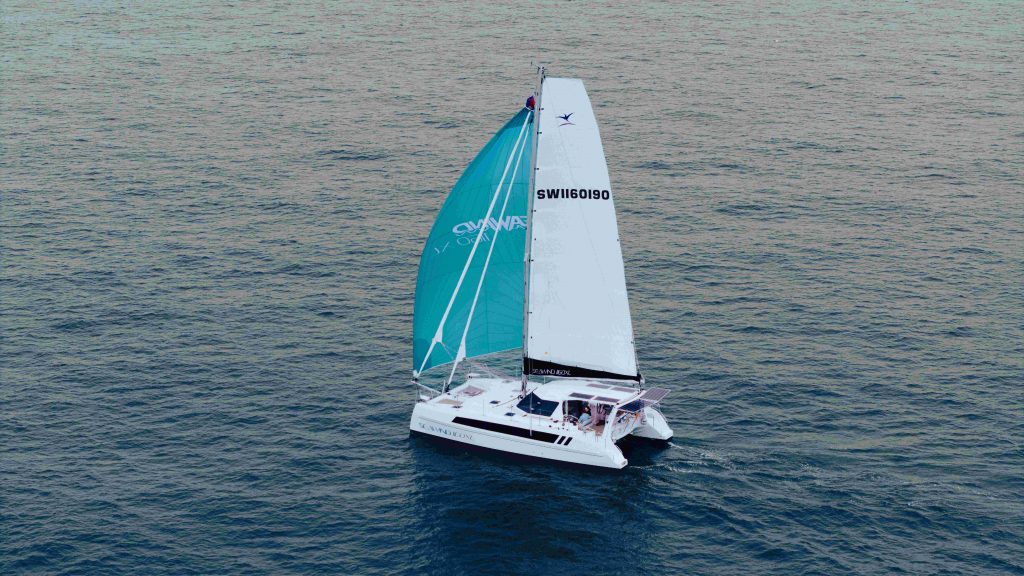
We’ve reconfigured our sail plan to increase sail area, particularly by lifting the forestay height, giving an additional 5 m² to the jib alone (54 sq ft). When sailing cats with skinny self-tacking jibs, they can feel a little underpowered, but this increase in power forward feels good on the water and keeps the boat balanced with the increased reverse bow length.
The outcome of all the above is a significant upgrade in functionality, whilst managing to increase the sailing performance on a boat that was already known for being a true sailor’s multihull. In case you have not seen it, there’s an excellent video we recently shot from our Ocean Marina Handover Centre, which you can see here: 1160XL Sailing Review.
This video features Phil Harper, a very seasoned Seawind skipper and the person who would be arranging your time in Thailand if you were to take up the opportunity to sail around the islands there. If you can, you should. Some absolutely spectacular sailing, and Thailand is just an incredibly fun place to visit, with good people, great food, and all relatively inexpensive.
Interestingly, we just had one of our very experienced Seawind 1160 Lite owners from Sydney charter the 1160XL in Thailand, who over the weekend sent in the testimonial below, which I think aligns well with my commentary above.
My wife and I have owned and sailed four Seawinds over the last 15 years, culminating in our current boat – an 1160 Lite delivered in June 2022. We’ve had huge fun racing and cruising the boat up and down the coast of New South Wales and so you can imagine how keen we were to take up the offer to check out the new 1160XL with a cruise from Seawind‘s new Thailand charter operation.
And we found that, while upgrades can sometimes be just marketing hype and a price rise, this one was the real deal. The comfort and usability of the boat has been enhanced by a significant increase in internal volume, little touches like the extended scoops, extra volume forward and flat decks. And all this has been achieved without a big increase in weight but with a larger sail plan which preserves one of the 1160 series great attributes – it’s sailing performance. If you are looking for a new boat, then you should definitely have a look at the new 1160XL.
David Cox
Seawind 1160 Lite “Seaglass”