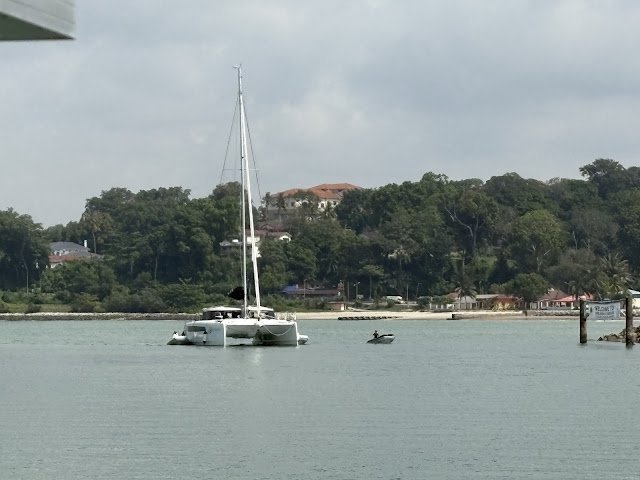
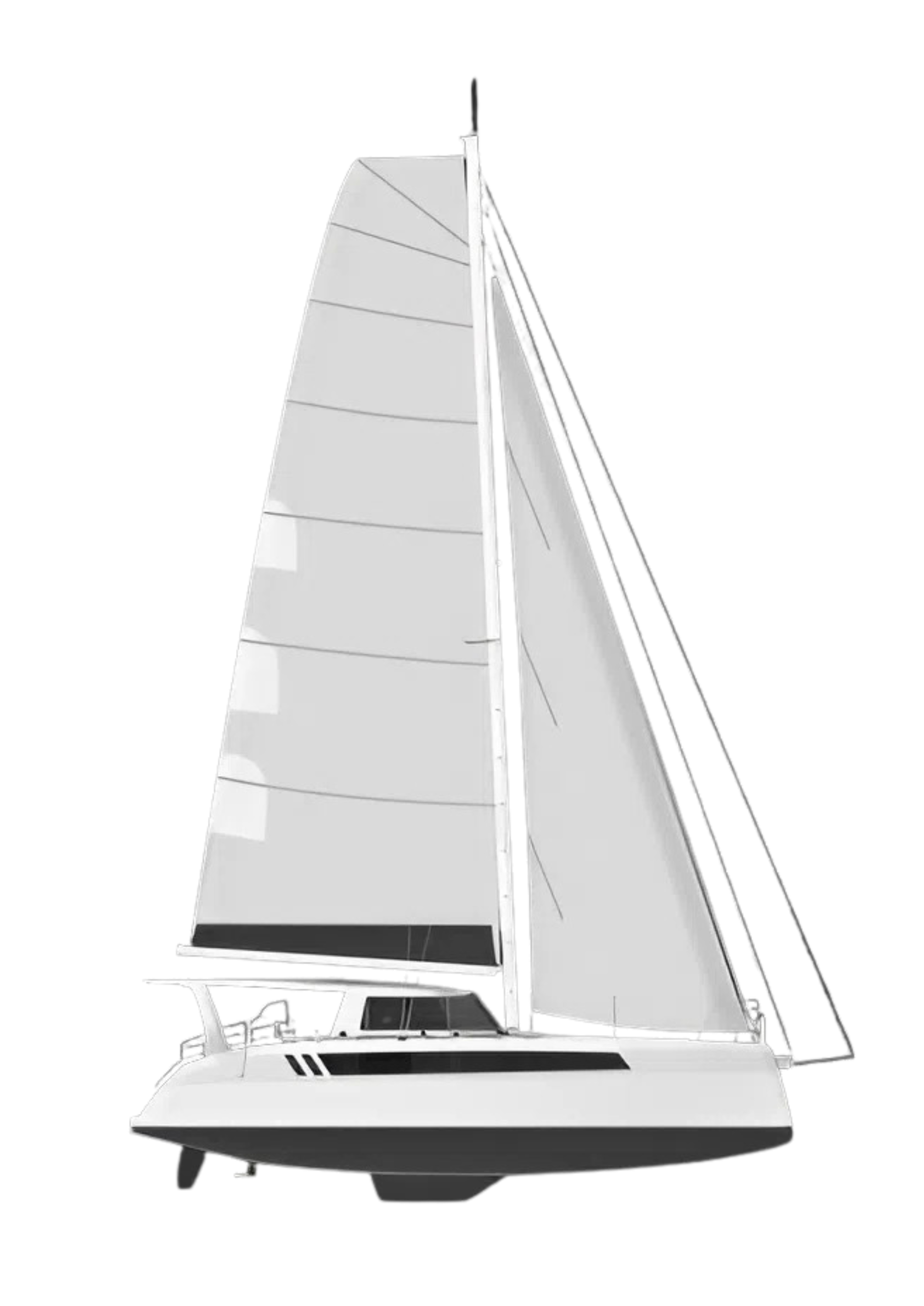
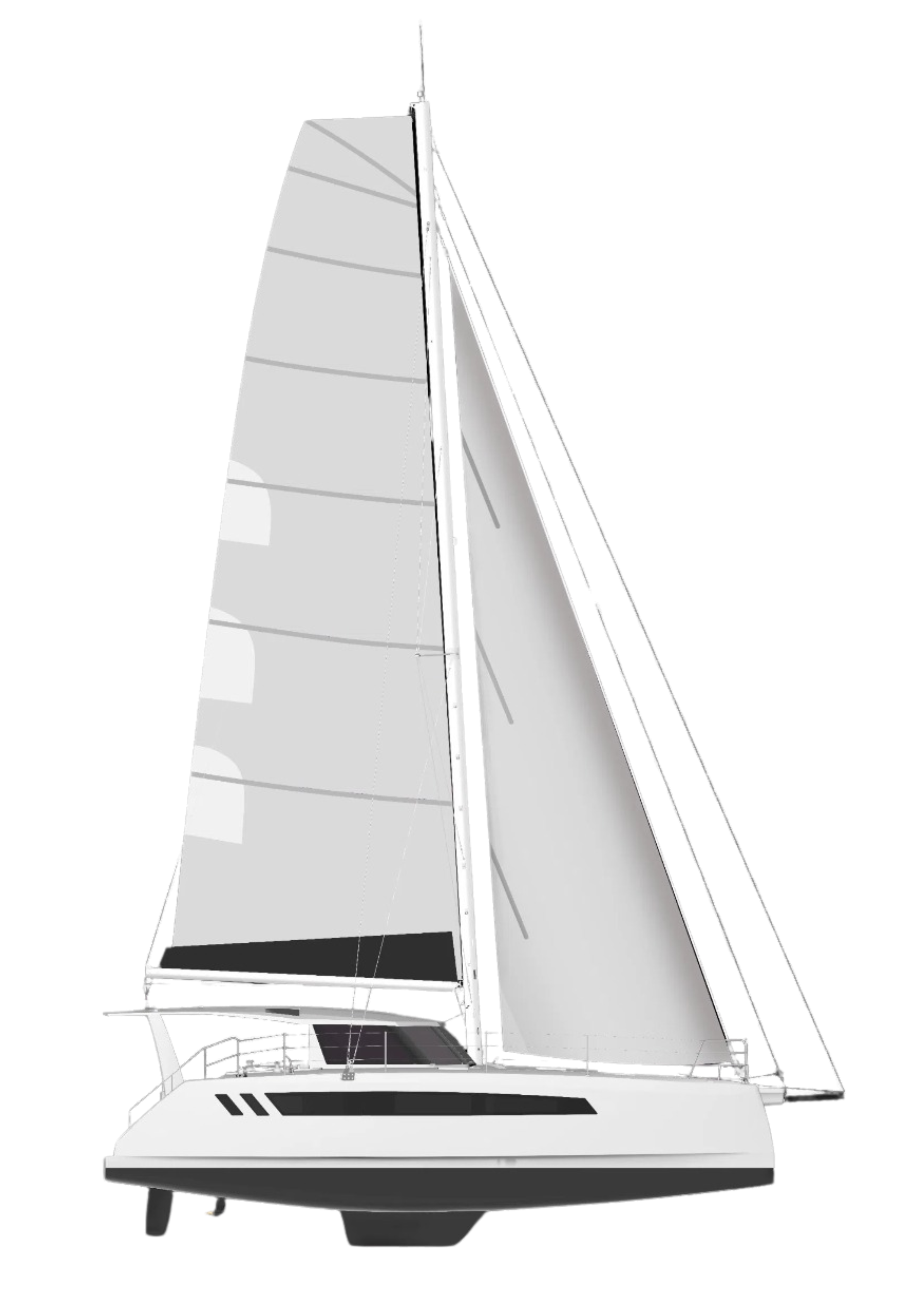
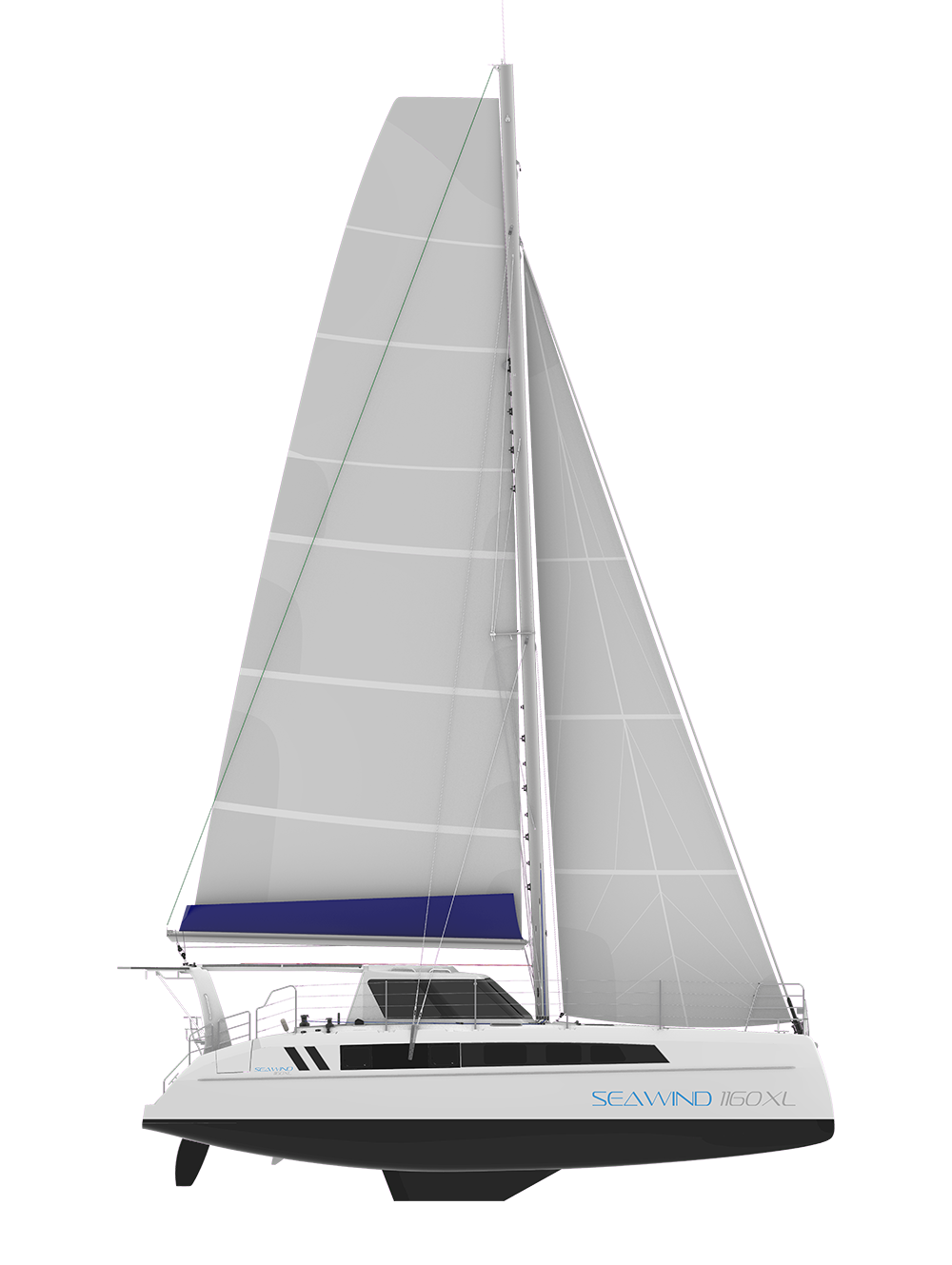
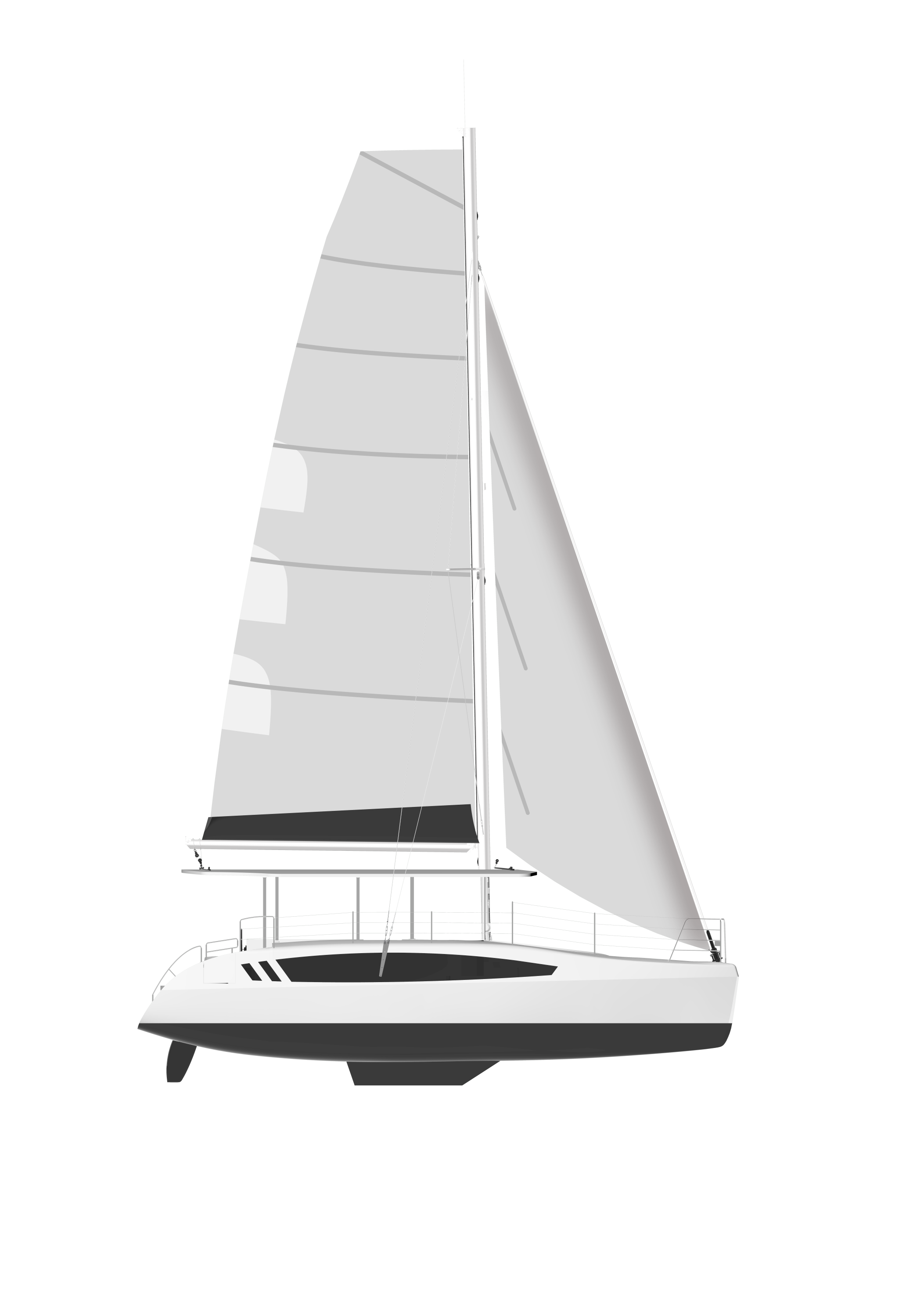


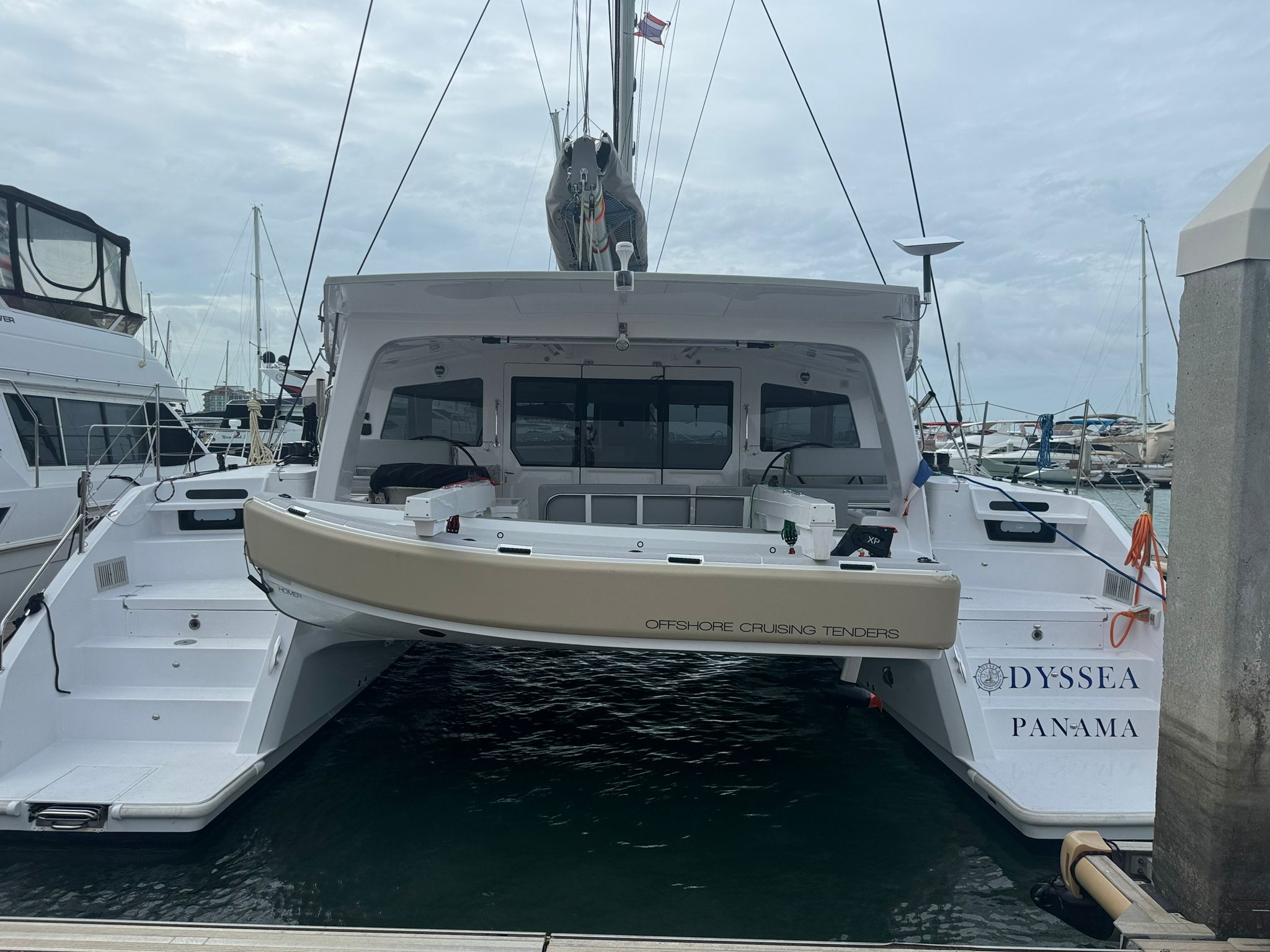
After nearly three years of living full-time aboard their Seawind 1370, Odyssea, Paul and Robin Hooge have sailed thousands of miles through Southeast Asia and into the Mediterranean. Ahead of the Cannes Yachting Festival, they share why Seawind’s safety-first design philosophy has become so important to them and why they describe their 1370 as their “Volvo at sea.”
In March, after more than two of living full-time aboard a Seawind 1370 and sailing thousands of miles throughout Southeast Asia, we relocated to the Mediterranean. Seawind subsequently asked if we would exhibit our boat, Odyssea, at the Cannes Yachting Festival this September.
For us, it’s quite an honor to be asked to show the Multihull of the Year award-winning Seawind 1370 at the world’s largest in-water sailing exhibition, so we agreed.
As the show approaches, we’ve been thinking about how best to honestly convey to a prospective owner why we are genuinely passionate about our Seawind 1370 and why, after living aboard and sailing her extensively, we would have a difficult time considering another catamaran design.
It turns out there are many reasons. But one reason dwarfs them all.
A little background helps explain why.
My wife, Robin, and I, both together and separately, have spent much of our adult lives undertaking less common, sometimes high-risk adventures. Between us, this has included hundreds of self-sufficient trips through more than 100 countries involving mountaineering, sea kayaking, canyoneering, climbing, off-road motorcycling, cycling, long-distance trekking, and ultrarunning distances of 100 miles and beyond.
We’ve given talks about survival and safety strategies to large groups where we reveal ten occasions when we nearly lost our lives and what those experiences taught us. They range from a boulder breaking loose and tearing open my leg during a solo mixed ice climb, forcing me to crawl for nine hours to self-rescue, to serious head injuries and hypothermia.
While we often pursued higher-risk activities, we always maintained an emphasis on safety, and that is a large part of what has allowed us to keep having these adventures.

In 2014, that lesson became even more personal.
While completely stopped in traffic, we were struck from behind by a tractor-trailer traveling approximately 50 miles per hour. Among other injuries, Robin suffered a severe head injury that took years to recover from.
When it came time to choose another car, one criterion overwhelmed everything else. We wanted the safest vehicle we could reasonably buy. We chose a Volvo.
Volvo has spent decades making safety fundamental to the way it designs automobiles. The company pioneered or helped advance innovations ranging from the safety cage and laminated windshields to perhaps its most famous contribution, the modern three-point seat belt.
But what makes a Volvo a Volvo isn’t a list of individual safety features. It is that safety influences the architecture of the entire vehicle. It isn’t something added after the car has been designed. It is part of the philosophy that determines how the car is designed in the first place.
What does any of this have to do with Seawind and sailing?
It turns out, everything.
In 2022, we decided we were going to live full-time aboard a sailing catamaran and sail the world. We knew we were undertaking another adventure with potentially serious consequences. So, just as we had done with our car, we went looking for something designed with safety as a fundamental priority.
That search led us to Seawind.
In 1982, Richard Ward founded Seawind Catamarans in Sydney with the idea that a cruising catamaran should be a sailing boat first. His “outside-in” philosophy meant first designing a boat to be safe, seaworthy, manageable, and capable offshore, and then designing the accommodations around those requirements.
Safety at sea became part of the Seawind DNA.
Seawind’s motto is “Cruising Catamarans for Real Sailors.” Ward emphasized protected helm positions, excellent visibility, simple and redundant systems, strong construction, manageable sail handling, and genuine sailing performance. The goal wasn’t simply to build the most luxurious catamaran possible. It was to build a boat that remained manageable, even short-handed, when conditions deteriorated.
Seawind turned out to be our Volvo.
After thousands of miles aboard our 1370, we’ve come to appreciate how many seemingly small design decisions contribute to that philosophy.
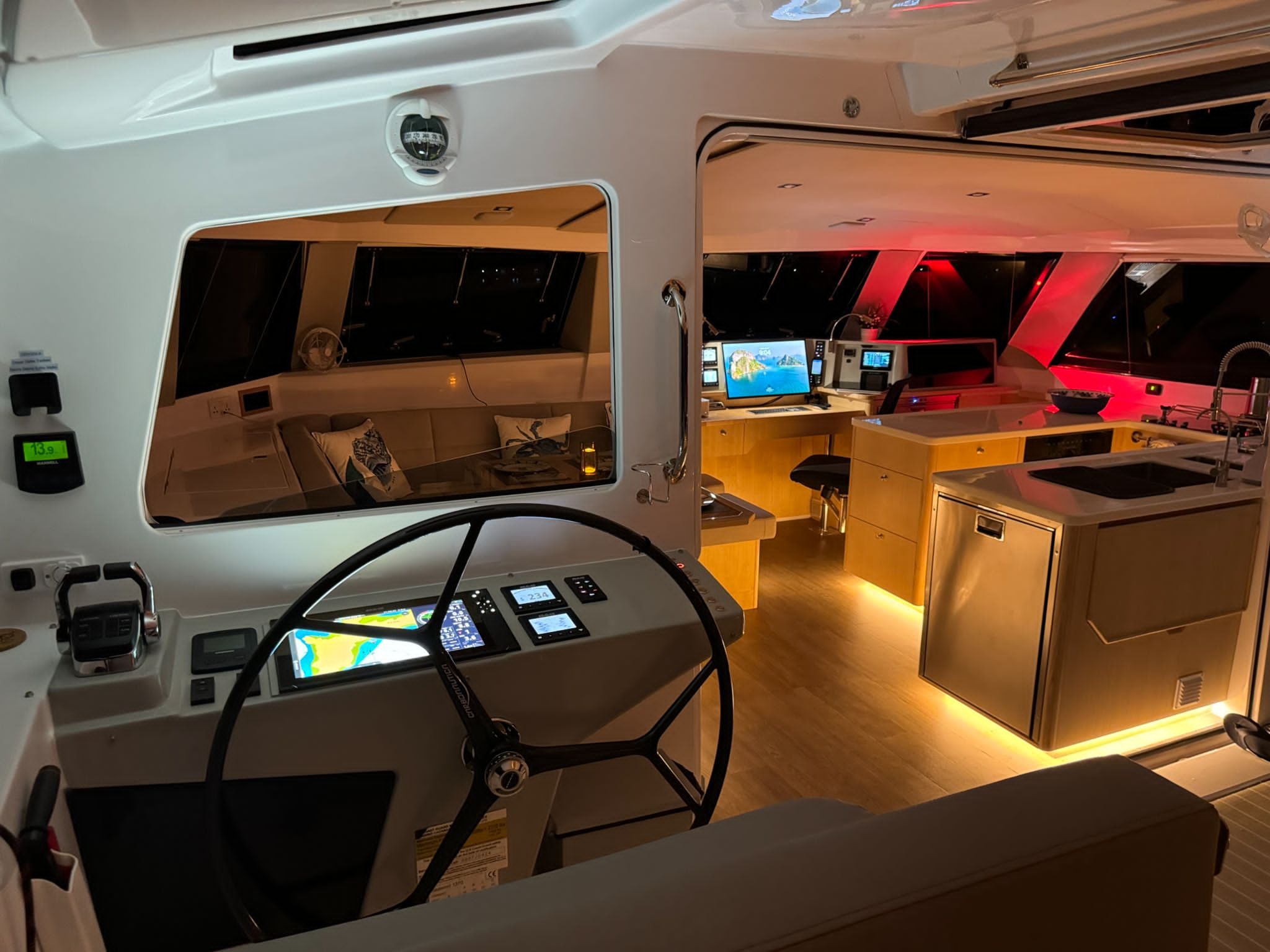
The twin protected helms provide exceptional visibility while allowing the helmsman to move between them as weather, sun, wind, and sea conditions change. Everyone remains together in the cockpit rather than having the person at the helm isolated on a flybridge or a helm exposed to the conditions in front of the transom when something goes wrong.
Protection from wind, spray, rain, and the elements isn’t simply about comfort offshore. It reduces fatigue and exposure. The cockpit itself provides a protected working environment that you physically have to step out of to go on deck. Halyards, sheets, reefing controls, and routine sail handling can all be managed from that protected cockpit.
And then there is performance.
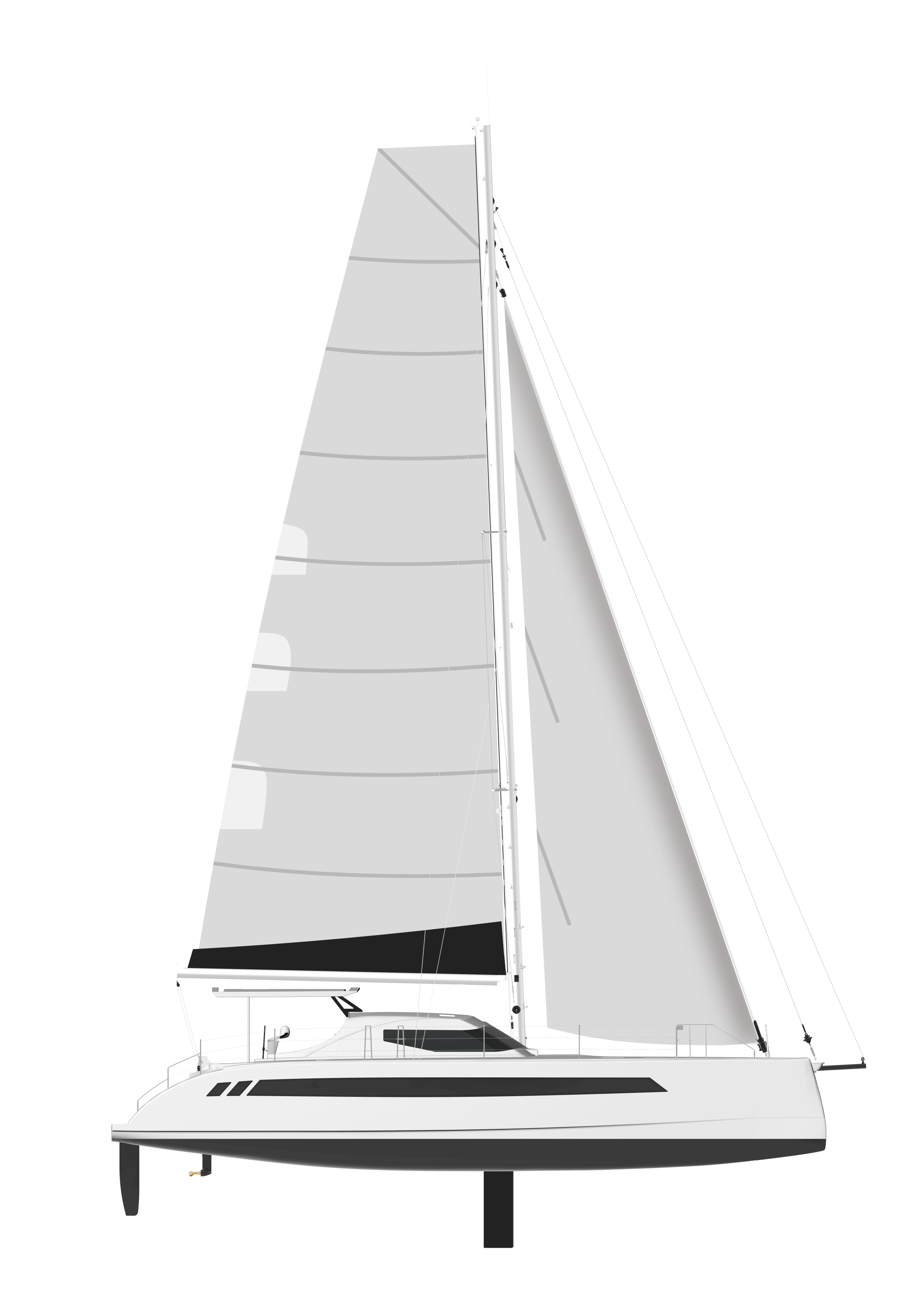
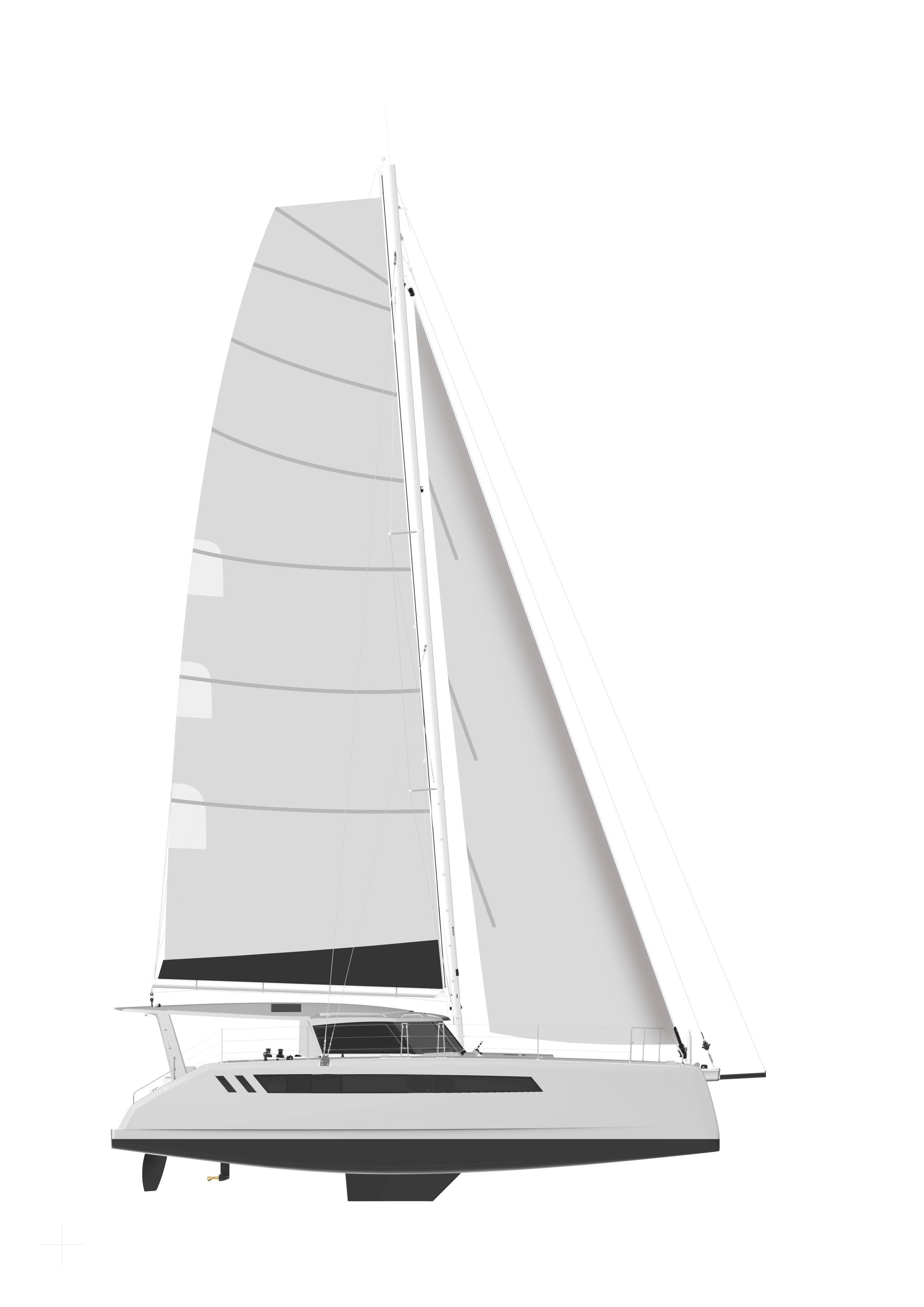
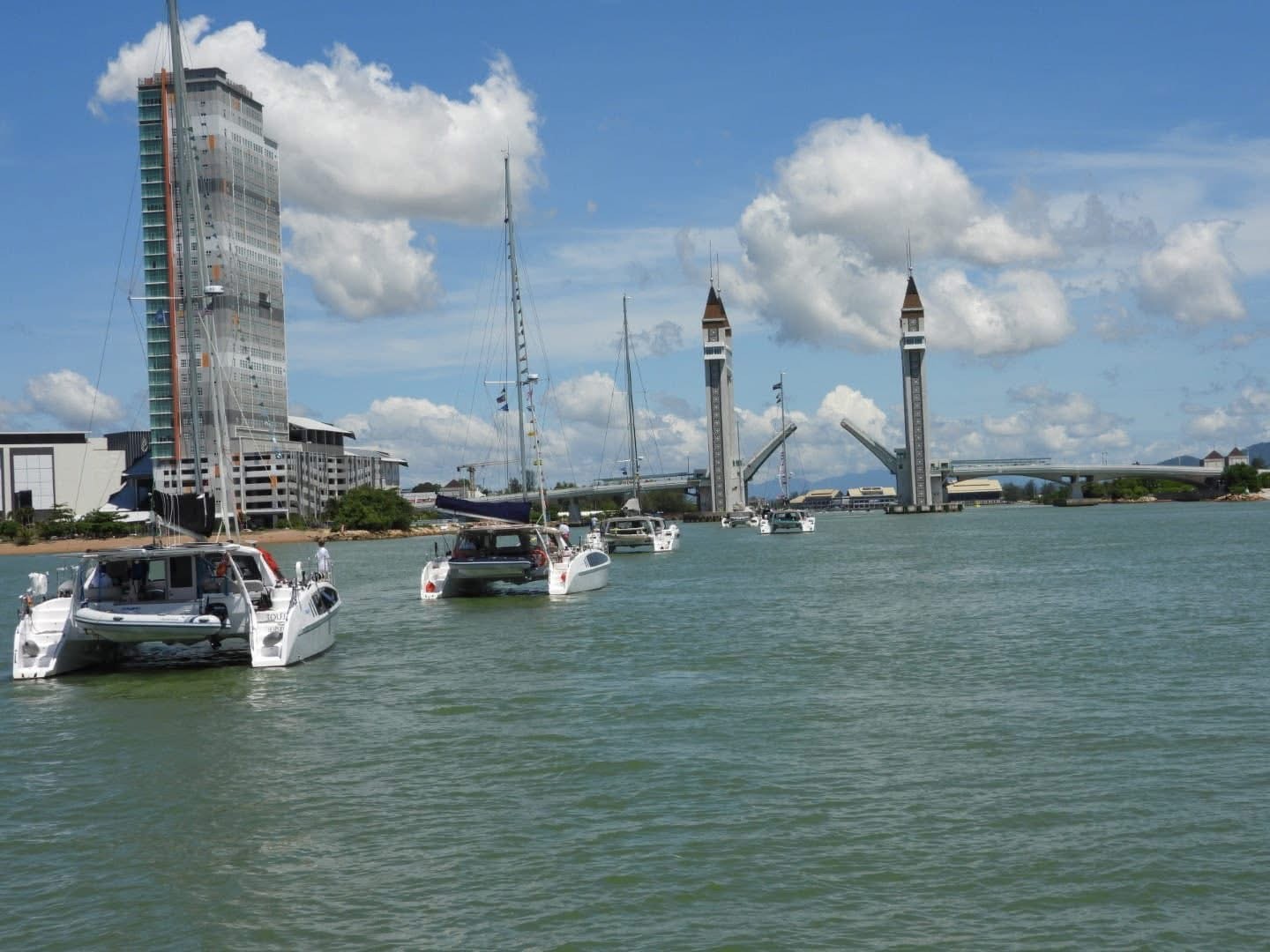
Performance isn’t just about getting somewhere faster. Offshore, performance is a safety feature. High bridgedeck clearance, relatively light displacement, fine hulls, and an efficient sail plan allow the boat to sail well when conditions become difficult and give the skipper more options for dealing with weather rather than simply enduring it.
That’s where the Volvo comparison really fits.
Neither Volvo nor Seawind approaches safety as something that can be reduced to a checklist of features. Safety is built into the architecture. It affects where you sit, what you can see, how you operate the machine, how protected you are, how easily you can control it when conditions deteriorate, and ultimately how it behaves when you need it most.
Taken individually, none of these features tells the entire story. Together, they create something that is difficult to appreciate from a brochure or a walk-through at a boat show.
You begin to understand it after living with the boat offshore. Seawind owners will often tell you that once you understand and experience these features, it’s difficult to consider anything else.
After nearly three years of full-time living aboard a 1370, we’ve encountered plenty of challenges. In every instance, the 1370 has risen to them. In the end, we didn’t just get the safety-focused catamaran we were looking for. We got a boat that is remarkably easy and comfortable to sail, delivers excellent performance, and still provides the beautifully appointed home we wanted to live aboard.
We don’t work for Seawind, and we don’t receive perks for saying any of this. We’re simply owners who have put a lot of miles beneath the keels and have become genuinely passionate about our boat.
If you’re considering a Seawind, or simply wondering why its owners tend to be so enthusiastic about them, come aboard Odyssea at the Cannes Yachting Festival.
Robin and I will be there, and we’ll be happy to tell you what nearly three years and thousands of miles aboard a Seawind 1370 have taught us.
Meet Seawind at Cannes
Come aboard Odyssea and discover the Seawind 1370 through the experience of the owners who live and sail aboard her.