

NO REGRETS - A 440-Mile Journey to Safety After a Lightning Strike
Discover our product
Sail Area
144.5 sqm
Overall Length
52' 8" / 16.1 m
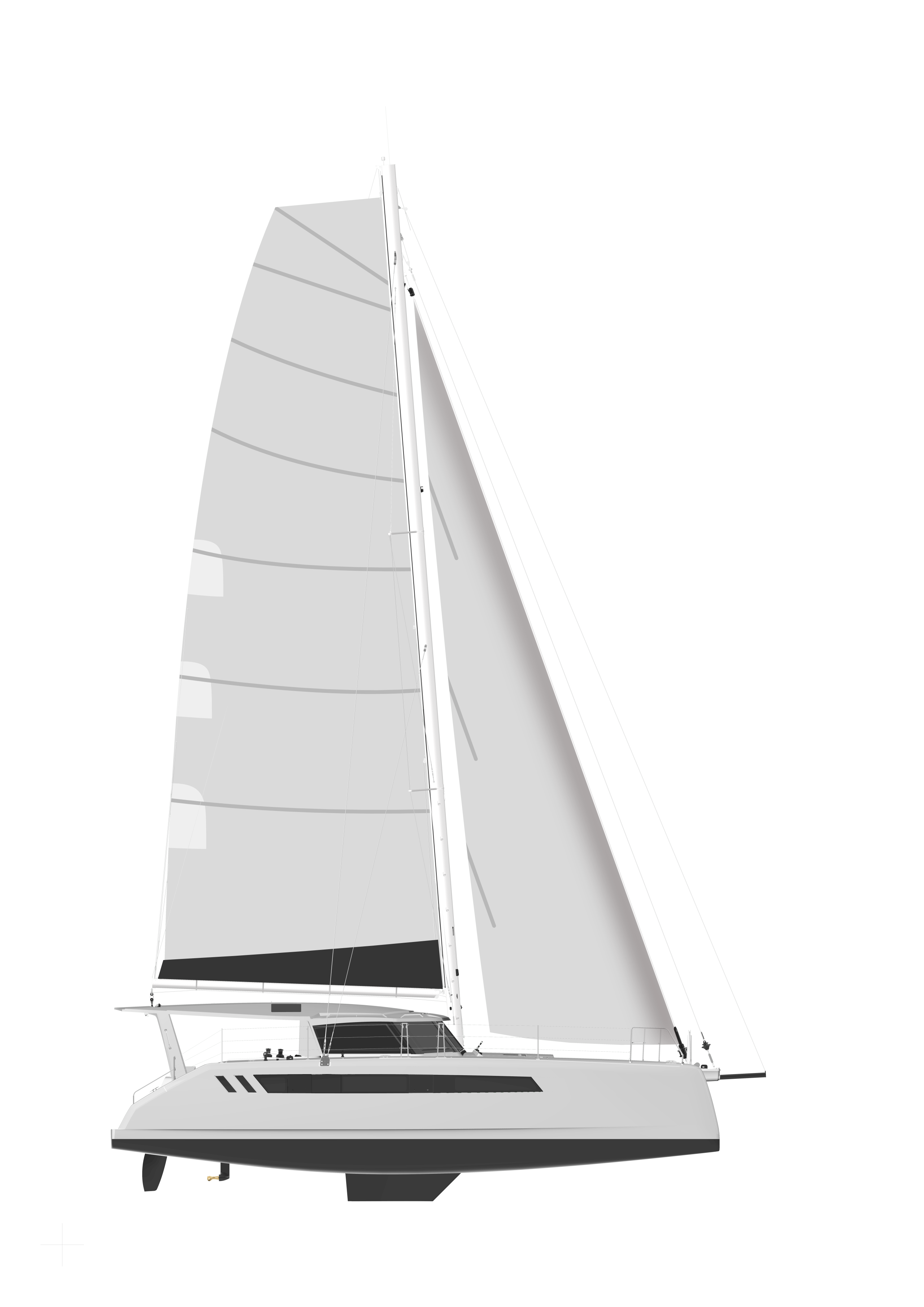
Sail Area
116 sqm
Overall Length
45' / 13.7 m
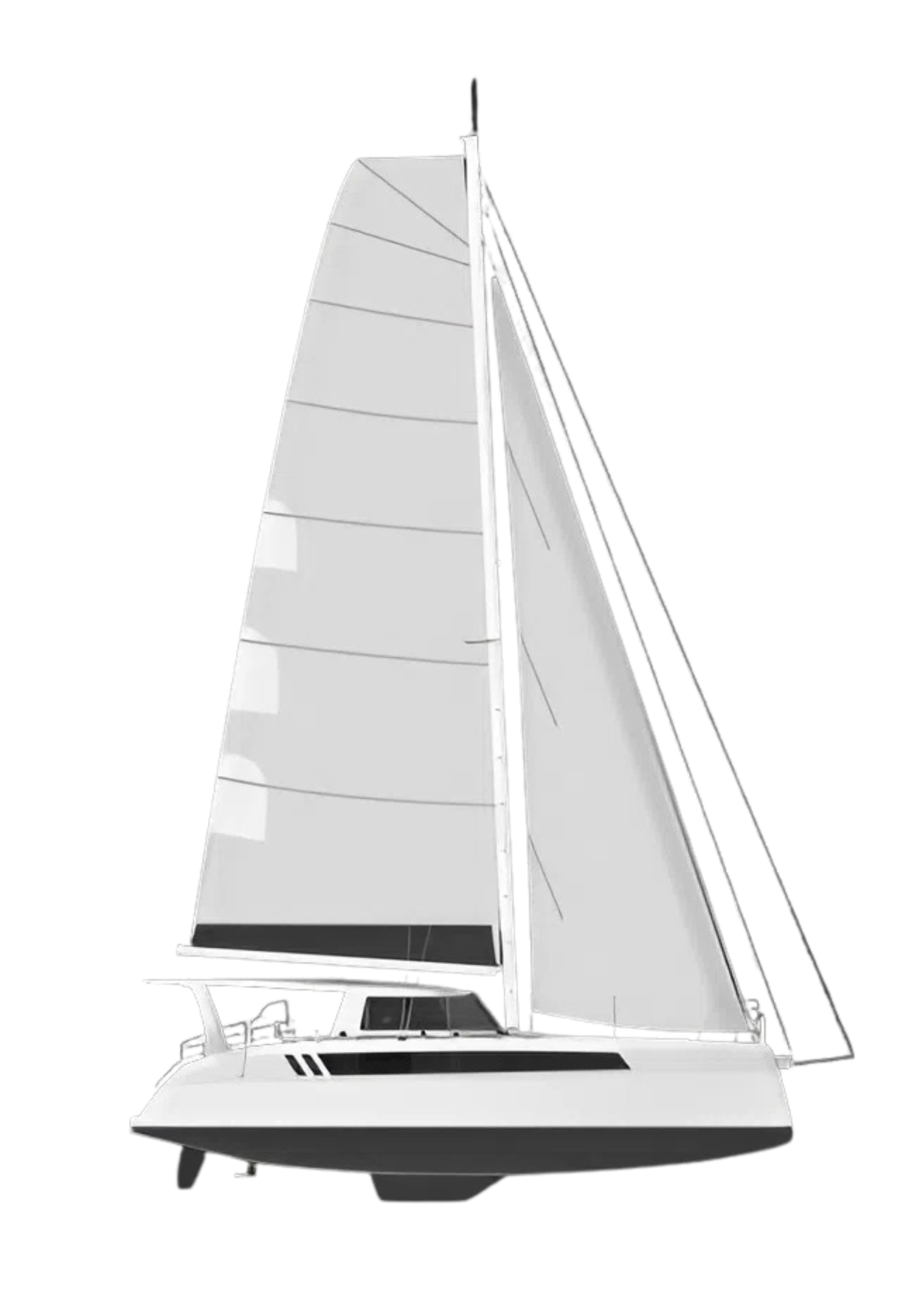 NEW CATAMARAN
Sail Area
103.8 sqm
Overall Length
42' / 12.83 m
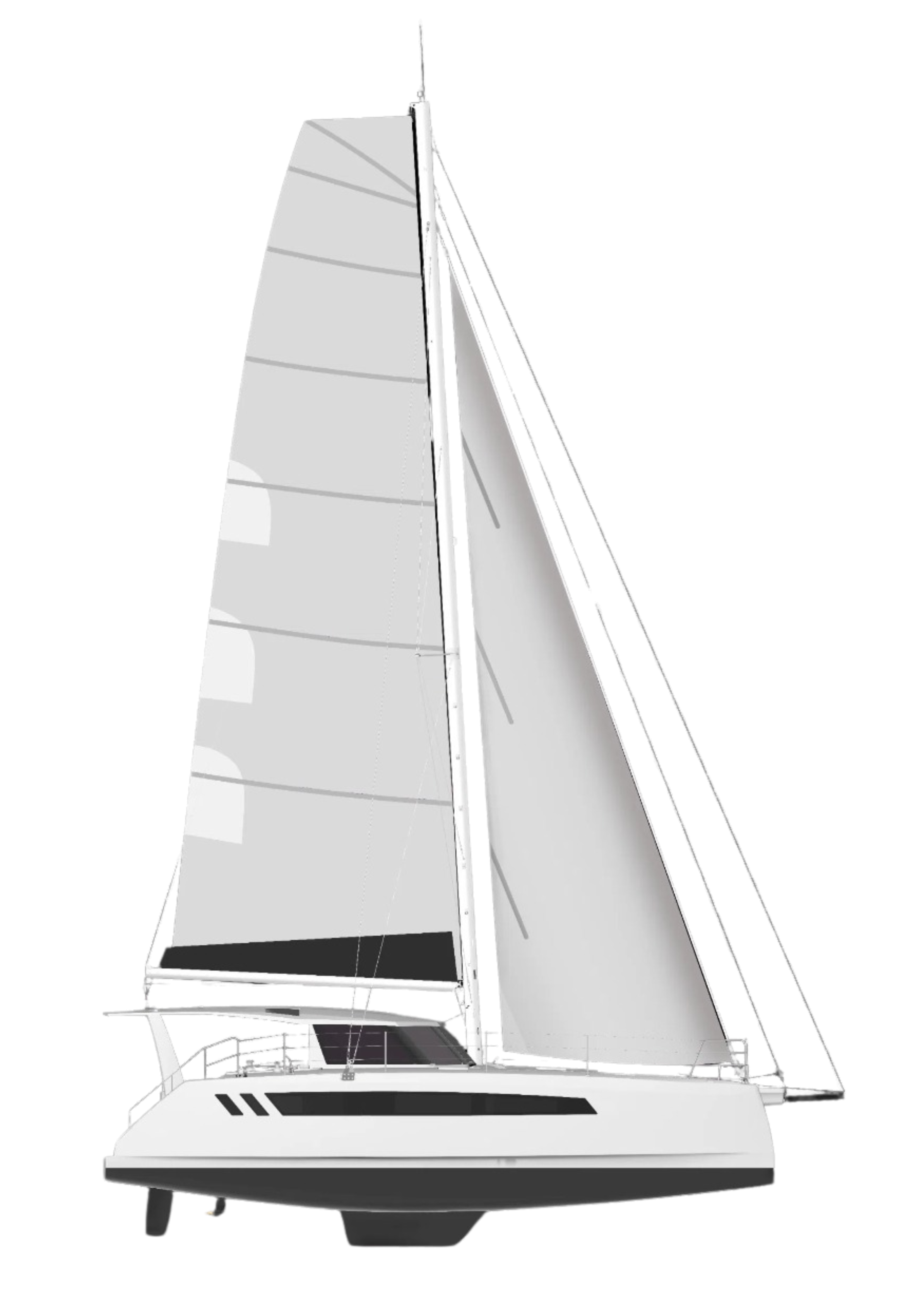
Sail Area
89.4 sqm
Overall Length
39' 3" / 11.9 m
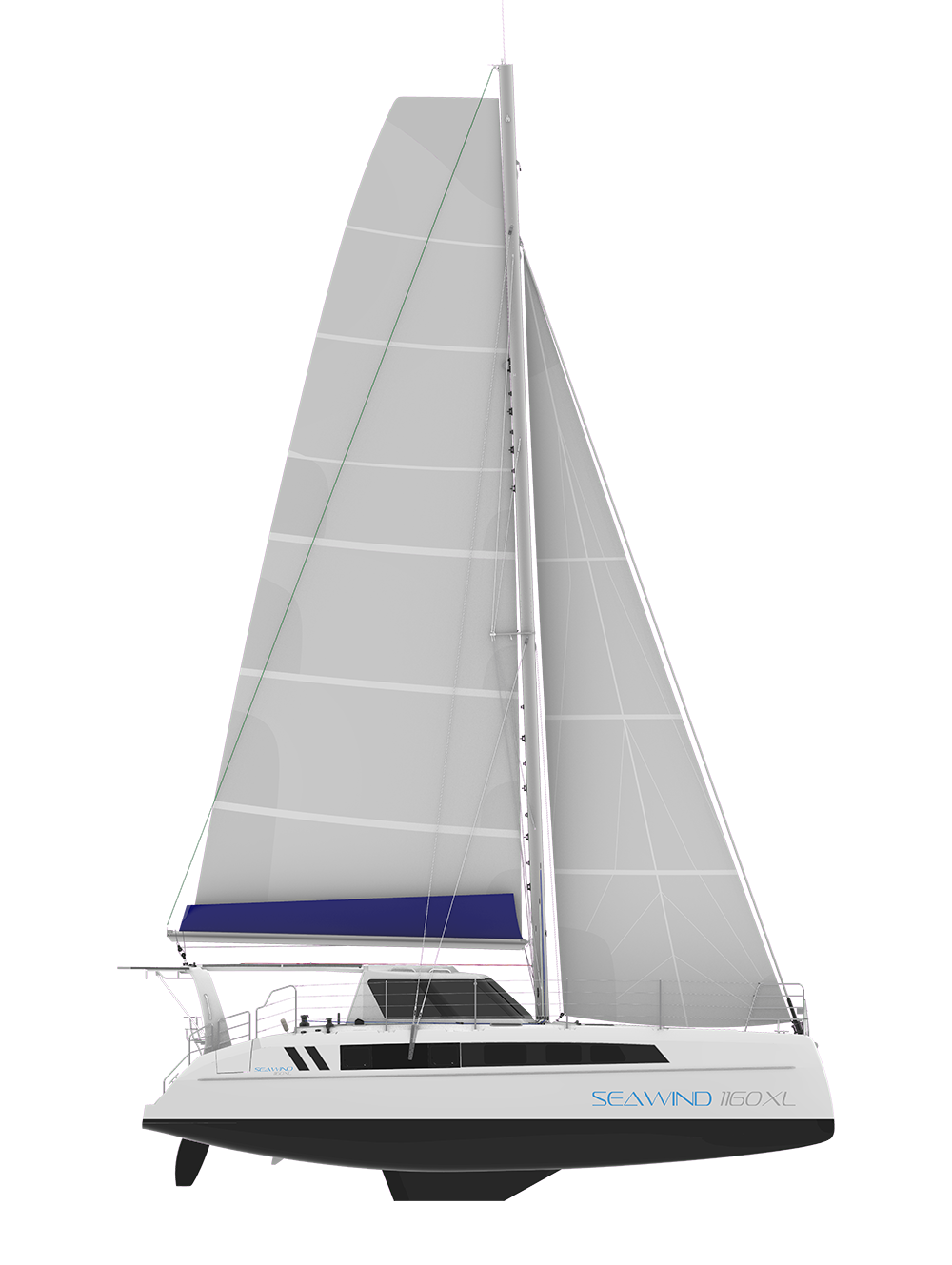 NEW CATAMARAN
Sail Area
87 sqm
Overall Length
38' 10" / 11.83 m
Sail Area
69.3 sqm
Overall Length
38' / 11.6 m
Come aboard our incredible trimaran and set sail for thrilling sea adventures that will create unforgettable memories
Explore our Trimarans
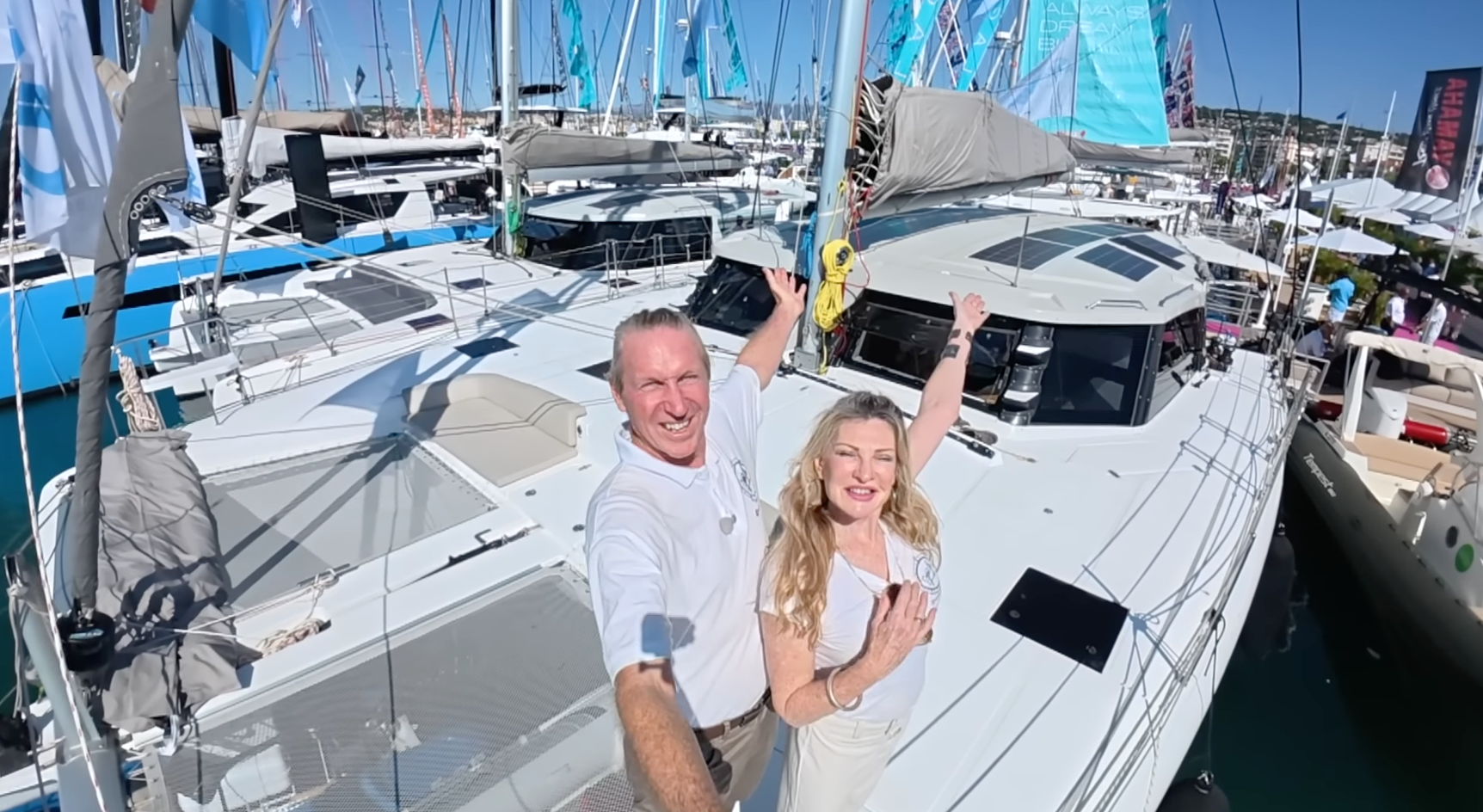
At the Cannes Boat Show, John and Ellie – a couple preparing to move aboard full time, not just go out on weekend charters – stepped onto the Seawind 1370. Their impression was direct and consistent: this is a catamaran built to go further, stay out longer, and be confidently managed by just two people.
Built for real passagemaking
In their view, the Seawind 1370 sits in the “sweet spot.” It offers more volume and bluewater range than a typical 40–42 ft platform, but it’s still manageable for a cruising couple to handle themselves. In other words, this is the size where long-term cruising stops being a plan and becomes something you can actually start – without bringing on hired crew.
Designed for owners
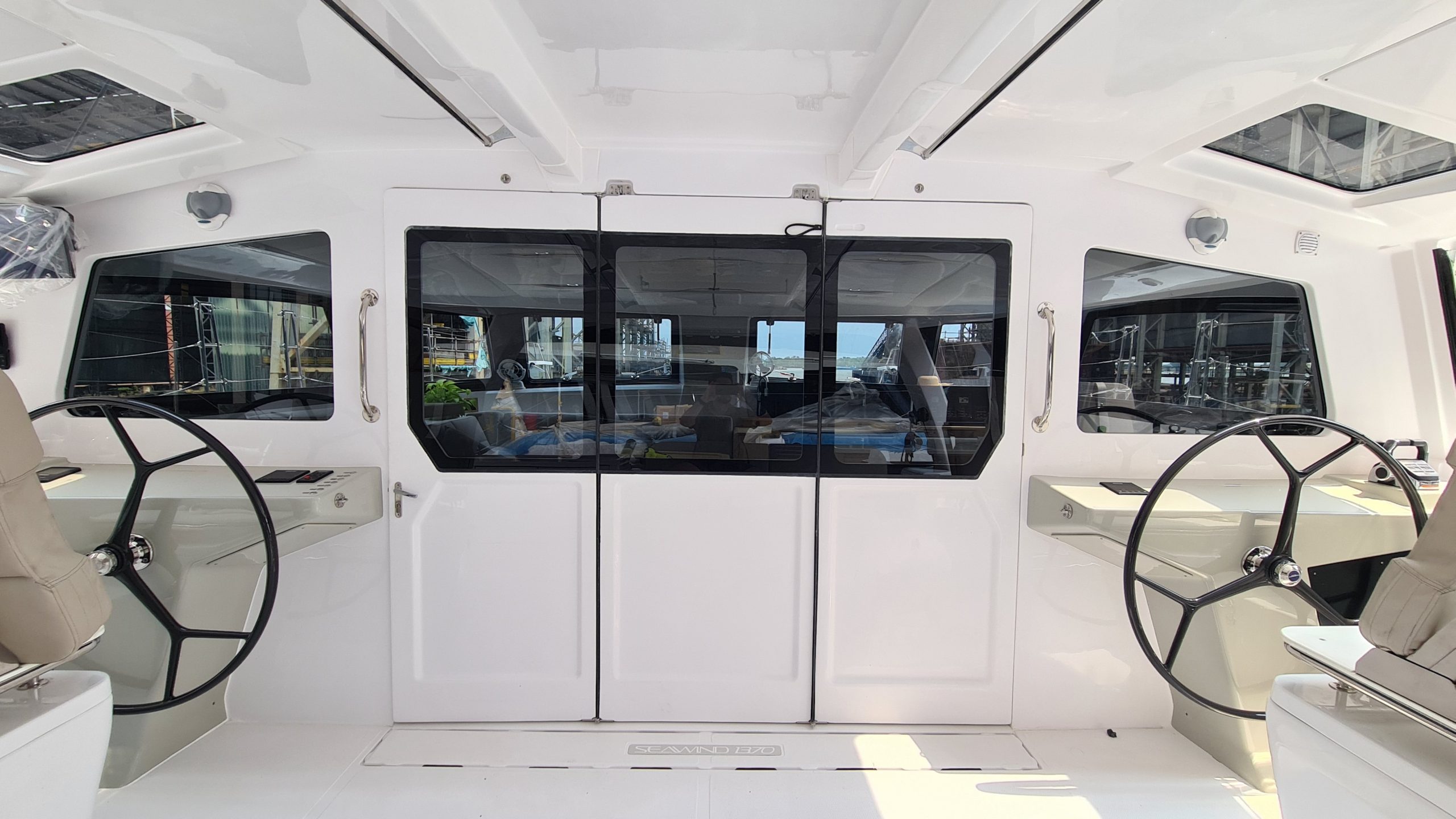
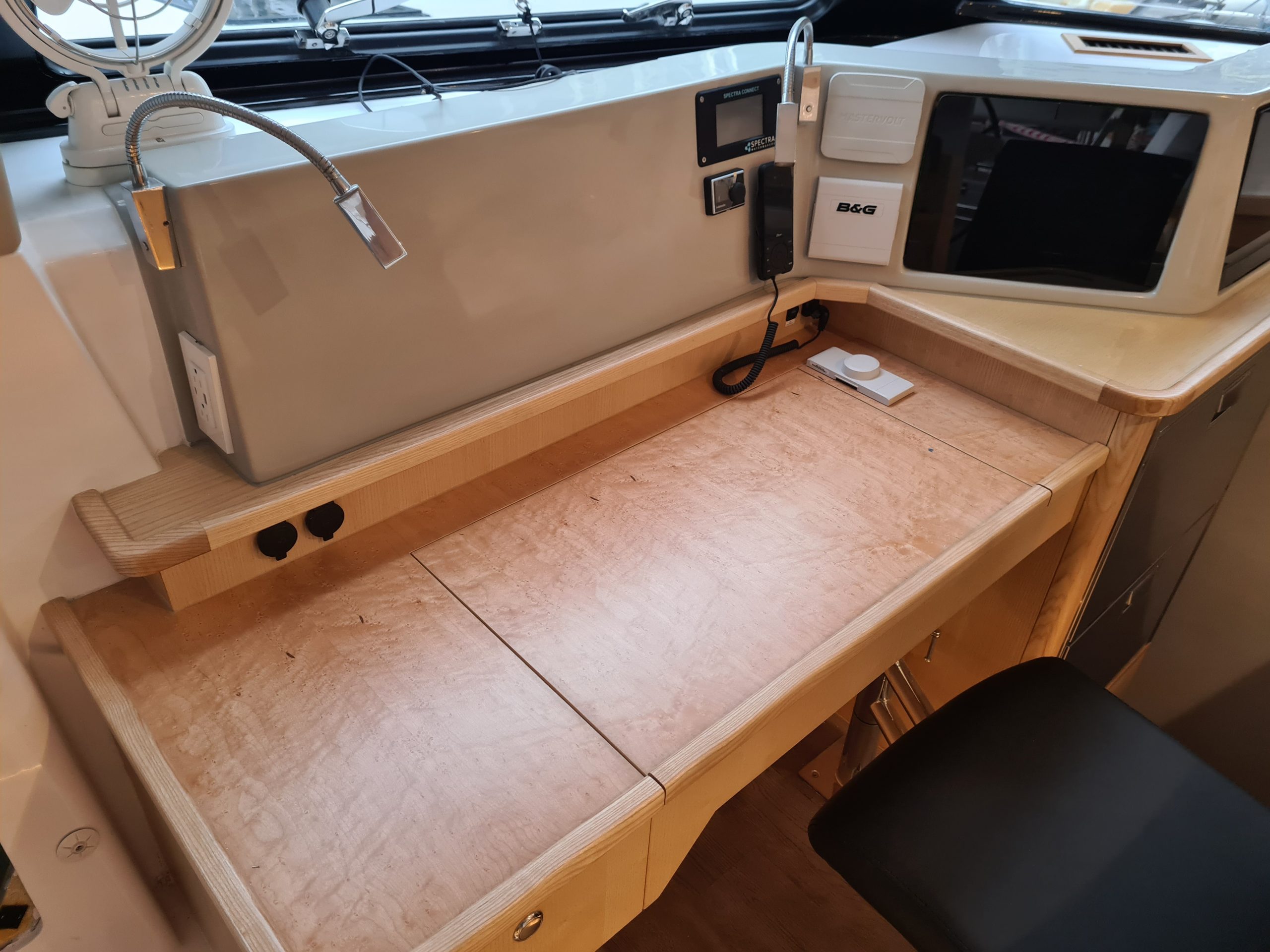
What stood out most to them was the helm and control environment. The 1370 features twin helms that are set low, fully protected, and on the same level as the saloon. That means:
For them, that setup delivers real confidence and peace of mind when it’s just the two of them offshore.
A living space that adapts to the weather
They also highlighted the signature Seawind tri-fold door at the back of the saloon. When it’s open, the saloon and cockpit merge into a single social area that feels like home.
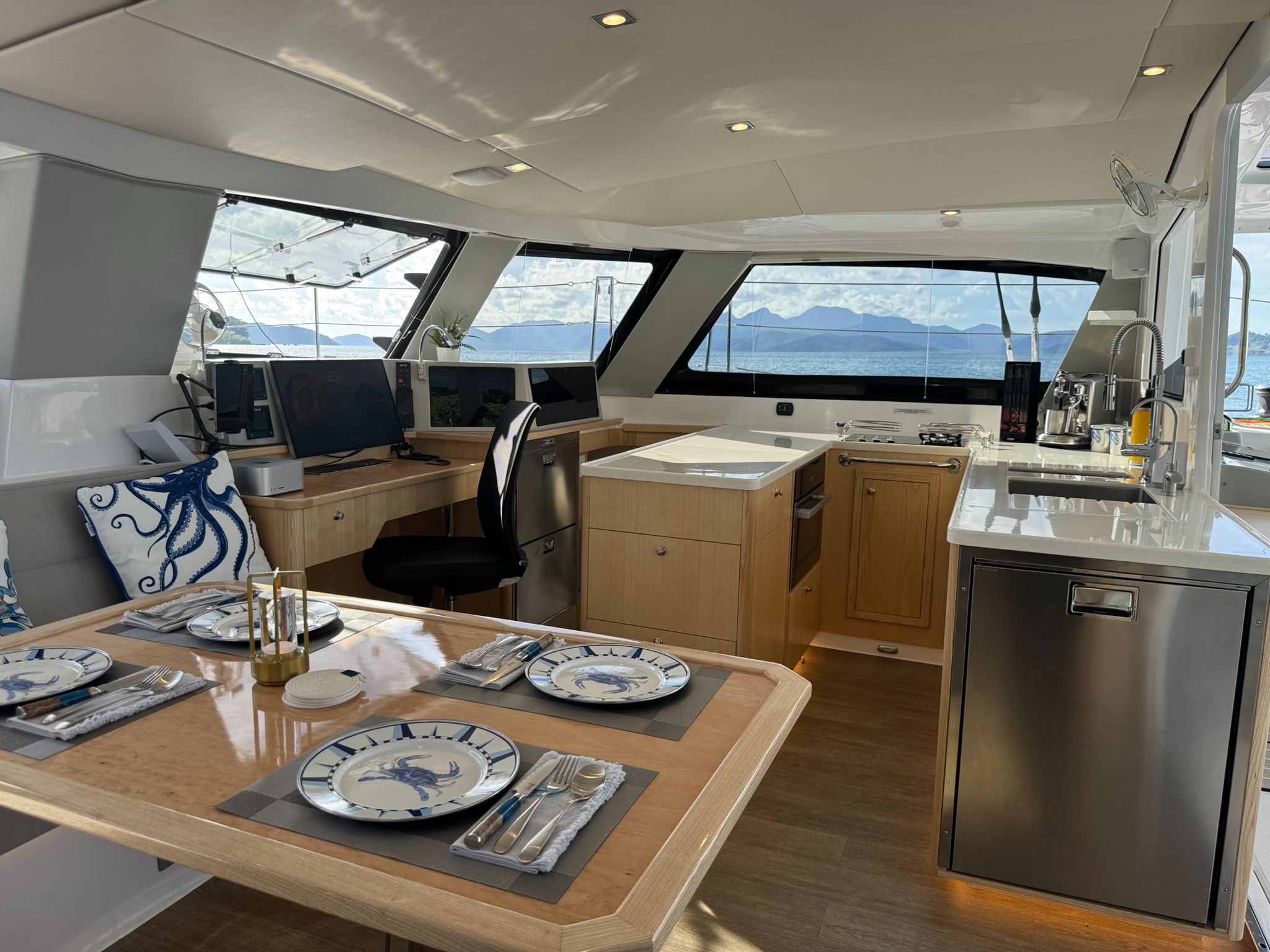
When the weather turns, that same space can be closed quickly to create a dry, protected interior – and the boat keeps moving. For them, that was the difference between “a boat that photographs well at the dock” and “a boat you can actually live on at sea.”
The owner’s hull: made for real life on board
On the Seawind 1370, the entire port hull is dedicated to the owner. John and Ellie described it as a space you could genuinely live in for months at a time:
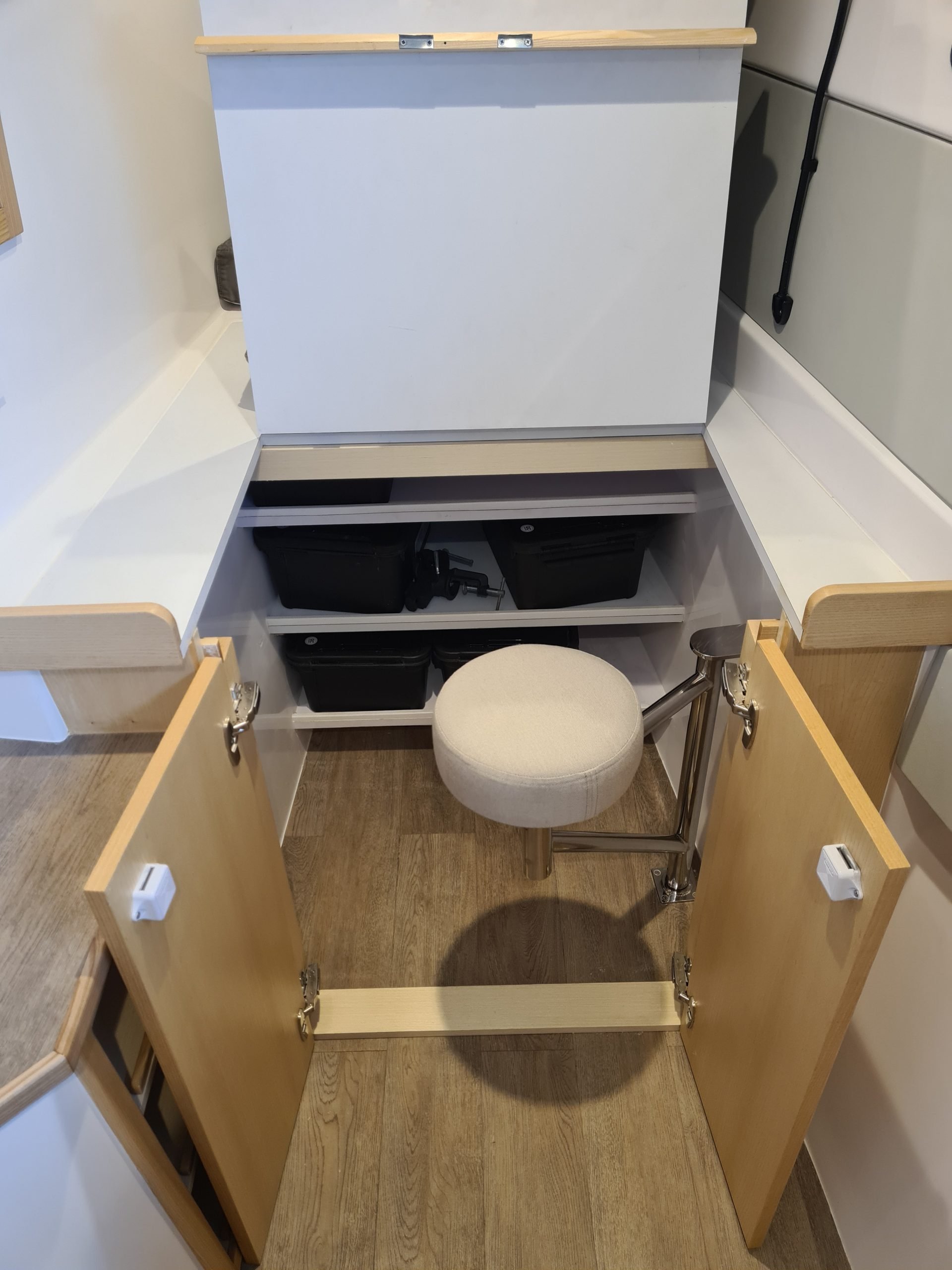
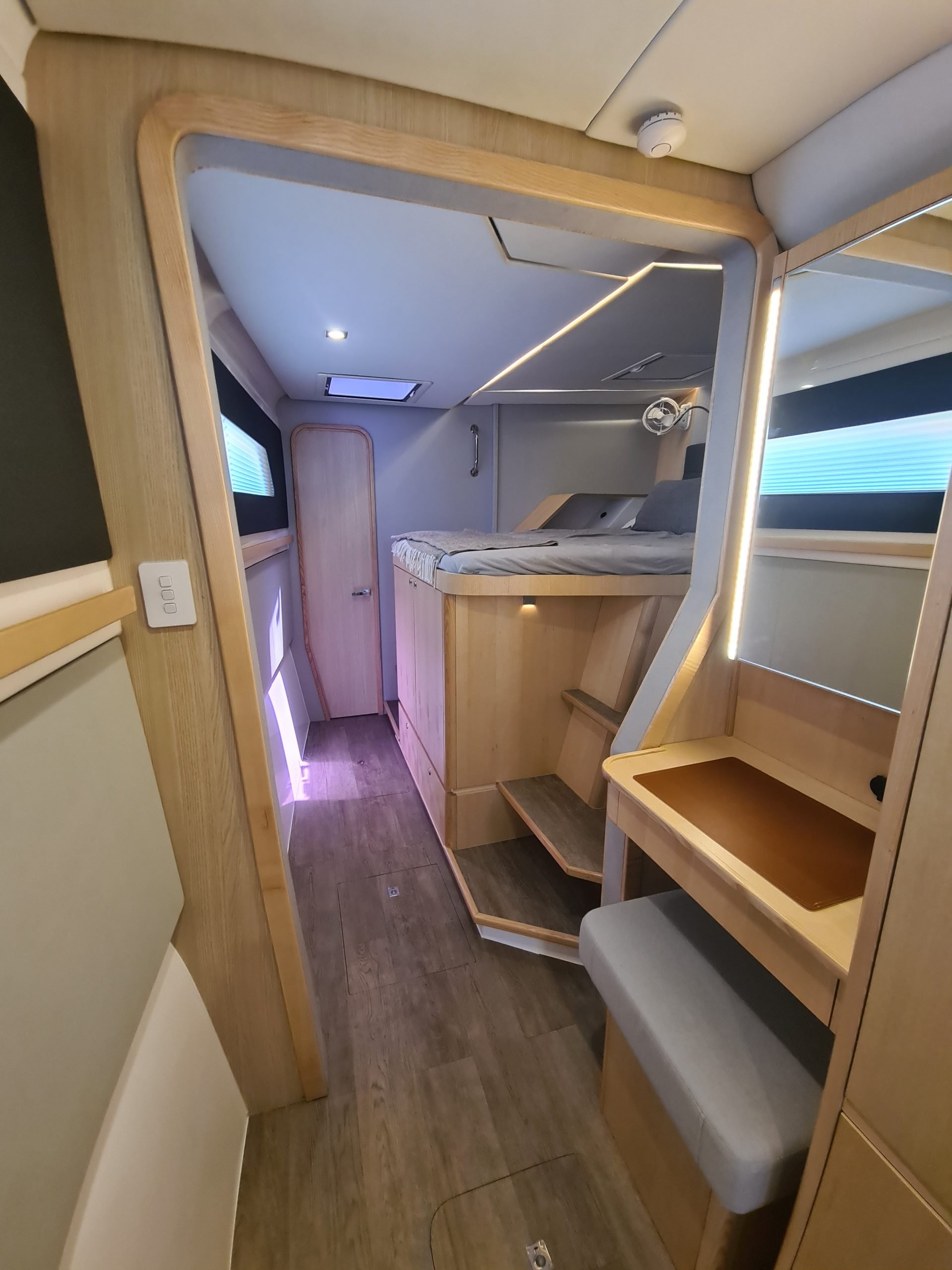
They also called out two details: the handcrafted timber joinery, which gives the interior warmth and quality, and the 24V DC air-conditioning system, which can cool the cabin overnight without running a generator. For anyone living aboard, that’s comfort you can depend on.
Practical utility space for self-sufficient cruising
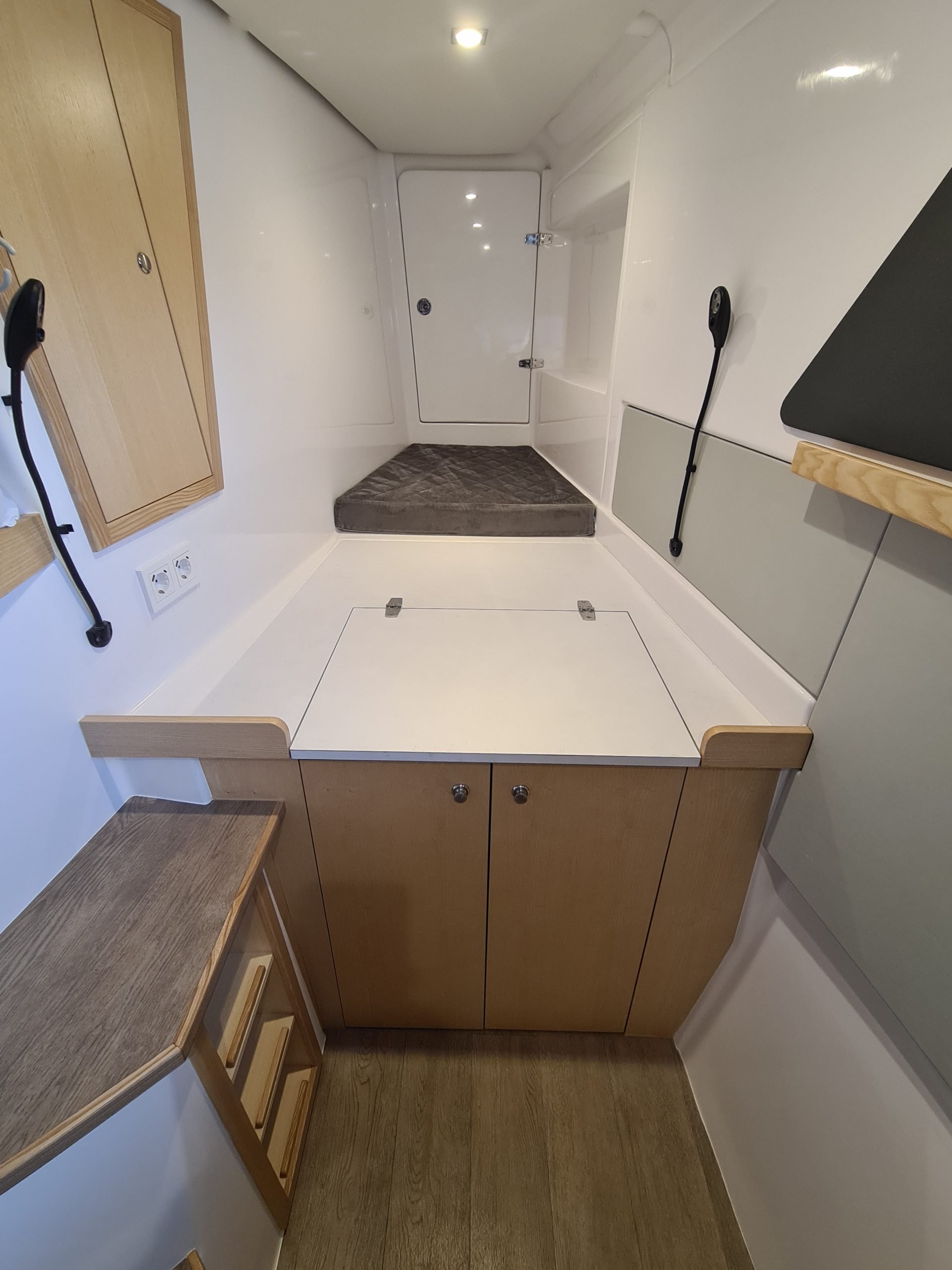
Rather than forcing extra mirrored cabins just to increase the cabin count, the starboard side of the boat can be configured as a true utility space. For long-term cruisers, that matters.
That area can carry tools, spares, emergency gear – even a compact washing machine – while guests still have a forward cabin. Their read was simple: this is the moment you understand the boat was designed for self-sufficient passagemaking, not just charter rotation.
Systems built for extended time away from the dock
They were especially impressed by the navigation and systems setup on the boat they toured: a large central plotter with a secondary display, autopilot controls available from a protected watch station inside, digital switching, watermaker, diesel heating.
In plain terms, that means you can stand watch comfortably from inside at night or in bad weather, instead of sitting outside in wind and spray.
This particular boat was also equipped with rig load sensors, giving live data on rig tension and helping the crew know exactly when to reef. Combined with solar, high-output alternators, and an integrated rainwater capture system on the coachroof, the 1370 is clearly set up to reduce marina dependency and extend your time offshore.
Real-world performance
From existing Seawind 1370 owners, they were given real numbers:
To them, this is not “floating apartment” performance. This is serious passagemaking speed – fast enough to plan real routes on real timelines.
Cost and fit-out strategy
They were told that pricing typically starts at around USD 820,000 ex-works, with a fully equipped, bluewater-ready cruising spec usually coming in under USD 1.1 million.
Their guidance to future owners was very clear, and it aligns with ours:
The goal is not to build the heaviest version of the boat. The goal is to build the right boat for you.
In summary
From John and Ellie’s perspective, the Seawind 1370 is a boat for people who are genuinely ready to go: two people, long-range cruising, a liveaboard interior that actually feels like home, sustained passage speeds in the 200-nm-per-day class, and the systems to stay independent instead of tied to a dock.
Ready to explore the Seawind 1370 in more detail? Discover on the Seawind 1370