

NO REGRETS - A 440-Mile Journey to Safety After a Lightning Strike
Discover our product
Sail Area
144.5 sqm
Overall Length
52' 8" / 16.1 m
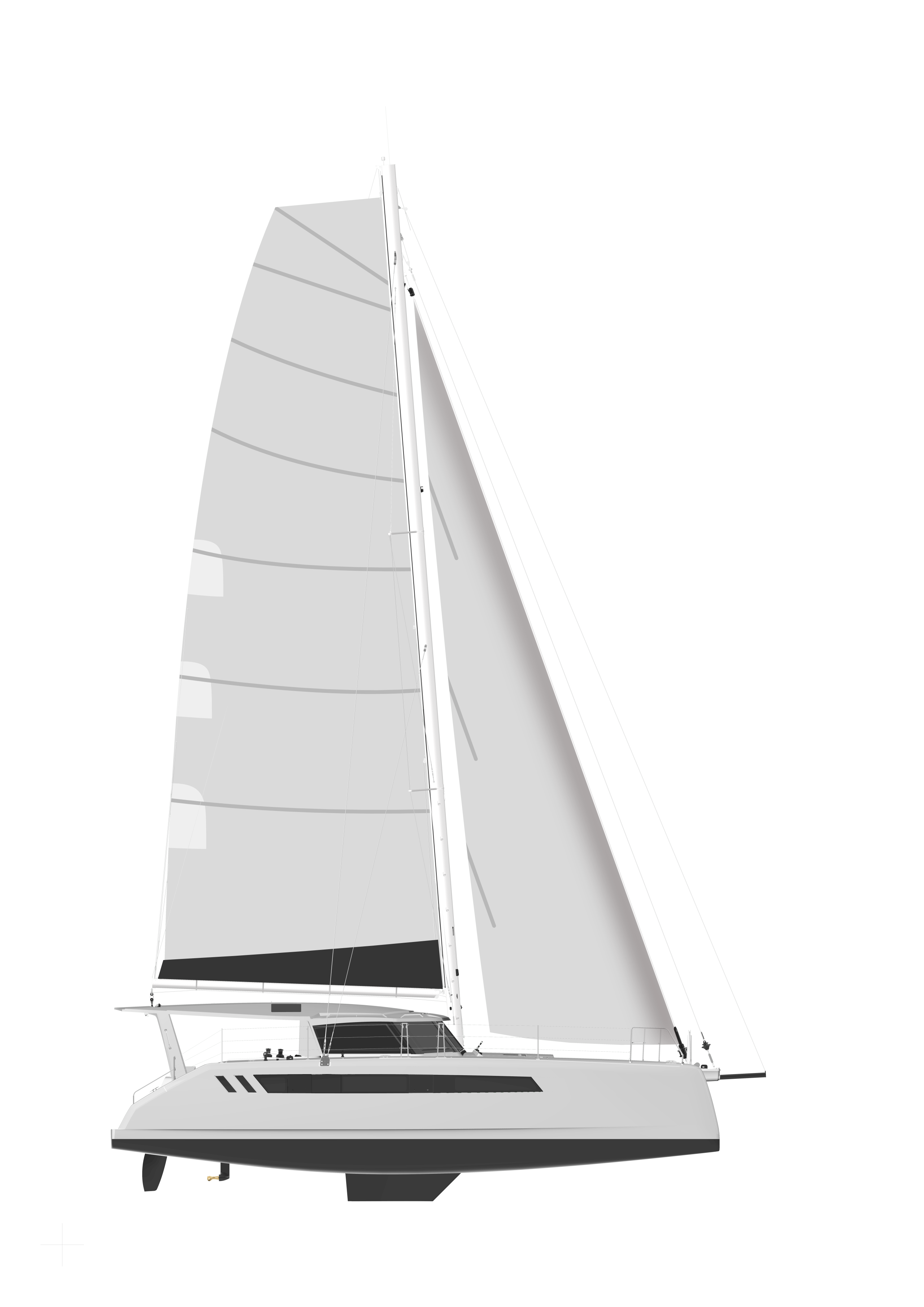
Sail Area
116 sqm
Overall Length
45' / 13.7 m
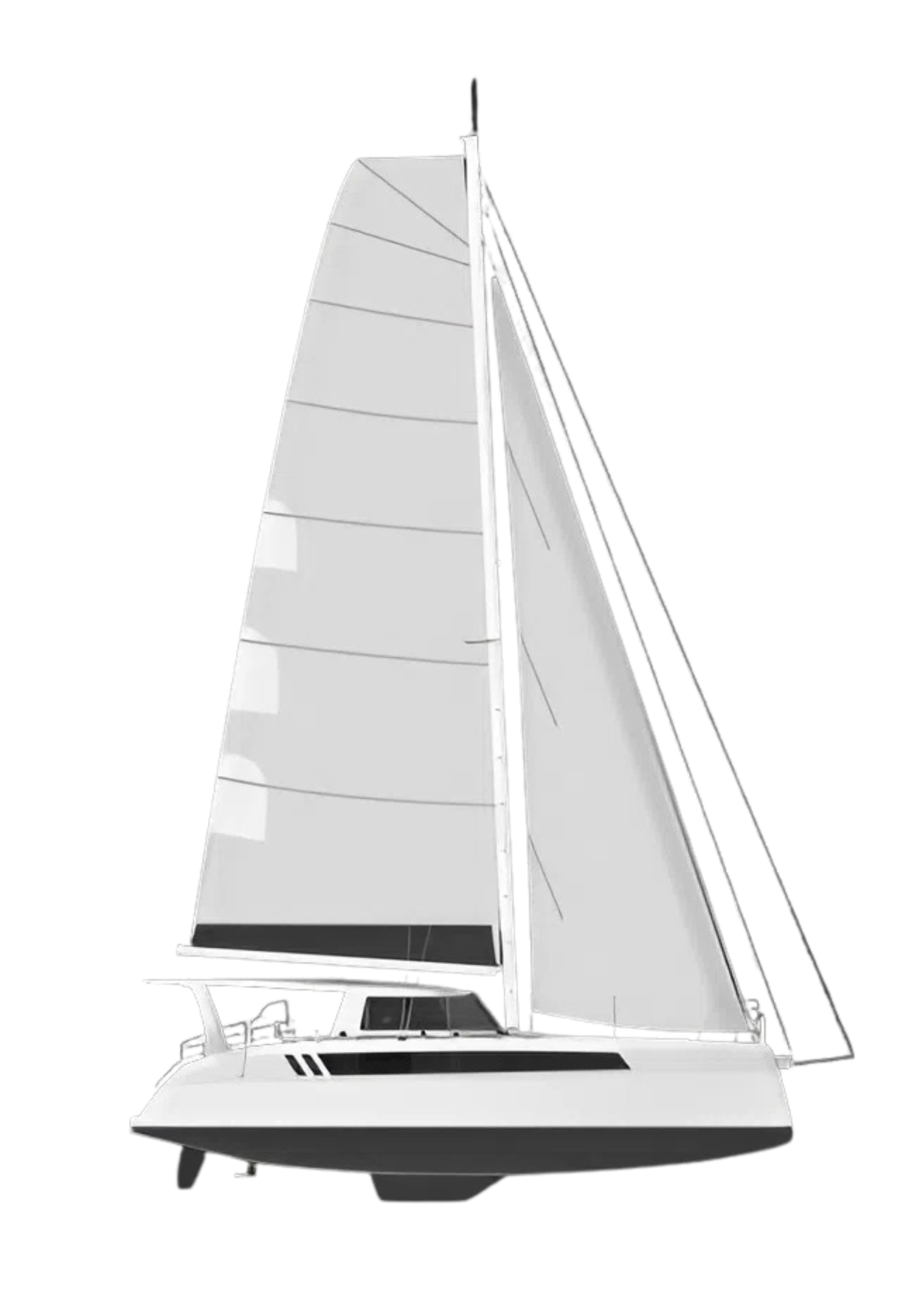 NEW CATAMARAN
Sail Area
103.8 sqm
Overall Length
42' / 12.83 m
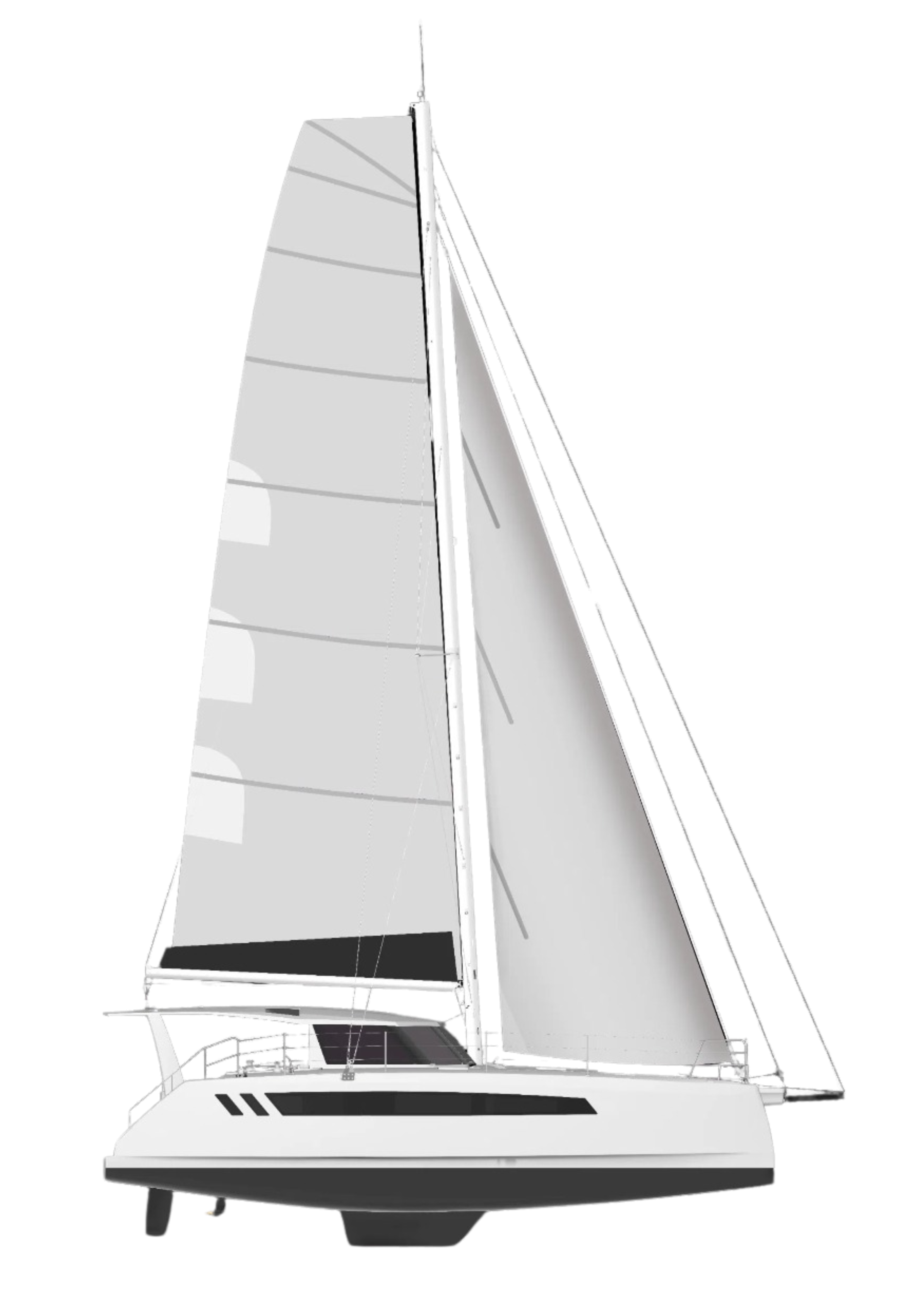
Sail Area
89.4 sqm
Overall Length
39' 3" / 11.9 m
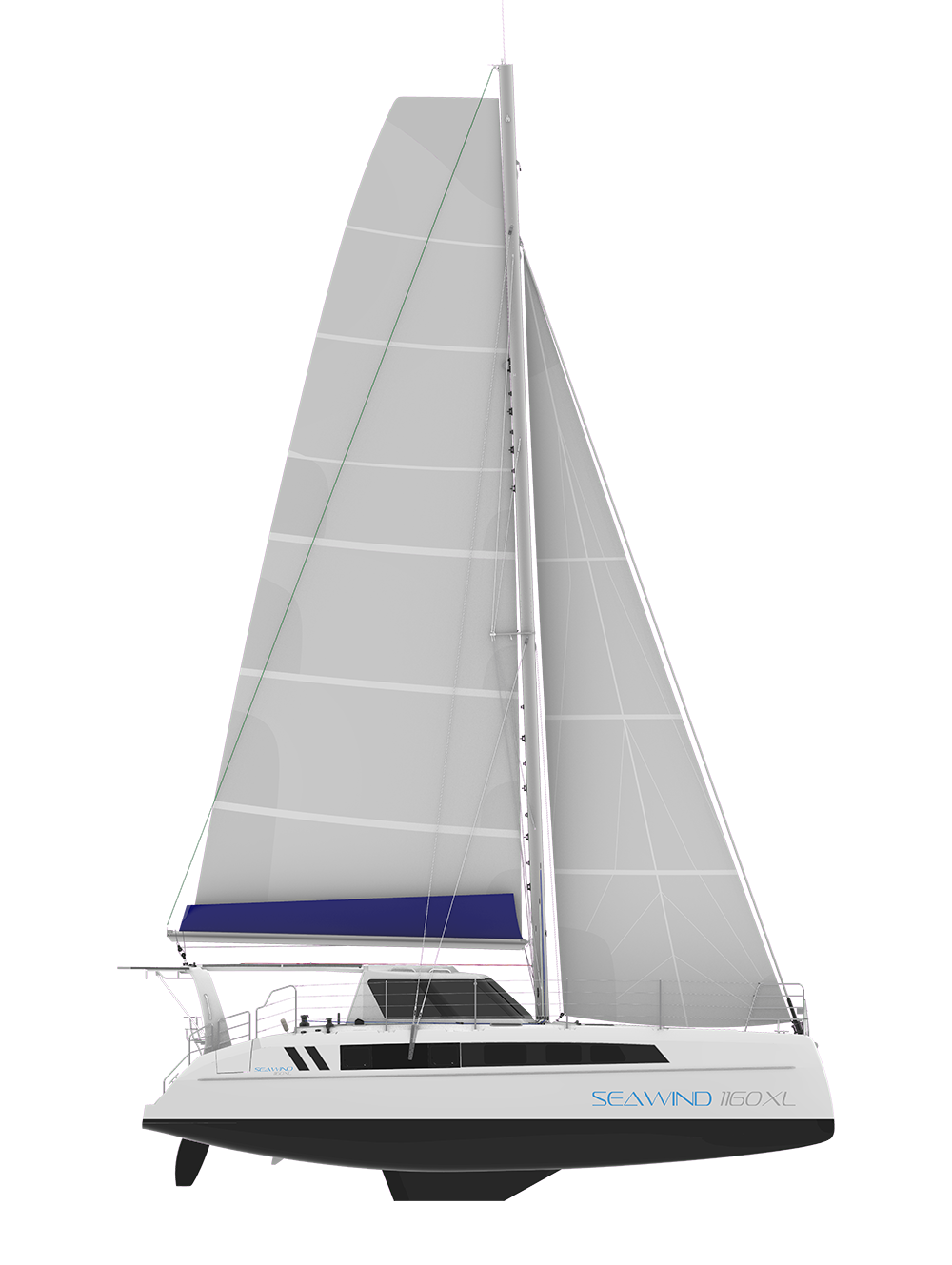 NEW CATAMARAN
Sail Area
87 sqm
Overall Length
38' 10" / 11.83 m
Sail Area
69.3 sqm
Overall Length
38' / 11.6 m
Come aboard our incredible trimaran and set sail for thrilling sea adventures that will create unforgettable memories
Explore our Trimarans
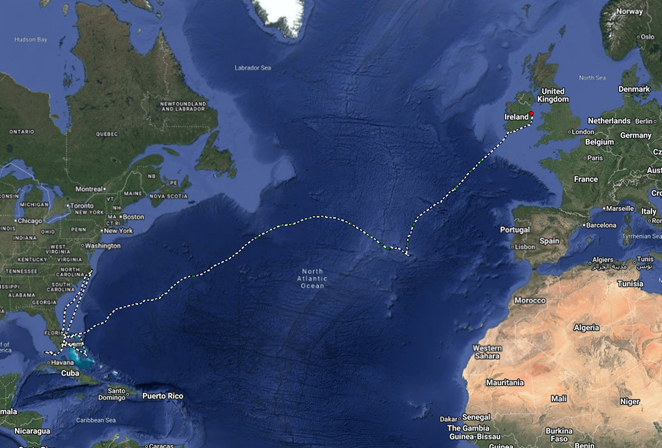
Ever since I was young, I’ve dreamed of crossing the Atlantic Ocean on my own sailboat. What an adventure that would be, following in the wake of the great explorers. Now in my sixties, and I knew if I didn’t go soon, I might never achieve my dream. So last fall, my wife Carolyn and I began to prepare for the trip.
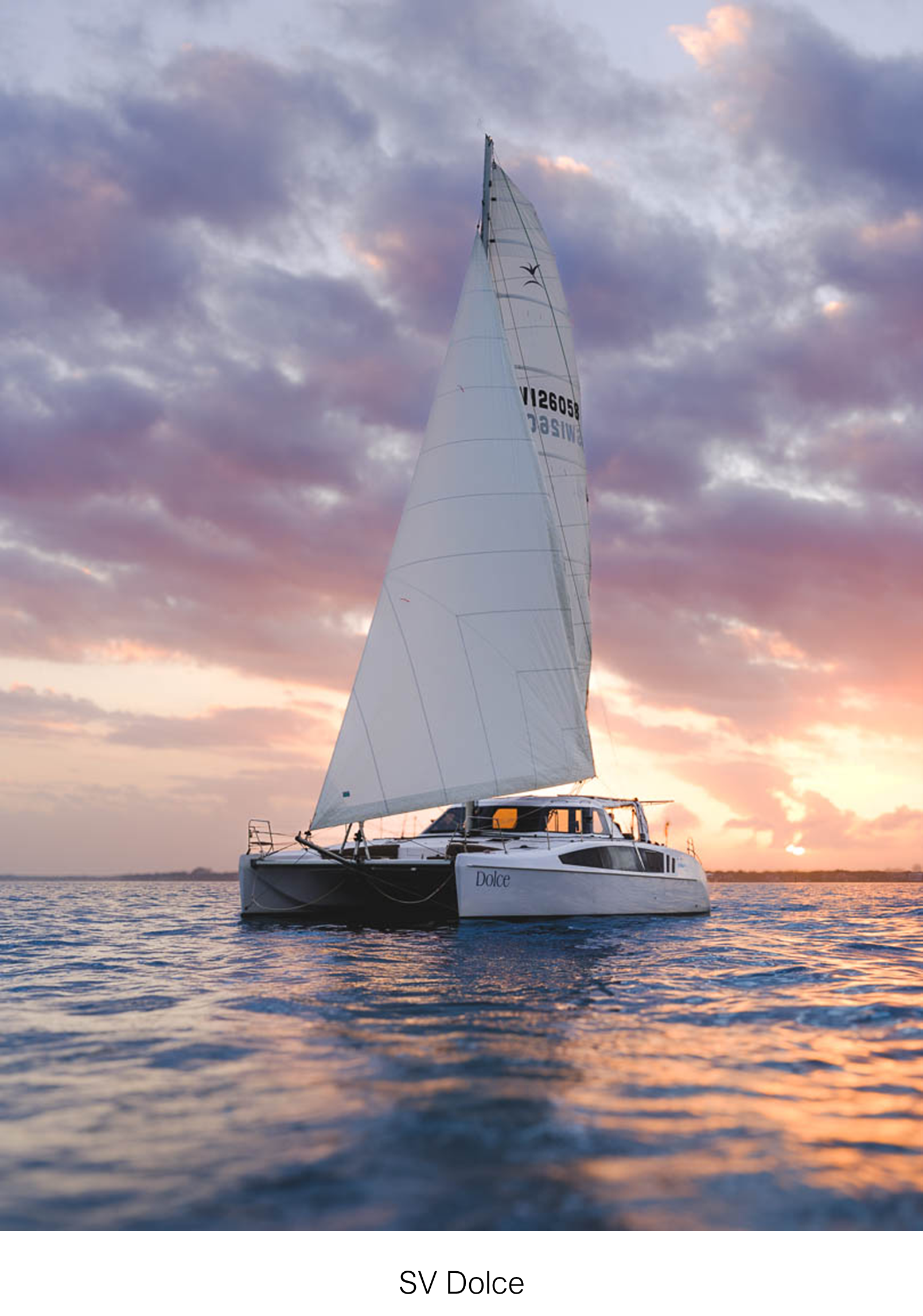
I knew we had a capable boat, the Seawind 1260, which we had purchased new the year before in 2023. The boat, which we named Dolce, is easy to sail double-handed and strong enough to withstand an ocean crossing. We especially liked its massive amounts of ventilation, since we didn’t want the complexity of air conditioning, and that rather than daggerboards, she had mini keels, which are more robust and would allow us to sit on a sandbar and dry out, for easy bottom cleaning and saildrive maintenance once we arrived in Europe.
Buying the boat new allowed us to customize it to our liking. Having already lived on a monohull for seven years, we knew we wanted a boat as simple as possible, since we knew the more complex the boat, the more there is to go wrong.
The key to a successful trip we knew would be thorough preparation, and so we spent the winter of 2024/25 in Florida, rather than going to the Bahamas or the Caribbean, making sure everything was ready, since even though we had a new boat, there are always systems that need testing and tweaking and additional equipment to be added, such as Starlink and a Jordan Series Drogue.
Normally, Carolyn and I cruise alone, with occasional guests. We could probably do the crossing ourselves but decided it would be prudent to have extra crew in case one of us became incapacitated. So we asked our good friends Tim Stone and Diane Knight to come along, and they agreed to meet us in Bermuda, where we would start our 1900 nm crossing. Tim and Diane have a lot of bluewater experience on their monohull, but no experience on a catamaran; it would be interesting to hear what they think about the differences.
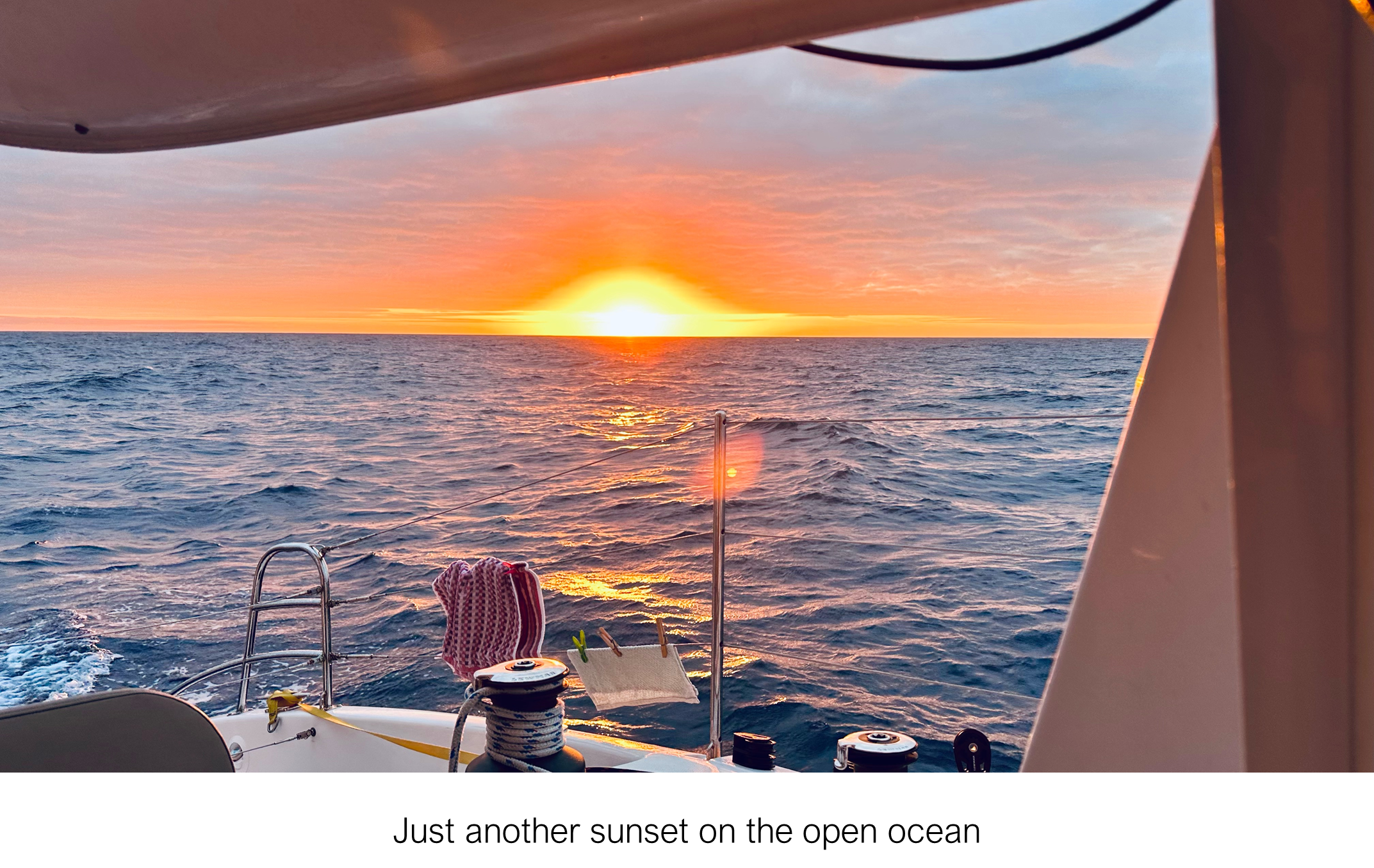
We would make the crossing in the company of nine other boats as part of the Salty Dawgs cruising club’s first transatlantic rally. We’d done a Salty Dawg rally once before, from Hampton, Virginia, to Antigua and found it helpful and comforting to have an experienced organization following us from shore. We would be the shortest of the 10 boats that had signed up. I was curious how the Seawind 1260 compared with the larger boats in speed.
Just before we left Bermuda, we decided to buy two 5-gallon jerry cans and fill them with diesel in case we had to do a lot of motoring. With a capacity of 130 gallons of diesel, we find our Seawind has a range of about 850 nautical miles when running on one engine at 2200 rpm and the Gori props in Overdrive. But if the winds were light and we had to do a lot of motoring we could run out of fuel.
We left on May 31, 2025, and from the outset there was wind, lots of it. The first day was a broad reach with the apparent winds in the low 20s. Perfect sailing weather. By nightfall, we put the first reef in the main, just in case the wind increased, and it was a good thing we did because by the next morning, the wind was blowing in the low 30s. We put in a second reef. The seas built and were now around 10 feet.
In these rough conditions, Carolyn was feeling nauseous but holding it together with the help of medication (Sturgeron), and our crew didn’t like the chaotic motion and the loud slamming of the waves. At one point, we were struck by a large wave broadside, and about three gallons of seawater came flooding in through the galley window. We screwed down the dogs tighter.
At this point, we decided to practice heaving to, in case conditions got worse. We rolled in the jib and headed into the wind, and everything calmed down dramatically, the boat became quiet and comfortable. This increased our confidence in being able to handle most conditions Mother Nature threw at us. And if heaving to wasn’t enough, we still had our drouge to fall back on.
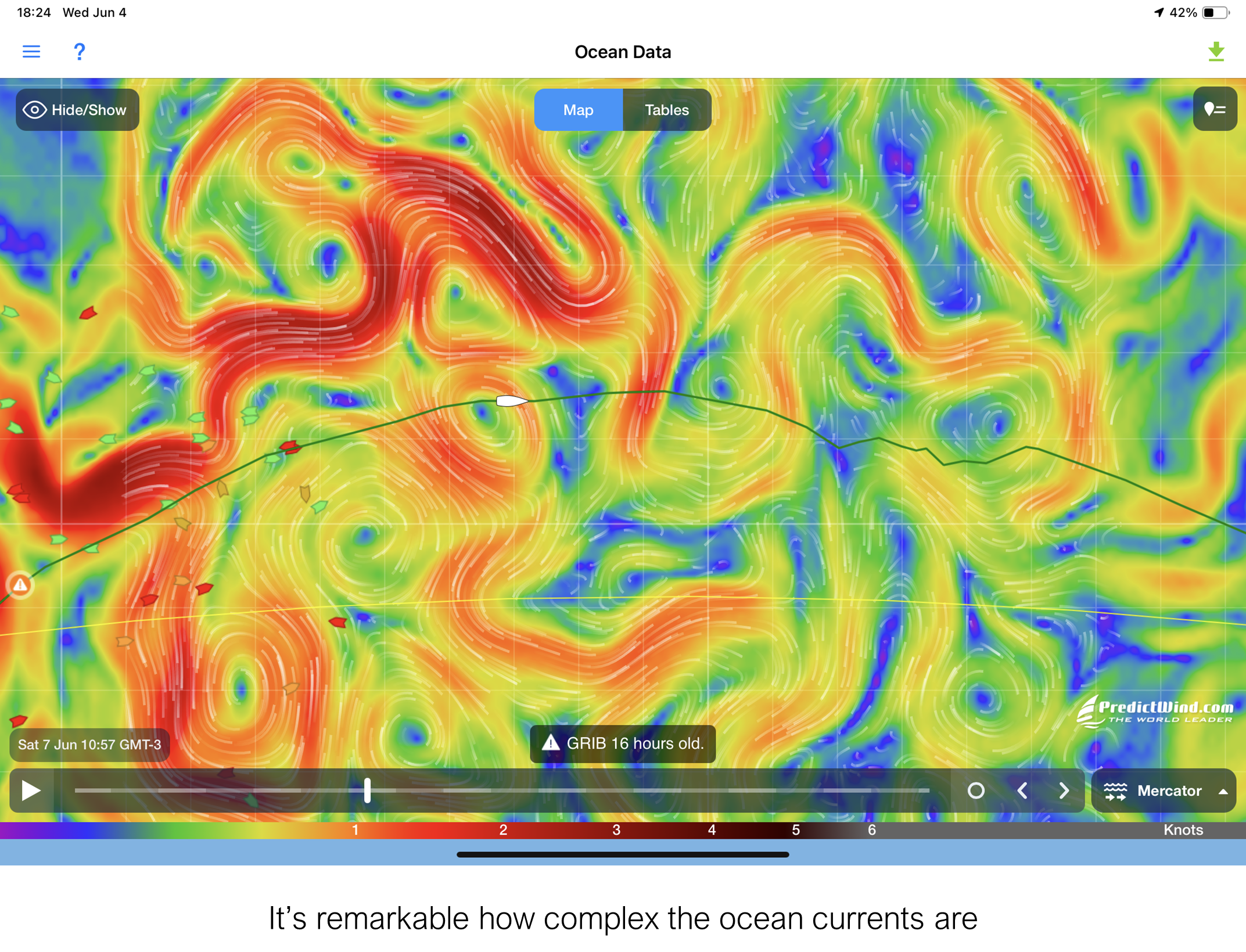
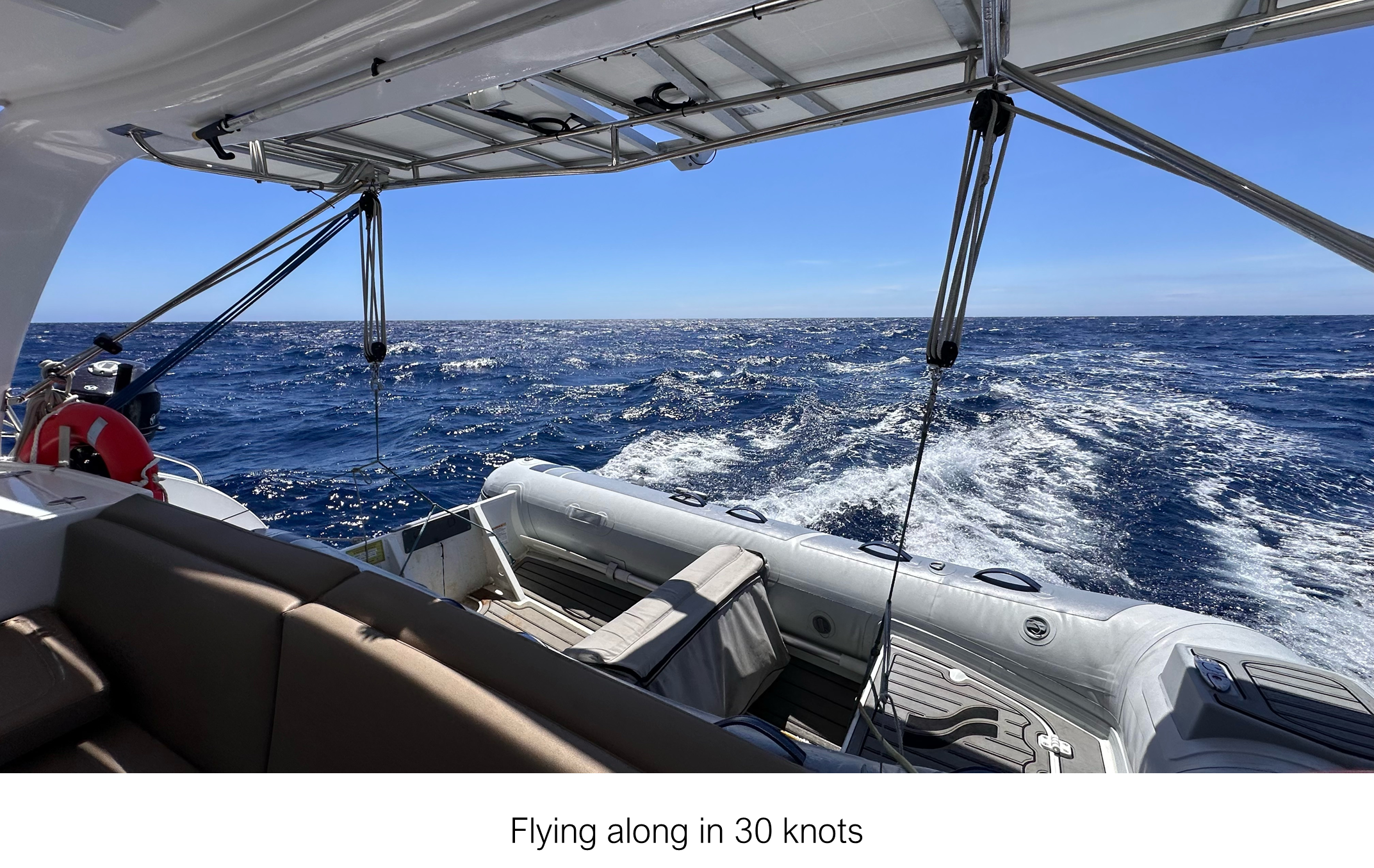
By the fifth day, we were flying along with two reefs in the main and winds gusting past 30. For the first time, we broke 200nm in 24 hours with a total distance of 203nm and an average speed of 9 knots. We were the fastest boat in the fleet, except for the big catamaran, which had disappeared over the horizon. (A longer waterline does make a difference.) The noise was loud with the waves banging against the hull, although not really slamming, and it was hard for the crew to sleep in the cabins, although not too bad in the saloon. Tim and Diane, who were used to the more predictable motion of their monohull, were by now getting used to the motion and the noise of our catamaran and appreciated the comfort of being able to drive the boat from the inside with the use of the remote autopilot and the fact that we could cook and eat without much effort, because there is very little heel.
By the sixth day, with Dolce in her groove, we made a remarkable 225 nm in 24 hours, and again we were the fastest boat in the fleet, except for the bigger catamaran.
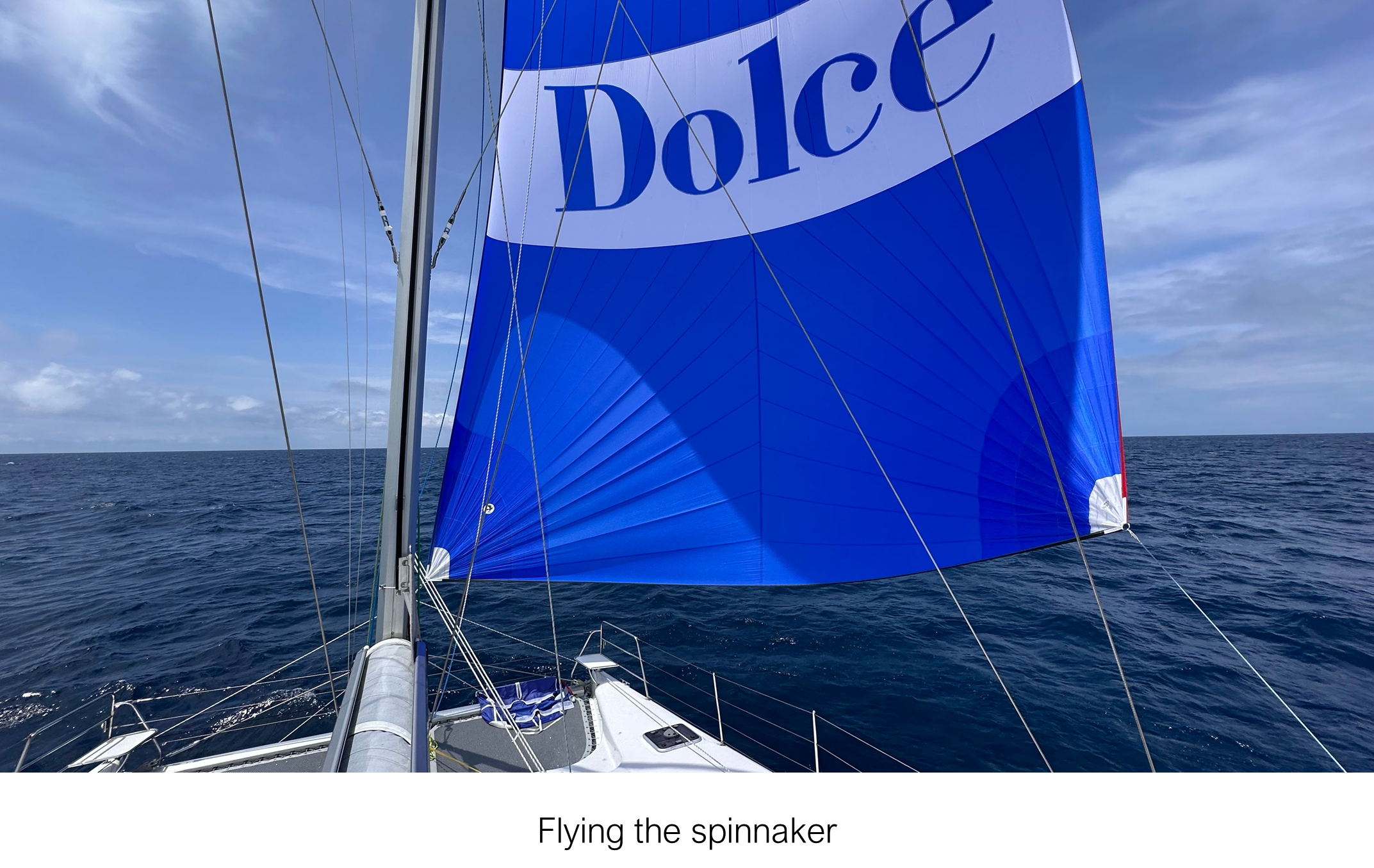
After the sixth day, the winds settled down, and most days we made 160nm to 180nm or so, which was still better than our last boat, a 44 foot monohull. We raised our beautiful blue and white spinnaker and sailed downwind at times reaching 9 knots. Our spirits were high as we had passed the half way mark and the boat was now moving smoothly and comfortably. We were able to sail with the spinnaker for the last third of our journey.
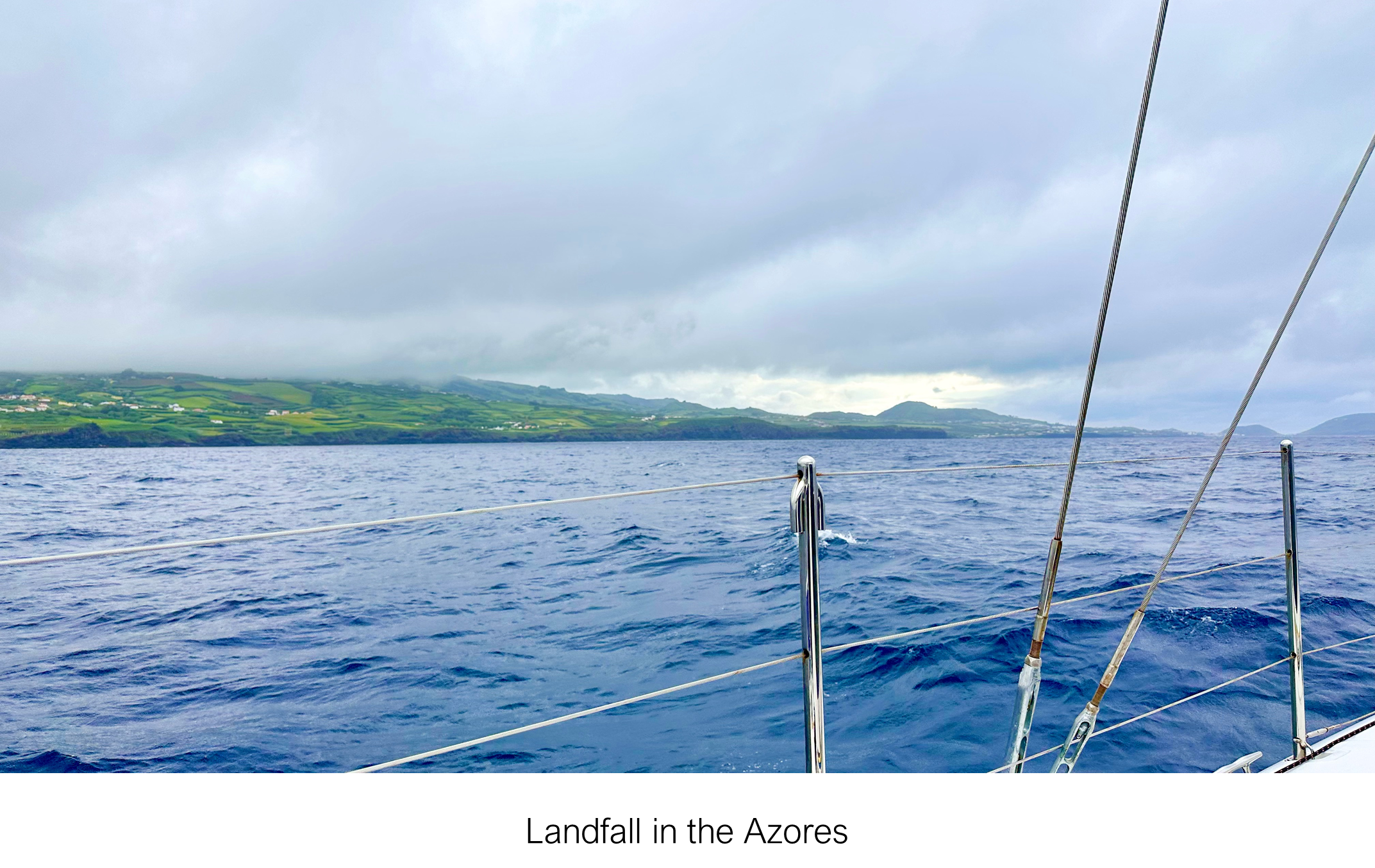
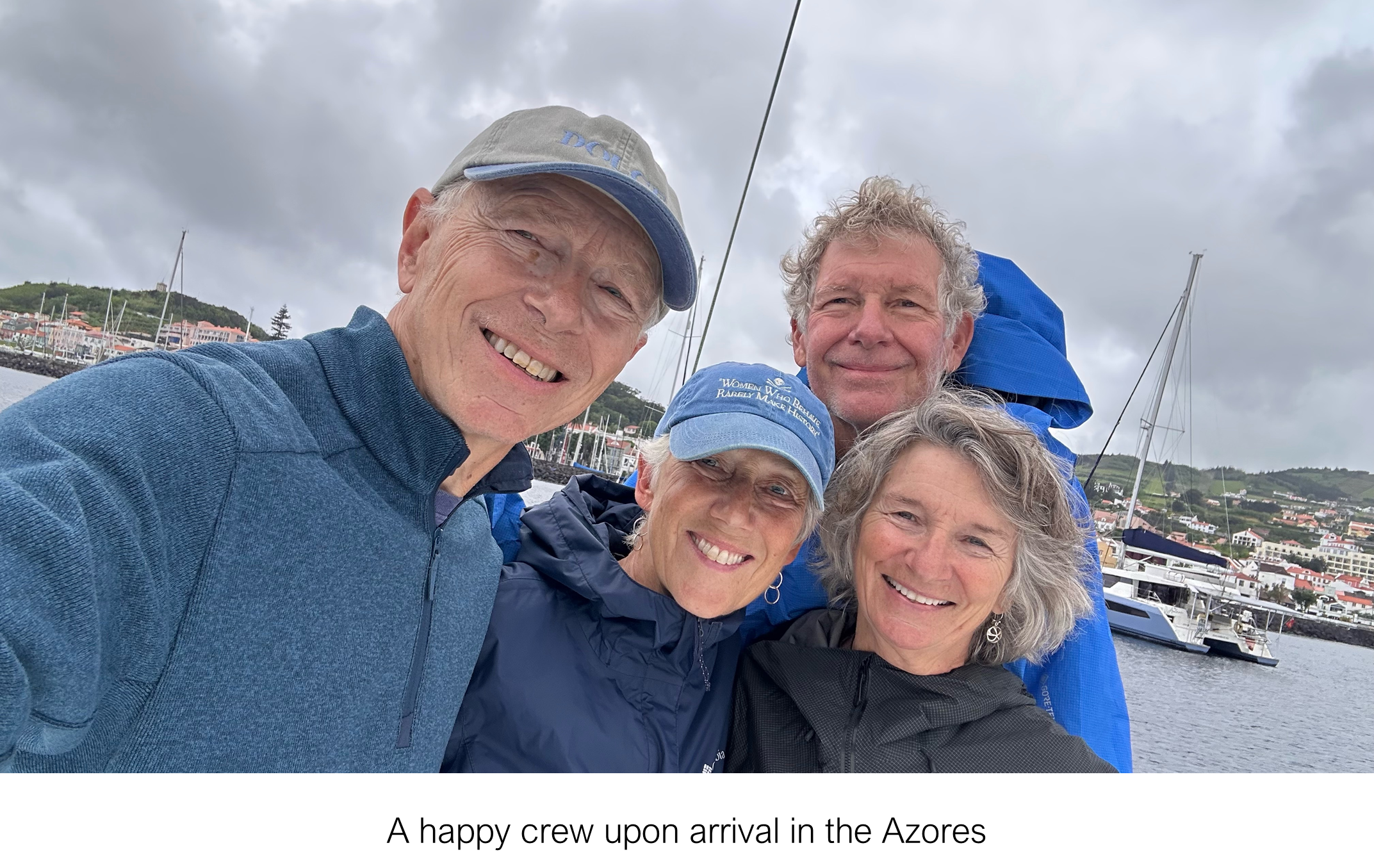
On June 11 we pulled into the port of Horta on the Azorian island of Faial in 10 days and 19 hours, a total of 1,932 nm, for an average speed of 7.5 knots and a max speed of 17 knots sliding down a big wave. We didn’t need the extra jerry cans of fuel as we used less than 10 gallons of fuel for the entire crossing. Most of the other boats were on fumes by the time they arrived.
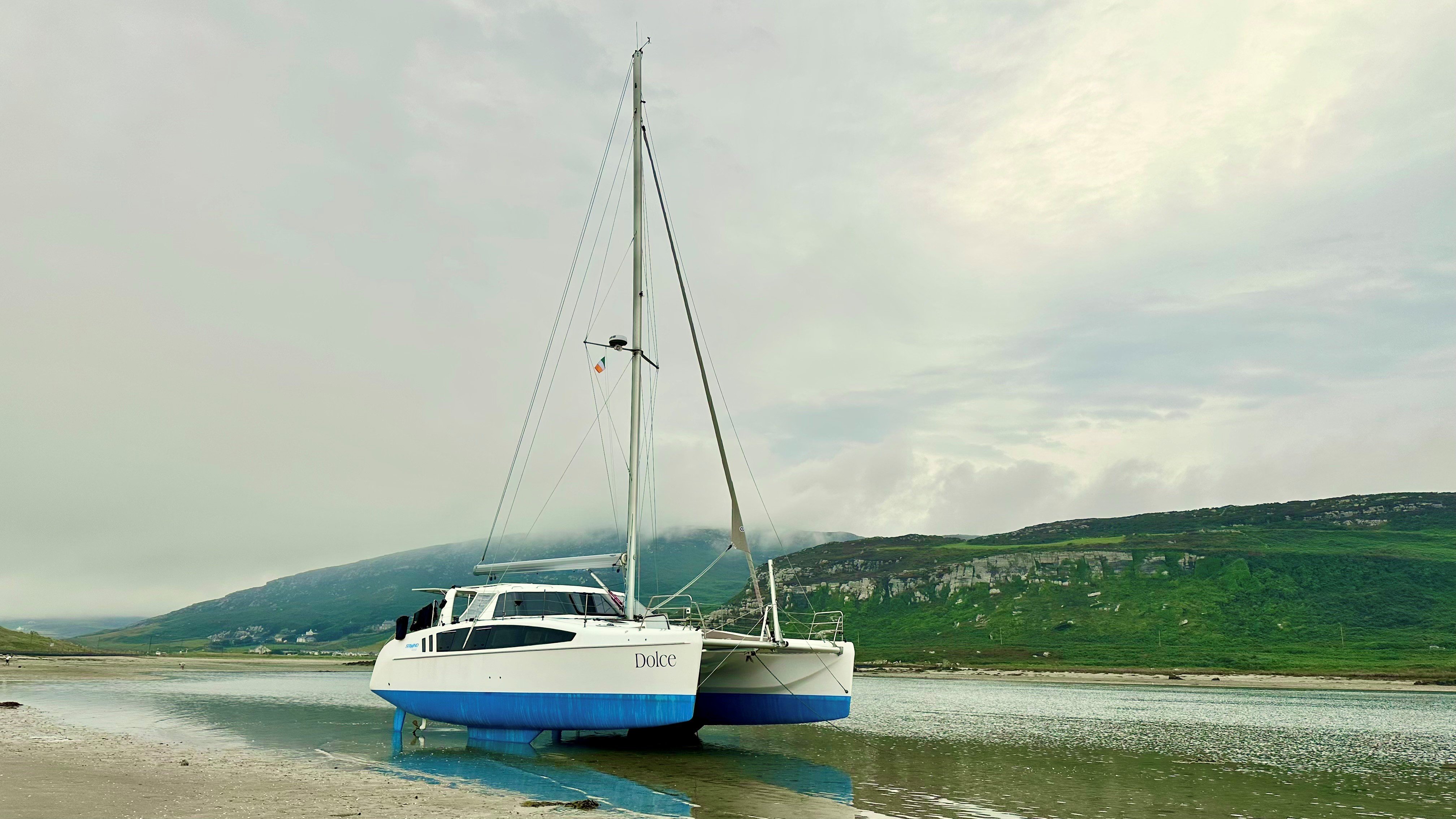
After a delightful three weeks exploring the Azores, Carolyn and I decided we’d be fine making the final leg to Europe by ourselves. This passage was easy with light winds, and eight days later we landed on the southwest coast of Ireland. After we arrived, we found a calm sandy beach with big tides where we beached Dolce and gave her the good cleaning she deserved and some basic maintenance and inspection.
This summer and fall we intend to explore Ireland, the West Coast of Scotland, England, and Brittany, France, and then put her away for the winter in Portugal. In the spring we look forward to coming back to Europe and exploring The Med before sailing back across the Atlantic to the Caribbean and then north to our home base in Newport, RI.
We consider ourselves lucky for getting such good weather for the crossing and Dolce performed beautifully to let us take advantage of the conditions. We don’t expect we’ll be as lucky in two years when we head home, but we know even if conditions are tougher our Seawind can handle it. And our monohull crew was impressed with our catamaran’s comfort and performance. I don’t think they’re ready to trade in their monohull, but Diane said after this experience she wouldn’t want to cross an ocean on her monohull.
1. Why did you choose Seawind?
We were initially attracted by its ventilation. We didn’t want air conditioning because of the complexity it entails and all the room it requires. Then we were attracted to its performance without the expense and fragility of one of the “high performance” catamarans. The list goes on.
2. What’s your favorite feature on the boat and why?
Its hard to pick, but one feature we love is its helm positions, which make it really easy to sail the boat from the comfort of the saloon. When you need to change course quickly you can just pop out the door.
3. What’s the best item you’ve added or upgraded since owning the boat and why?
We added a LeisureFurl boom. We had one on our monohull and the make it so much easier to raise and reef the main.
4. What’s your favorite cruising destination so far? What made it memorable?
The Azores, it has it all for a sailor: spectacular scenery, friendly people, nice climate, inexpensive and uncrowded.
5. Anything else you’d like to share – favorite moments, challenges, lessons learned, or future plans?
We are currently headed up the east coast of Ireland, great sailing. Then we’ll spend August in Scotland (we hear its wonderful from our friends who have been there) then to Brittany, France, and finally to Portugal, where we’ll leave Dolce for the winter and head home for the holidays. Next season we hope to explore the Mediterranean. Its a wonderful life.